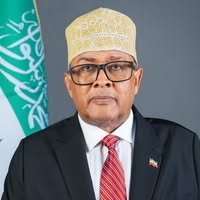
HARGEISA — As Somaliland President Abdirahman Mohamed Abdullahi Irro conducts a high-profile visit to Washington seeking international recognition, authorities in Hargeisa have imposed a sweeping weapons ban in Awdal and Salal, regions where growing political movements are now openly demanding secession from Somaliland and alignment with Somalia’s federal system.
The directive, effective 2 p.m. on Sunday, September 20, 2026, bans organised armed mobilisation and the carrying of weapons without legal authorisation. State Minister for Interior and Security Abdirashid Mohamed Ahmed (Magaalo) warned that anyone who confronts security forces and is injured or killed will not receive government compensation.
The timing is difficult for Irro. He arrived in Washington on September 5 for meetings aimed at strengthening diplomatic, security and economic ties, and advancing Somaliland’s campaign for recognition. The trip was framed as a historic push following Israel’s decision in December 2025 to become the first country to formally recognise Somaliland.
But Washington has not followed Israel’s lead. A US State Department report to Congress in June 2026 reaffirmed that Somaliland is part of the Federal Republic of Somalia, while outlining areas for expanded practical engagement. President Donald Trump reaffirmed the One-Somalia policy during a UN Security Council emergency session days after Israel’s recognition.
Awdal Follows the North Eastern State Playbook
The crisis in Awdal has become a direct challenge to Somaliland’s core claim of territorial coherence. In early 2026, Somali federal lawmakers representing Awdal, alongside local leaders, announced the formation of Guban State and aligned the new entity with Somalia’s central government.
This mirrors the path taken by the Dhulbahante clan in Sool, Sanaag and Cayn, which established the North Eastern State after rejecting Hargeisa’s authority and aligning with Mogadishu. That precedent has provided a template for Awdal’s political movements.
During protests in Borama in December 2025, demonstrators carried the flag of the Awdal State movement, signalling demands for regional autonomy and closer alignment with the Federal Government of Somalia in Mogadishu. The protests followed clashes between security forces and civilians that reportedly killed between 10 and 20 people.
Analysts have noted that the rise of assertive movements in both Awdal and the North Eastern State has fundamentally altered Somaliland’s territorial claim. The internal fragmentation, the full integration of Las Anod into Somalia’s federal structure, and the rise of assertive regional actors such as Awdal have left Somaliland’s recognition project on an unsustainable trajectory.
Somalia’s Diplomatic Counter-Offensive
Somalia’s government has seized on the Awdal crisis to reinforce its argument against recognition. In June 2026, State Minister of Foreign Affairs Ali Mohamed Omar (Ali Bal’ad) cited both the North Eastern State and Awdal as evidence that Somaliland does not exercise uncontested authority over the territory it claims.
He argued that recognition risks intensifying these challenges by encouraging zero-sum political calculations among communities that already feel excluded from decision-making processes.
Somalia has also sent its own delegation to Washington to counter Irro’s visit. The diplomatic contest reflects the high stakes for both sides.
Regional bodies have overwhelmingly rejected Israel’s recognition. The African Union, Arab League, Organisation of Islamic Cooperation, East African Community, and IGAD all condemned the move. China reaffirmed its support for Somalia’s territorial integrity, and as a permanent UN Security Council member, its opposition effectively blocks any path to UN membership for Somaliland.
Critical Note
Irro’s Washington visit was intended to capitalise on Israel’s recognition and present Somaliland as a stable, strategically valuable partner. Instead, it has coincided with the most serious internal challenge to Somaliland’s territorial claims since the North Eastern State consolidated its position within Somalia’s federal framework.
The weapons ban in Awdal is a measure of weakness, not strength. It signals that Hargeisa cannot rely on political legitimacy in the region and must resort to coercive enforcement. The warning that those killed confronting security forces will receive no compensation is an implicit acknowledgment that further clashes are anticipated.
Somaliland’s recognition pitch rests on the argument that it is a functioning state with uncontested authority over its territory. Awdal’s secessionist trajectory, following the North Eastern State’s path, undermines that argument at the precise moment Irro is in Washington making it. The timing could not be worse.
Recommended Reading On ftlsomalia.com
- Somalia’s Foreign Affairs State Minister Rejects Somaliland’s Coherence Claims, Points to SSC and Awdal as Evidence
- Awdal State Declares Independence from Somaliland
- Somaliland Troops Fire on Civilians in Awdal Protest
- Israel Recognizes Somaliland as Independent State
- Somaliland Leader Offers US Military Base for Recognition
- Somaliland Military Crackdown on Awdal Gadabuursi Clan