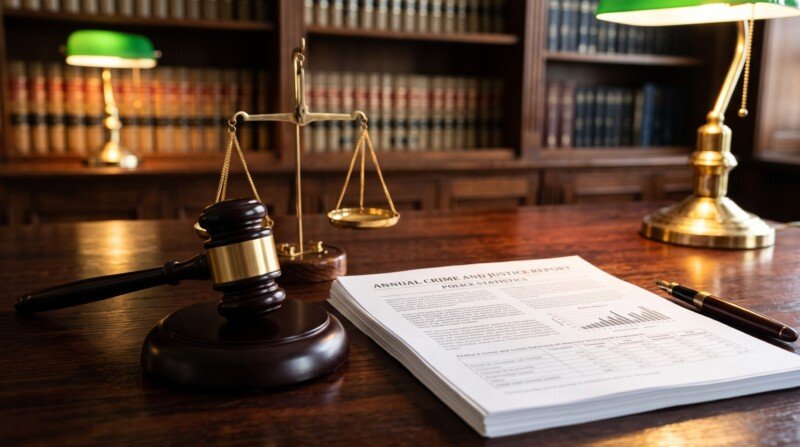
HARGEISA, Somaliland’s police force recorded 254 rape cases, 82 homicides, and 23 cases of child abandonment over the past year, according to its annual report released on November 3, 2026. The figures offer a rare official snapshot of crime and violence in the territory, but they also reveal significant gaps in how the data is documented and disclosed.
The report, presented by the Somaliland Police Force, recorded that 78 of the 82 homicide cases resulted in arrests, leaving four murder suspects still at large. The 254 reported rape cases represent a grim statistic, though the police did not disclose how many suspects were arrested in connection with these cases, how many were prosecuted, or how many resulted in convictions.
Authorities also recorded 23 cases of child abandonment, a figure that raises questions about the circumstances of the children involved and the support systems available to them. The report did not provide details on the children’s ages, their locations, or whether they were placed in care.
The Numbers at a Glance
| Crime Category | Reported Cases | Status / Outcome |
|---|---|---|
| Homicides | 82 | 78 arrested; 4 suspects at large |
| Rape Cases | 254 | No arrest or prosecution data disclosed |
| Child Abandonment | 23 | No further details provided |
A Data Problem, Not Just a Crime Problem
The report’s most revealing feature is not the number of cases it records but the number of questions it leaves unanswered. For the 254 rape cases, the absence of arrest, prosecution, and conviction data means it is impossible to assess whether the justice system is responding to these crimes or whether survivors are being left without recourse.
This pattern of incomplete disclosure is not unique to the police report. It echoes broader concerns about transparency and accountability in Somaliland’s institutions. As the UK government raised alarm over more than 50 journalist arrests in less than two years, the territory’s democratic reputation is increasingly tested by the gap between its stated commitments and the lived reality of its institutions. A police report that records crimes without recording outcomes fits within a wider pattern of institutional reticence.
Similarly, the report provides no regional breakdown. Somaliland’s police operate across several regions, including Awdal, Maroodi Jeex, Togdheer, Sanaag, and Sool. Without regional data, it is impossible to determine where the 82 homicides or 254 rapes occurred, or whether certain areas are experiencing higher rates of violence than others.
Comparative data is also missing. Authorities did not release figures from the previous reporting period, making it difficult to determine whether the 254 rape cases represent an increase, a decrease, or a stable trend. The absence of a baseline undermines the utility of the figures for policymakers and civil society organizations seeking to design effective responses.
Critical Note
The release of any crime statistics is a step toward transparency, and the Somaliland Police Force deserves credit for publishing the figures at all. In many parts of Somalia, comparable data is not available, and the absence of official crime statistics makes it impossible to hold authorities accountable or to design evidence-based policies.
But the report is a starting point, not an answer. The 254 rape cases represent 254 individuals who reported a crime of sexual violence. The report tells us how many came forward. It does not tell us how many did not. It does not tell us what happened to those who did report, whether their cases were investigated, whether suspects were charged, or whether survivors received support. The 82 homicides are similarly incomplete: four suspects remain at large, and the report does not explain what progress has been made in their cases.
The most troubling figure may be the one that is missing: the number of rape cases that resulted in a conviction. In the absence of that number, the public cannot know whether justice is being served or whether survivors are reporting crimes that the system is unable to address. The Somaliland authorities have taken a first step. The next step is to provide the data that would allow the public to judge whether the response to these crimes is adequate. Without that data, the report is a record of violence, not a measure of justice.