MOGADISHU, The World Food Programme has warned that communities devastated by the 2023 floods are once again bracing for El Niño and the threat of further flooding, as Somalia enters the Deyr rainy season under a high-risk climate scenario.
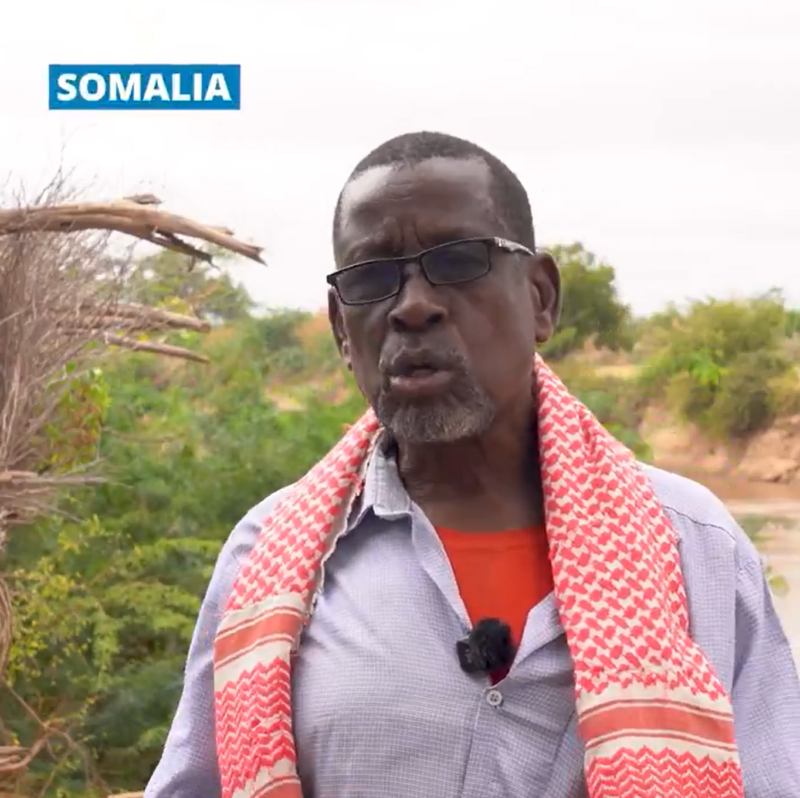
In a statement posted on social media, WFP shared the testimony of a community member named Ali, whose account of the 2023 disaster and the growing risks facing his community underscores the cyclical nature of Somalia’s climate emergencies. The agency said climate signals currently mirror those that preceded the severe floods of 1997 and 2023, with the Juba and Shabelle river basins facing the highest risk of inundation.
The warning comes just days after WFP cautioned that drought conditions from the previous season have left communities with depleted coping mechanisms, making them even more vulnerable to the anticipated rains. The Deyr season, which typically runs from October to December, is expected to bring above-normal rainfall to central and southern Somalia.
A Disaster Repeating Itself
The 2023 floods were among the most severe in Somalia’s recent history, displacing over a million people and submerging vast areas of farmland in the Juba and Shabelle basins. The disaster followed a prolonged drought that had already pushed millions to the brink of famine, compounding a humanitarian crisis that had barely begun to stabilize.
According to the Food and Agriculture Organization, sea surface temperatures in the eastern and central Pacific Ocean are rising, and if warming continues, rainfall could increase significantly, triggering riverine and flash floods in the main river basins. The FAO has warned that historical patterns suggest a high likelihood of an El Niño event, with the Juba and Shabelle rivers carrying the highest risk of severe flooding.
The areas of greatest concern include riverine communities in Middle Shabelle, Lower Shabelle, and Hiran regions, as well as parts of Bay and Bakool. Many of these communities were already displaced in 2023 and have yet to return to their homes or rebuild their livelihoods.
Critical Note
WFP’s warning is a necessary alert, but it arrives with an uncomfortable subtext: the agency has already said it lacks the resources to respond at scale. In late September, WFP warned that it could assist fewer than 5 percent of Somalis facing emergency hunger levels, even without the added strain of new flooding. If the El Niño rains materialize as predicted, the humanitarian system will be asked to do more with less, exactly when the need is greatest.
The cyclical nature of Somalia’s climate disasters is not a natural inevitability. The country oscillates between drought and flood, each time eroding the resilience of communities that have done little to contribute to global warming. Ali’s testimony, whatever its specific content, is a reminder that these are not abstract meteorological events. They are lived experiences of loss, displacement, and repeated recovery attempts that are becoming harder each season.
WFP’s warning is also a test of the international community’s willingness to act on early warnings. Pre-positioning supplies, reinforcing riverbanks, and evacuating vulnerable communities are costly and logistically complex. But the cost of inaction, measured in lives, livelihoods, and the repeated destruction of development gains, is far higher. The question is whether donors will treat this warning as a call to prepare, or as one more headline to be forgotten when the next crisis arrives.
Share your story. FTL Somalia is continuing to follow the El Niño threat and its impact on communities across the country. If you have information or insights to share, contact us at info@ftlsomalia.com. Your identity will be protected.