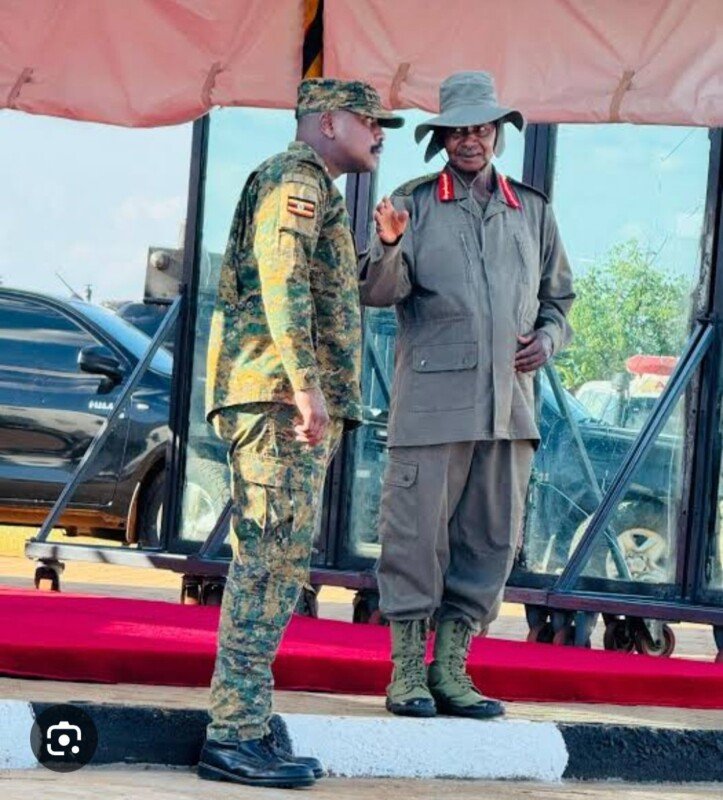
KAMPALA, Uganda has begun withdrawing its troops from Somalia, Chief of Defence Forces General Muhoozi Kainerugaba announced, marking the first concrete step in a drawdown that comes just days after President Hassan Sheikh Mohamud asked Kampala to delay the departure from strategic locations in southern Somalia.
In a post on X, Muhoozi said: “As we promised, we have started withdrawing UPDF from Somalia. After 20 years of a lot of blood and sacrifice we are handing over security to our Somali brothers.” The statement did not specify the number of troops involved, the locations affected, or whether the withdrawal would be conducted in phases.
The announcement follows reports that President Mohamud had appealed to President Yoweri Museveni to delay the withdrawal from Barawe, Bulo Marer, Qoryoley, and Janaale, to allow Somali forces more time to prepare to take over security responsibilities. Whether the withdrawal has been adjusted to accommodate that request is not clear.
The Funding Crisis Behind the Withdrawal
Uganda’s decision is rooted in a funding crisis that has been building for months, and it is a direct consequence of the structural weaknesses documented in FTL Somalia’s analysis of Somalia’s $1 billion security bill. That analysis, drawing on the World Bank’s 2026 Public Finance Review, warned that the planned AUSSOM drawdown could force the government to assume costs it cannot afford or preside over a decline in security capacity as external funding recedes.
The crisis deepened when the United States informed the African Union that it would not support extending the UN logistical support arrangement for AUSSOM beyond the current mandate, which expires on December 31, 2026. The UN Support Office in Somalia provides food, fuel, water, medical support, and casualty evacuation for the mission’s roughly 11,200 soldiers and 680 police officers. Without that support, AUSSOM’s operations become logistically untenable.
As FTL Somalia reported, the UN support office has already begun preparing for liquidation, issuing a public tender seeking auctioneers to sell generators, medical equipment, prefabricated accommodation, and heavy machinery valued at approximately $30 million. The drawdown is no longer a threat. It is happening.
Uganda’s Dual Role
Uganda’s presence in Somalia has two tracks. Under AUSSOM, Uganda contributes approximately 4,500 troops to the multilateral mission. Separately, Uganda maintains a bilateral force of roughly 2,000 personnel under a security agreement signed with Mogadishu in late 2024. Muhoozi’s statement did not clarify whether the withdrawal affects the AUSSOM contingent, the bilateral force, or both.
Uganda’s Defence Minister, Kiryowa Kiwanuka, said in August 2026 that Uganda would remain in Somalia even if the AU mission ended, citing the bilateral agreement. Muhoozi’s announcement appears to contradict that position, or at least to suggest that a full withdrawal is now the preferred course.
The Security Gap
The withdrawal will place additional pressure on the Somali National Army to take over positions currently secured by Ugandan forces, including areas around Mogadishu and its approaches where Al-Shabaab has repeatedly carried out attacks. Ugandan troops have been instrumental in protecting critical government facilities, including Aden Adde International Airport and Mogadishu Port.
As reported in FTL Somalia’s coverage of the Entebbe meeting, President Mohamud’s request for Ugandan troops to stay longer was a tacit acknowledgment that Somali forces are not yet ready to assume full security responsibility. Muhoozi’s announcement suggests that Uganda is proceeding with the withdrawal regardless, or at least beginning a process that will be difficult to reverse.
The structural weakness of the Somali security sector is not new. As documented in FTL Dhambaal’s 2021 report, “AMISOM: A Rescue Mission in Need of Rescue”, the mission originally scoped for 8,000 troops and six months grew into a 20,000-person operation spanning every federal member state. The report warned that troop-contributing countries had developed elaborate systems for deducting from soldiers’ allowances, and that the AU mission had expanded far beyond its agreed strategic locations. The current withdrawal is the latest chapter in a long history of external actors deciding when and how to leave, while the Somali state struggles to build the capacity to secure itself.
Critical Note
Muhoozi’s announcement is a social media post, not a formal military order, and it lacks the operational detail that a withdrawal of this significance requires. It does not say how many troops are leaving, from which bases, or whether the bilateral force will remain. It does not address President Mohamud’s request for a delay. And it does not explain how the handover will be managed without creating gaps that Al-Shabaab can exploit.
The broader context is one of a mission unravelling under financial pressure. The United States has withdrawn its support for the logistics that sustain AUSSOM. The European Union has reduced its funding. The African Union owes months of arrears to troop-contributing countries. Uganda is the first major contributor to act on the warnings it has been issuing for months. Others may follow.
For Somalia, the message is stark. The international scaffolding that has supported its security for two decades is being dismantled, and the withdrawal is beginning before the Somali National Army is ready to stand on its own. Muhoozi’s words, “handing over security to our Somali brothers,” frame the withdrawal as a transfer of responsibility. Whether it becomes a transfer or an abandonment will depend on what happens in the weeks and months ahead, and on whether the Somali government can fill the gap that Uganda is leaving behind. The Dhambaal’s warning from 2021, that the “African solutions to African problems” narrative is crippled, has never been more relevant.
Recommended Reading On ftlsomalia.com
- Somalia’s $1 Billion Security Bill: Who Pays, and What Happens When They Stop?
- President Mohamud Asks Ugandan Troops to Stay Longer as Museveni Calls for United Front
- FTL Dhambaal: AMISOM: A Rescue Mission in Need of Rescue (PDF)
- Washington Proposes One-Year UNSOS Drawdown, Rejects 18-24 Month Extension Sought by Somalia and AU