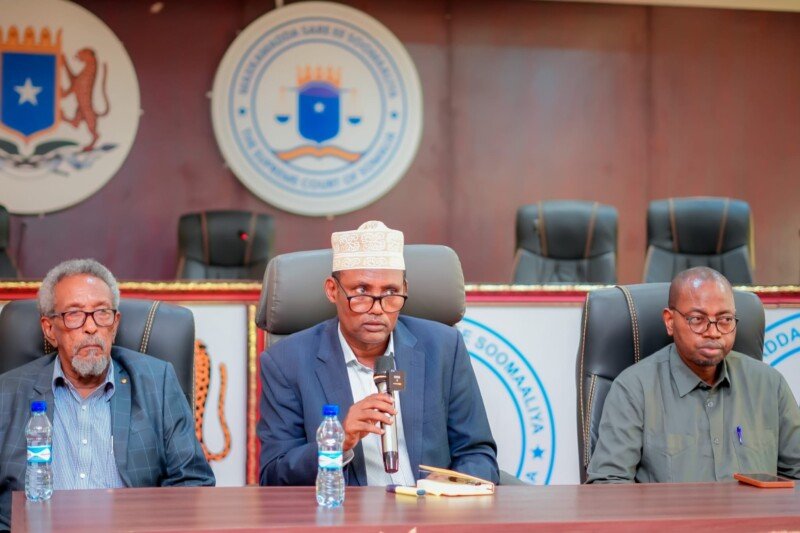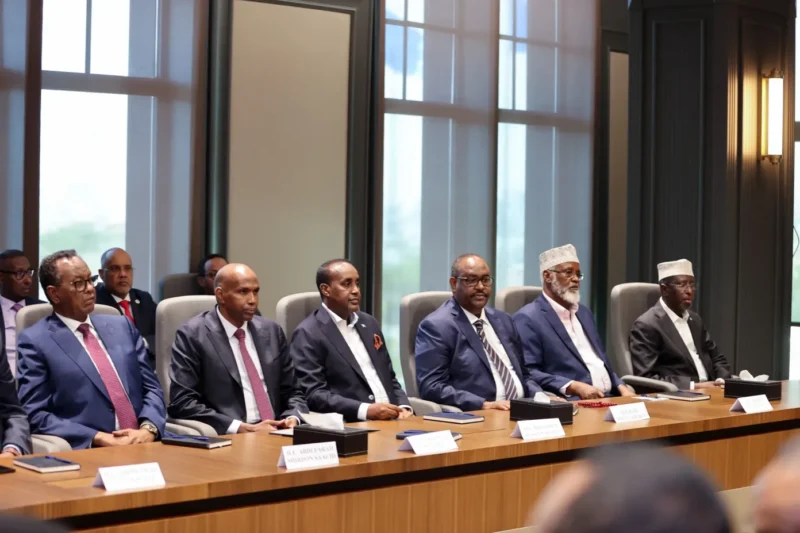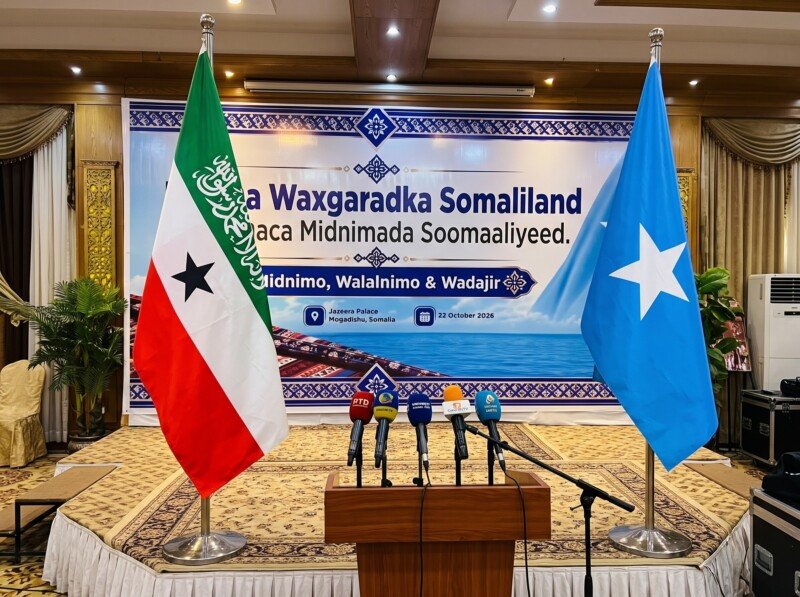
MOGADISHU, Banadir Regional Governor Hassan Mohamed Hussein (Muungaab) attended a ceremony in Mogadishu this week to welcome a delegation of traditional elders from Somaliland, describing their visit as a gesture of unity and cultural affinity.
“The traditional elders of Hargeisa has come to us. I say welcome to your city and to the people of Mogadishu,” Muungaab said. He emphasized the necessity of working toward the unity and togetherness of the people and the country.
Boqor Ibraahim and Suldaan Goodir, two prominent traditional leaders who spoke at the ceremony, said: “We have come to Mogadishu seeking unity and supporting the togetherness of the Federal Republic of Somalia.”
The ceremony was attended by traditional leaders from various Somali clans, underscoring the cross-clan nature of the event.
A Counterpoint to Political Division
The welcoming ceremony stands in contrast to the political trajectory of Somalia-Somaliland relations over the past year. As reported in FTL Somalia’s coverage of a similar event, senior federal ministers have used previous gatherings of Somaliland elders to issue calls for national unity, with Defence Minister Ahmed Moalim Fiqi arguing that grievances from the past must be addressed through collective discussion rather than separation.
The political backdrop remains difficult. Israel’s recognition of Somaliland in December 2025, followed by the opening of a Somaliland embassy in Jerusalem, pushed the two sides further apart. As reported in FTL Somalia’s coverage of the Israeli security framework, the recognition was widely condemned by Mogadishu as a violation of sovereignty, and the relationship between Hargeisa and Tel Aviv has deepened rapidly since, including a visit by President Irro to Israel and plans for direct flights.
Despite this, the traditional elders who traveled to Mogadishu are sending a different message. Their presence does not change the political reality, but it suggests that the social and cultural ties that bind Somali communities across the borders of the former republic remain intact.
The Timing
The ceremony comes at a delicate moment. President Hassan Sheikh Mohamud has invited opposition groups to a National Consultative Forum in November, and the federal government is pressing to finalize an electoral transition that the opposition rejects. The visit of Somaliland elders does not directly affect that dispute, but it reinforces the government’s narrative that it is a force for national unity, even as it faces internal opposition.
For Muungaab, the Banadir governor, the event is also a political statement. He has been a prominent figure in the government’s push to assert control over Mogadishu’s administration and land policy, and his presence at a ceremony welcoming Somaliland elders positions him as a unifier, at least rhetorically. As reported in FTL Somalia’s coverage of the land crisis, his administration has faced criticism over forced evictions and demolitions, which complicates the image of unity he sought to project at the ceremony.
Critical Note
The welcoming ceremony is a genuine expression of cultural affinity, and the traditional elders who traveled to Mogadishu deserve credit for their willingness to engage across political lines. But it would be a mistake to read too much into it. The elders do not speak for the political leadership in Hargeisa, and their call for unity does not change the fact that Somaliland’s government has rejected reunification and pursued its own diplomatic path.
What the ceremony does show is that Somali society is not entirely defined by the political divisions of its leaders. Traditional leaders, clan elders, and cultural figures can maintain relationships that politicians cannot. That is a source of hope, but it is not a substitute for political resolution. The elders can open a door, but they cannot force the politicians to walk through it.
The federal government should be careful not to instrumentalize the visit. Welcoming the elders is one thing. Using their presence to claim that Somaliland is on the verge of returning to the fold would be a misrepresentation. The elders came seeking unity. Whether unity is possible depends on the political leadership on both sides, and on whether the federal government is willing to address the grievances that led Somaliland to seek independence in the first place.
Recommended Reading On ftlsomalia.com
- Somali Ministers Call for Dialogue as Somaliland Elders Attend Mogadishu Event
- Somaliland and Puntland Designated as “Friendly” in Israeli Security Framework
- Algeria Accuses Israel of Seeking to Divide Somalia at UN General Assembly
- President Irro of Somaliland Meets Israeli Ambassador at UN as Recognition Strategy Faces Growing Doubts