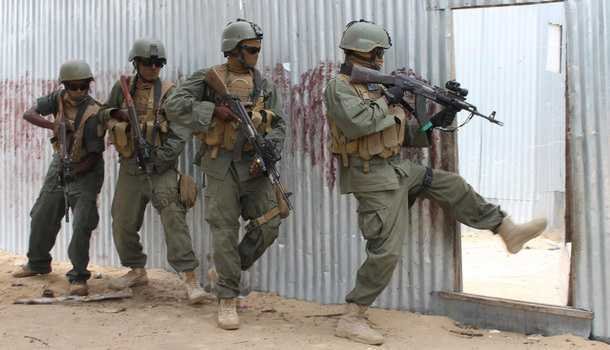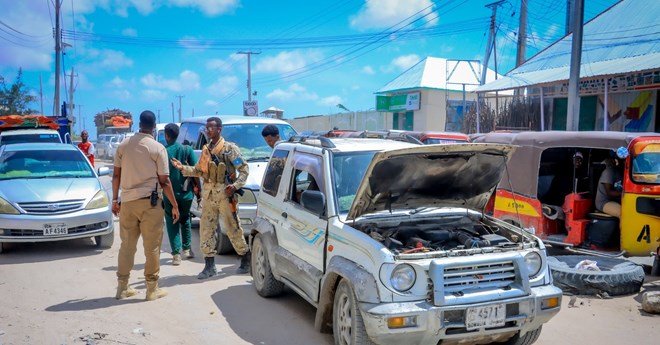

MOGADISHU — Heavy fighting erupted in Baidoa, the administrative capital of Somalia’s South West State, in the early hours of Monday morning after forces loyal to former regional President Abdiaziz Hassan Mohamed Laftagareen attacked federal and regional positions from multiple directions.
Residents reported hearing large explosions and sustained gunfire in several parts of the city, including Boonkaay, Barwaaqo, Munaawar, Maayafuulka, Al-Axmaar, Al-Faras and Onodka. The fighting began around dawn during morning prayers, according to local sources.
Drone activity was reported over the city, and several explosions were heard. Among the sites reported damaged was the RB Hotel, where officials were believed to be residing. The South West State presidency spokesperson, Mohamed Sheikh Abdullahi Xaayow, said government forces had defended themselves against an attack by what he described as “terrorist groups,” accusing Al-Shabaab of carrying out the assault alongside Laftagareen-aligned forces.
Hassan Abdi Mohamed, information minister for the Laftagareen-aligned faction, claimed their forces had destroyed military vehicles supplied to Somalia by Türkiye and several weapons depots belonging to opposing forces. The competing claims could not be independently verified.
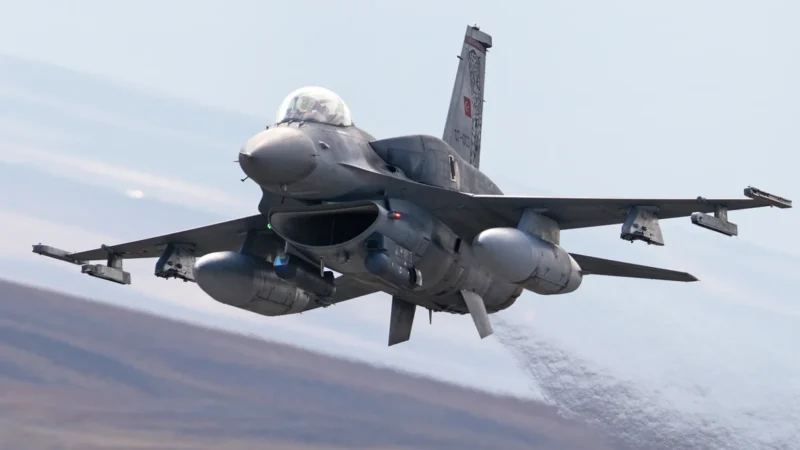
Turkish F-16 Departs Mogadishu
Separately, a Turkish F-16 fighter jet departed Mogadishu’s Aden Adde International Airport on Monday as the fighting continued in Baidoa, according to flight tracking reports and local sources. Türkiye maintains a military presence in Somalia as part of its support for the Somali government’s operations against Al-Shabaab.
The presence of Turkish military assets in Somalia has been a subject of political controversy. Türkiye has deployed F-16 fighter jets to Mogadishu as part of broader military support provided to Somalia as the country intensifies operations against Al-Shabaab, as reported in FTL Somalia’s coverage of Somalia-Türkiye defence cooperation.
Laftagareen has previously alleged that Turkish F-16 aircraft were used in operations around Baidoa and in Doolow, including an attack on the residence of former Somali Custodial Corps commander General Mahad Abdirahman Aden, known as General Shub.
Those allegations remain unproven. Somalia’s federal government denied involvement in the Doolow incident and said preliminary information suggested that explosions at the residence may have resulted from explosives being prepared inside the house. The government said it would establish a fact-finding committee to investigate the incident.
A Political Dispute Turned Armed Conflict
The fighting in Baidoa is the latest escalation in a months-long political dispute between Somalia’s federal government and Laftagareen over control of South West State.
Federal forces took control of Baidoa on 30 March 2026, after which Laftagareen resigned. He had governed the state since 2018. Sheikh Aden Mohamed Nur Madobe was subsequently elected South West State president with federal government backing. Laftagareen and his supporters rejected the political transition and have continued to challenge the new administration’s legitimacy.
As detailed in FTL Somalia’s coverage of Laftagareen’s position, the former president has strongly rejected federal government allegations linking his forces to Al-Shabaab, warning that such claims could endanger civilians and worsen political tensions. His office said South West Darawish forces are legally established security forces mandated to protect civilians and the constitutional order of South West State.
Forces loyal to Laftagareen have launched repeated attacks on Baidoa since the political dispute turned into an armed confrontation earlier this year. Monday’s assault follows previous attacks on 17 August and 3 September. During the September 3 clashes, Bay Regional Hospital received 71 wounded people, including 15 women, and one civilian who was killed, according to the AP. Fighting in and around Baidoa the previous month had also killed at least four civilians and wounded 98 others.
The federal government has consistently accused Laftagareen-aligned forces of fighting alongside Al-Shabaab. Defense Minister Ahmed Moallim Fiqi wrote on Facebook that “the ‘terrorist twins’ that attacked Baidoa this morning have been dealt a crushing blow.” Laftagareen and his allies have repeatedly denied cooperating with the militant group and have accused the federal government of politicizing the security situation.
Civilians Caught in the Crossfire
Baidoa, located approximately 245 kilometres northwest of Mogadishu, is a major humanitarian hub and hosts more than half a million people displaced by conflict and drought. The city has repeatedly experienced clashes since the political dispute turned into an armed confrontation earlier this year.
Laftagareen has appealed to the United States, the United Nations, European Union, African Union and IGAD, urging international actors to condemn what he describes as a military assault on South West State and to launch an independent investigation into the reported air operations.
The federal government has portrayed its operations as necessary to defend the regional administration and counter armed groups threatening the city. Prime Minister Hamza Abdi Barre has declared that there will be no elections in Baidoa or across South West other than a one-person, one-vote process, and warned against any attempts to disrupt security in the city, as reported in FTL Somalia’s coverage of security measures in Baidoa.
Critical Note
The fighting in Baidoa is not a conventional counterterrorism operation. It is a political dispute over regional authority that has escalated into armed confrontation, with civilians paying the price. The use of drones, heavy weapons, and reportedly advanced military aircraft in a densely populated urban centre raises serious questions about compliance with international humanitarian law and the protection of civilians.
The conflicting accounts from the two sides make independent verification of responsibility difficult. The federal government says it is fighting terrorists. Laftagareen’s faction says it is resisting an illegal military occupation. Both sides claim victories. Neither has provided independent evidence for its claims. The absence of verified casualty figures, despite reports of dozens killed and wounded, is itself a failure of transparency.
The involvement of Turkish military assets adds a further layer of complexity. Türkiye is a key partner in Somalia’s security sector, but its role in internal political disputes, if confirmed, would raise questions about the use of foreign military capabilities in domestic political conflicts. The F-16’s departure from Mogadishu on Monday, as Baidoa burned, will be noted by those who have alleged Turkish involvement in operations against Laftagareen’s forces.
What Baidoa needs is not more military escalation but a political settlement. The underlying dispute over regional leadership, constitutional changes, and the balance of power between Mogadishu and federal member states cannot be resolved by force. Every additional airstrike and every additional attack risks creating new grievances, new displacement, and new demands for retaliation. The international community should press both sides to cease hostilities and return to dialogue.
Recommended Reading On ftlsomalia.com
- Ousted South West President Rejects Federal Claims Linking His Forces to Al-Shabaab
- Speaker Madoobe Holds Emergency Security Meeting in Baidoa as Federal Forces Repel Pro-Laftagareen Militia Attack
- ‘I Remain Lawful President’: Laftagareen Rejects Removal, Vows Political Return from Exile
- South West State Tightens Baidoa Security
- Turkey’s Outgoing Ambassador Praised for Strengthening Somalia Ties Amid Growing Cooperation