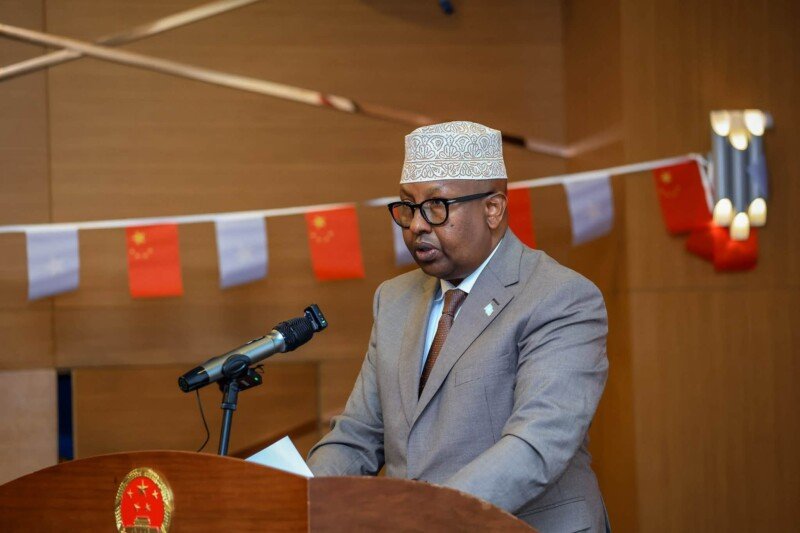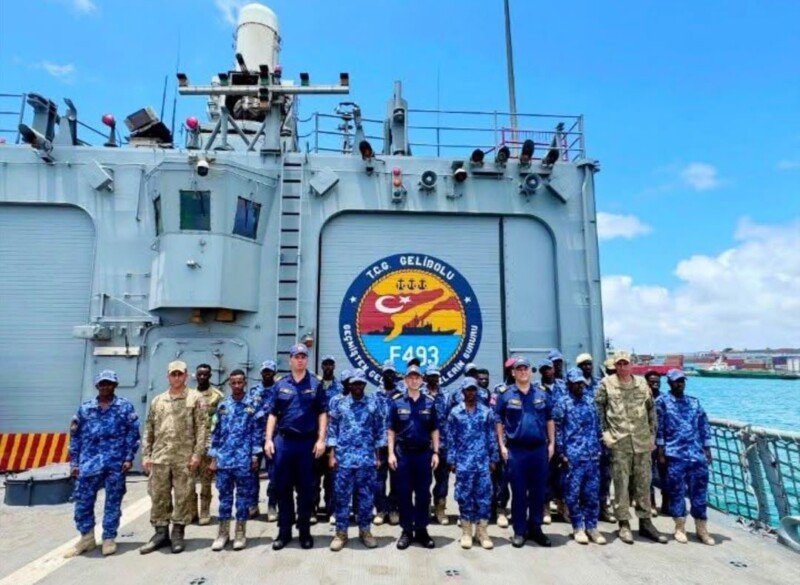
MOGADISHU — Turkish Ambassador to Somalia Ferhat Alkan visited the naval vessels TCG Gelibolu and TCG Göksu this week, the two frigates serving as core elements of the Somali Naval Task Group, according to a statement from the Turkish Embassy in Mogadishu.
The ambassador met with Turkish naval personnel aboard the ships, which continue to provide escort and protection for the Çağrı Bey ultra-deepwater drillship and its support vessels, Korkut, Altan, and Sancar, operating off the Somali coast.
Dual Mission: Drilling Protection and Somali Training
The Turkish frigates are engaged in a dual mission. Their primary operational task is to escort and protect the Çağrı Bey drilling ship and its accompanying support fleet, which are conducting Turkey’s first overseas deepwater drilling operation at the Curad-1 well. The vessel is drilling at a site located approximately 372 kilometers off the Somali coast, targeting a total depth of roughly 7,500 meters.
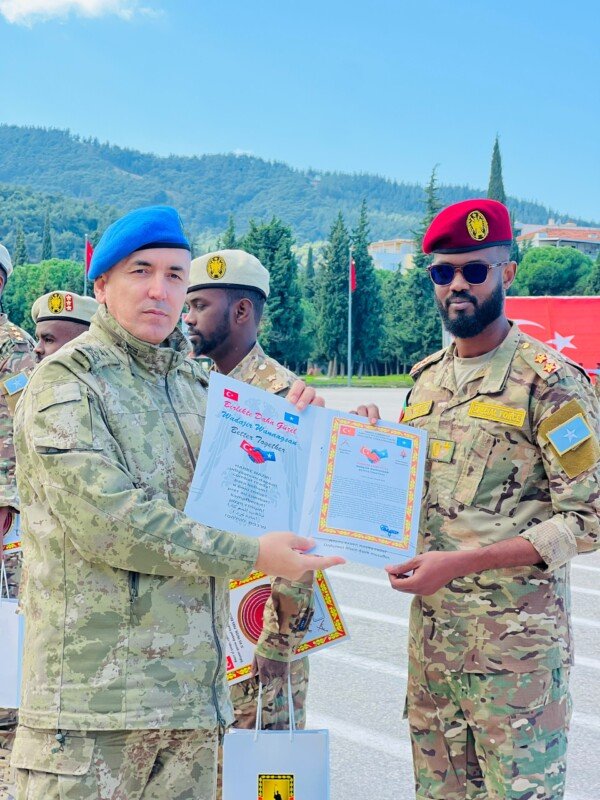
Beyond the escort mission, the Turkish Navy ships are conducting training activities for Somali Navy and Coast Guard personnel. This capacity-building component aligns with the broader defense cooperation framework between Ankara and Mogadishu, which includes commitments to train and equip Somali naval forces.
Turkish naval assets have maintained a sustained presence in Somali waters through the Somalia Naval Task Group. In July 2026, Türkiye’s Ministry of Defense confirmed that TCG Göksu, TCG Gelibolu, and TCG Bartın were actively protecting the drilling fleet, with the escort mission remaining ongoing.
In a separate deployment, the Turkish frigates TCG Kemalreis and TCG Yzb. Güngör Durmuş conducted training exercises in the Indian Ocean while transiting to Somalia as part of the same task group.
Strategic Context
Türkiye and Somalia signed a defense and economic cooperation framework agreement in February 2024, establishing a ten-year partnership that includes Turkish assistance for the construction, training, and equipping of the Somali Navy. The agreement aims to strengthen Somalia’s capacity to protect its waters from piracy, illegal fishing, and other maritime threats.
The naval deployment coincides with an uptick in piracy incidents in 2026. In late August, Turkish naval forces collaborated with Somali units in the liberation of the merchant vessel MV LATUF, which had been seized off the Nugal region coast.
Türkiye also operates its largest overseas military base in Mogadishu, where it trains Somali troops. The country extended its military mission in Somalia for another two years in 2026, allowing Turkish forces to continue providing military support and training.
Critical Note
The visible presence of Turkish naval ships off Somalia and the ambassador’s visit to their crews underscore Ankara’s deepening role as Somalia’s primary external security partner. The escort mission for the Çağrı Bey serves dual purposes: protecting a flagship energy project that could transform Somalia’s fiscal outlook, and signalling Türkiye’s commitment to maritime security in a strategic corridor linking the Gulf of Aden, the Indian Ocean, and the Red Sea.
The training component for Somali Navy and Coast Guard personnel is significant, but the scale and sustainability of these efforts remain difficult to assess. Somalia’s naval forces are still in the early stages of reconstruction after decades of conflict. Turkish trainers and equipment can help build institutional capacity, but the Somali government’s ability to maintain and operate a professional navy over the long term will depend on sustained funding and political stability.
The deployment also raises questions about the division of labor among international actors in Somali waters. Türkiye’s naval presence is focused on protecting its own energy assets and training Somali forces, not on broader counter-piracy patrols. The extent to which these missions contribute to Somalia’s overall maritime security architecture, as opposed to Turkish commercial and strategic interests, remains an open question that Ankara has not addressed publicly.