KAMPALA — The Uganda People’s Defence Forces (UPDF) has suspended all defence and military cooperation with the Republic of Türkiye with immediate effect, according to a statement issued on Saturday, September 19, 2026.
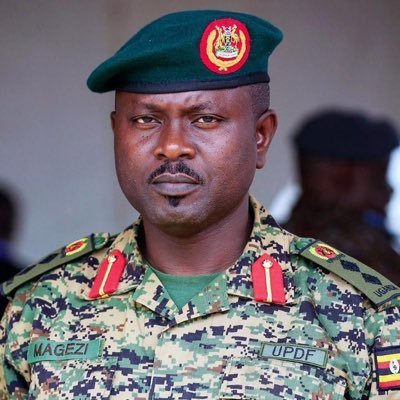
The announcement was made by Colonel Chris Magezi, Acting Director of Defence Public Information at Uganda’s Ministry of Defence and Veteran Affairs. The statement said the suspension will remain in force until outstanding issues of mutual defence and military cooperation between the two countries are resolved.
The UPDF did not specify the nature of the outstanding issues or indicate which particular cooperation programmes are affected.
Gen Muhoozi’s Twitter Diplomacy and the Lumbuye Dispute
The suspension follows escalating tensions over Uganda’s demand that Türkiye extradite Fred Lumbuye, a Ugandan government critic who has lived in Türkiye for years. Lumbuye faces 15 criminal charges in Uganda, including incitement to violence, spreading false information, and computer misuse.
On Friday, September 18, hundreds of supporters of the Patriotic League of Uganda (PLU), a group chaired by Uganda’s Chief of Defence Forces Gen Muhoozi Kainerugaba, demonstrated outside the Turkish Embassy in Kampala demanding Lumbuye’s handover.
Gen Muhoozi, the son of President Yoweri Museveni and widely seen as his likely successor, has built a reputation for conducting foreign policy through social media. In April 2026, he publicly demanded $1 billion from Türkiye as compensation for Uganda’s military role in Somalia, along with what he described as “the most beautiful woman” in Turkey as his wife, threatening to close the Turkish embassy in Kampala within 30 days if the demands were not met.
His posts on X, formerly Twitter, have repeatedly strained Uganda’s diplomatic relations. In October 2022, he tweeted that it “wouldn’t take us, my army and me, 2 weeks to capture Nairobi,” referring to Kenya’s capital. President Museveni was forced to issue a public apology to Kenya, and Gen Muhoozi was briefly stripped of his position as Commander Land Forces before being promoted to Chief of Defence Forces in March 2024.
What This Means for Somalia
Uganda’s rupture with Türkiye carries direct implications for Somalia, where both countries are deeply embedded in the security architecture.
Uganda is the largest troop contributor to the African Union Support and Stabilization Mission in Somalia (AUSSOM), the mission that replaced ATMIS in 2025. Ugandan forces number approximately 5,000 to 6,000 within the AU mission, with additional troops operating under bilateral arrangements with Mogadishu. Uganda was the first country to deploy troops to Somalia in 2007 and has remained a cornerstone of international peacekeeping efforts since.
Türkiye, meanwhile, operates its largest embassy complex in the world in Mogadishu, a compound inaugurated in 2016 that spans over 61,000 square meters. Beyond diplomacy, Türkiye maintains Camp TURKSOM, its largest overseas military base, which trains Somali elite units including the Gorgor commandos. Türkiye has also delivered Bayraktar Akıncı drones to Somalia and signed a 10-year defence and economic cooperation agreement in 2024.
The suspension of Uganda-Türkiye military cooperation raises practical questions for Somalia. Ugandan forces in Somalia have relied on various international partners for logistics, funding, and equipment. Türkiye has been a significant contributor to Somali security sector reform, including through the training of Somali forces that operate alongside Ugandan troops in joint operations against Al-Shabaab.
Gen Muhoozi has previously criticised Türkiye’s role in Somalia, arguing that Ankara was not active during earlier years of intense conflict but became involved later, while Uganda bore the burden of combat operations. His earlier demands had included a $1 billion payment and other provocative conditions directed at Ankara, as reported in FTL Somalia’s coverage of the Ugandan commander’s threats.
The deeper context of Uganda’s role in Somalia was underscored by President Hassan Sheikh Mohamud’s attendance at Museveni’s inauguration in May 2026, where bilateral defence ties were reaffirmed through a Status of Forces Agreement and a Memorandum of Understanding on Defence Cooperation. The current dispute places those arrangements in a more complicated light.
Meanwhile, AUSSOM’s future remains uncertain. As reported in FTL Somalia’s coverage of the AU mission’s funding crisis, Uganda has already declared its intention to withdraw its forces after nearly two decades, and the mission faces chronic funding shortfalls as international support wavers. A rupture with Türkiye adds another layer of uncertainty to a security transition that was already under strain.
Critical Note
The UPDF’s suspension of military cooperation with Türkiye places Somalia at the intersection of two of its most important security partnerships. Uganda provides the largest troop contingent in Somalia, while Türkiye operates the most extensive bilateral defence and training presence in the country. A rupture between Kampala and Ankara does not automatically translate into a crisis for Mogadishu, but it creates friction within the coalition that sustains Somalia’s security operations.
The official Ugandan statement offers no explanation of the “outstanding issues,” leaving observers to connect the decision to the Lumbuye dispute and the pattern of Gen Muhoozi’s social media-driven diplomacy. Whether the suspension is a temporary pressure tactic or a lasting rupture remains unclear. For Somalia, the key question is whether the dispute spills over into coordination on the ground, where Ugandan forces and Turkish-trained Somali units operate in overlapping areas of responsibility. Neither Kampala nor Ankara has outlined how the suspension will affect third countries, and Somalia has not publicly commented.
Recommended Reading On ftlsomalia.com
- Ugandan Commander Threatens Somalia Troop Pullout Without Turkish Funding
- Somali President Attends Museveni’s Inauguration in Uganda
- Kampala Summit to Decide Fate of AU Mission as US Funding Cuts Bite
- Minister Jibril Calls for Accelerated Defense Cooperation between Somalia and Türkiye
- Türkiye Plans to Deploy Private Army to Somalia
- EU Approves €75 Million for AU Mission in Somalia