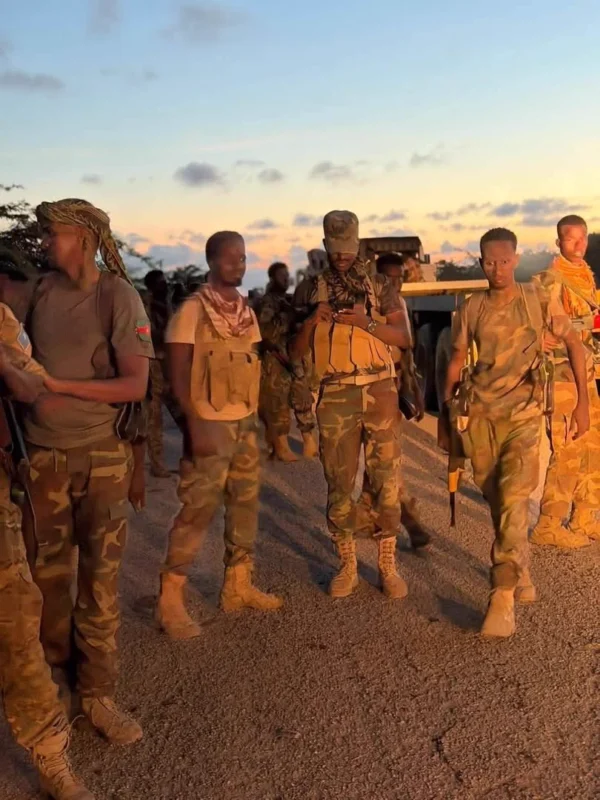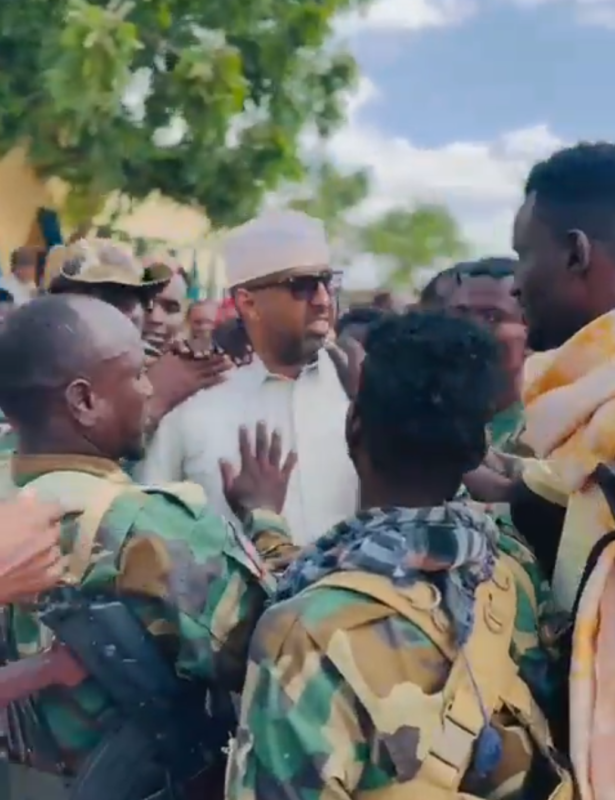
KAMPALA, The Uganda People’s Defence Forces (UPDF) has formally commenced the withdrawal of its troops deployed in Somalia under bilateral arrangements with the Federal Government, with the first cohort of soldiers already back in Uganda, the military announced on Monday.
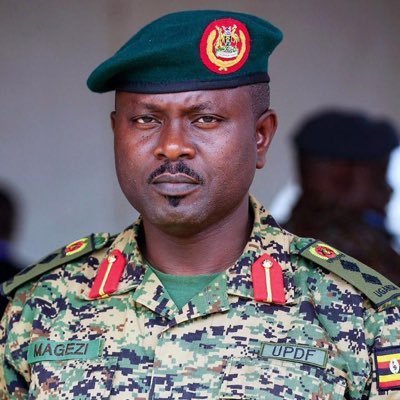
In a press statement signed by Acting Director of Defence Public Information Colonel Chris Magezi, the UPDF clarified that the current drawdown applies only to the roughly 2,000 personnel deployed under a separate bilateral security agreement with Mogadishu. This specific withdrawal took effect immediately and will be completed “in the next few days.”
The statement explicitly distinguished this bilateral exit from Uganda’s larger commitment to the African Union Support and Stabilization Mission in Somalia (AUSSOM). The approximately 4,500 Ugandan troops serving under the AUSSOM mandate will not be leaving in the coming days; instead, they will be gradually withdrawn in a phased process that will only be completed by the close of 2027.
“This will mark the end of Uganda’s enduring 20-year peace and stabilization support operations in Somalia, permitting the Somali Armed Forces to assume full responsibility for security in the country,” Magezi said, referring to the eventual completion of the entire withdrawal.
The formal announcement follows the departure of the first flight carrying 109 UPDF soldiers from Aden Adde International Airport last week, aboard a Kenyan-owned Fokker F-100 leased by Uganda and registered as 5Y-SKE. Somali sources indicated that Ugandan positions in Lower Shabelle were expected to be vacated by November 4, and that Kampala had informed President Hassan Sheikh Mohamud that part of its forces would leave by November 15.
Two Tracks and a Disputed Deadline
The dual nature of Uganda’s presence has caused confusion since the withdrawal was first announced. The UPDF statement now clarifies that the bilateral troops are leaving first and fast, while the AUSSOM contingent will follow in a much slower, phased drawdown stretching to the end of 2027.
That end-of-2027 deadline for the AUSSOM troops differs from some earlier reporting. The BBC cited military sources saying the phased withdrawal was expected to be completed by August 2027, while the UPDF’s own statement now specifies the close of 2027. The discrepancy has not been publicly explained, but the later date provides additional time for coordination with the African Union and Somali forces.
The announcement formalizes a process that began with a social media post by Chief of Defence Forces General Muhoozi Kainerugaba on October 29. “As we promised, we have started withdrawing UPDF from Somalia,” he wrote. “After 20 years of a lot of blood and sacrifice we are handing over security to our Somali brothers.” At the time, the statement lacked operational detail, and it was not clear whether it affected the AUSSOM contingent, the bilateral force, or both. The formal UPDF statement has now resolved that ambiguity, a development detailed in coverage of Uganda’s withdrawal as the first domino in the unravelling of Somalia’s security architecture.
The Funding Crisis Behind the Exit
The Ugandan withdrawal is unfolding against a backdrop of severe financial strain on the African Union mission. The United States, the coalition’s largest donor, has moved to end funding for the UN Support Office in Somalia (UNSOS), which provides logistics, troop rotations, transport, food, fuel, and medical support to AUSSOM forces. UNSOS operational costs amount to roughly half a billion dollars annually, approximately three times AUSSOM’s own budget, and the loss of that support threatens to pull the logistical foundation from under the mission.
The UN support office has already begun preparing for liquidation, issuing a public tender seeking auctioneers to sell generators, medical equipment, prefabricated accommodation, and heavy machinery valued at approximately $30 million. The drawdown is no longer a threat. It is happening.
Washington has cited frustration with the lack of progress in the fight against Al-Shabaab, as well as the Somali government’s failure to advance political reforms and unite the country. A 12-month transition plan is due to begin in January, giving Somalia and the African Union time to seek alternative funding sources.
The Lower Shabelle Question
The areas affected by the immediate bilateral drawdown include positions in Lower Shabelle, a region that serves as a defensive buffer for Mogadishu and has long been a battleground in the campaign against Al-Shabaab. AUSSOM has warned in a letter to UNSOS, verified by diplomatic sources, that the Ugandan withdrawal could leave parts of the region vulnerable to Al-Shabaab attacks. Somali State Minister for Foreign Affairs Ali Omar acknowledged the risk: “Things are not dire now, but it could create problems if their troops suddenly pull out.”
Lower Shabelle has also been the site of recurring governance vacuums when security presence recedes. Tensions have mounted in the Janaale, Baqal, Xawaaloow and Lambar 60 areas amid clan disputes over administrative control and authority in territory where Al-Shabaab’s grip has weakened, a pattern of governance vacuums fuelling clan mobilisation whenever the militant group’s control is removed or reduced. Unresolved local disputes resurface, and weak administrative institutions create openings for armed mobilisation.
Sources said the Somali government’s forces had limited capacity to hold the vacated positions, and that reports had emerged of militants moving into some of the affected towns, though these reports could not be independently verified. Neither the Somali government nor the African Union had publicly confirmed the specific locations or the handover schedule at the time of the reports.
Analysts have expressed graver concerns. Matt Bryden, co-founder of the Sahan research group, said the Somali National Army “is not in a position to hold any territory or even to protect the capital,” warning of a potential “full collapse of the federal government and possibly the fall of Mogadishu to Al-Shabaab.” Others, including Omar Mahmood of the International Crisis Group, argue that while progress has been made, “the needs are still vast.”
A 20-Year Chapter Closes
Uganda was the first African country to deploy troops to Somalia, sending forces in March 2007 under the African Union Mission in Somalia (AMISOM). Ugandan forces played a central role in driving Al-Shabaab out of Mogadishu and other major towns, fighting alongside the Somali National Army to recapture strategic territory and secure key government installations.
The mission evolved from AMISOM to the African Union Transition Mission in Somalia (ATMIS), and then to AUSSOM in 2025, with a focus on strengthening Somali security institutions and preparing local forces to take full responsibility. The Ugandan departure marks the beginning of the end of that project.
The exit comes as the broader international scaffolding is being dismantled. The UN political mission concluded its mandate on October 31, transferring responsibilities to Somali institutions without the budgets or staff to sustain them. The AUSSOM transition remains a central concern for the remaining international presence, as the mission draws down.
Critical Note
The Ugandan withdrawal is not a surprise. It has been signaled for months, and the financial pressures that drove it are well documented. But the timing is precarious. Uganda is leaving as the UN political mission closes, as AUSSOM faces a funding cliff, and as Somalia’s electoral calendar is contested by opposition figures and federal member states.
The UPDF’s statement frames the end-2027 withdrawal as a handover, a moment when Somali forces assume “full responsibility for security.” That framing is generous. The Somali National Army is not ready to fill the gap left by departing Ugandan troops, particularly in Lower Shabelle, where AUSSOM itself has warned of vulnerability. The 2027 deadline gives Somali forces time to prepare, but time is not the same as capacity.
The decision to set a formal deadline of end-2027 also reveals something about Kampala’s calculation. By committing to a date for the AUSSOM contingent, Uganda is signaling that it will not be indefinitely responsible for Somalia’s security, regardless of what happens on the ground. The earlier August 2027 timeline reported by the BBC may have reflected a faster exit, but the formal statement locks in a longer window. That gives Mogadishu more time, but it also creates a fixed point after which the Ugandan presence will end, ready or not.
What is most striking about the Ugandan exit is how it completes a trilogy of departures. The UN left last week. Uganda’s bilateral force is leaving now, and its AUSSOM contingent will be gone by the end of next year. The African Union mission is set to wind down. Each departure transfers responsibility to Mogadishu. None transfers the resources needed to discharge it. The question is not whether Somalia can assume full responsibility. It is whether anyone has given the Somali government the means to do so, or whether the international community is simply declaring the job done and walking away.
Recommended Reading On ftlsomalia.com
- The First Domino: Uganda’s Withdrawal and the Unravelling of Somalia’s Security Architecture
- Uganda Begins Somalia Withdrawal as President Mohamud’s Plea for More Time Fails
- The UN Political Mission Ends: Somali Institutions Inherit the Mandate Without the Budget
- National Security Adviser and AUSSOM Chief Meet at Villa Somalia to Discuss Transition
- Governance Vacuum Fuels Clan Mobilisation in Lower Shabelle Following Al-Shabaab Withdrawal