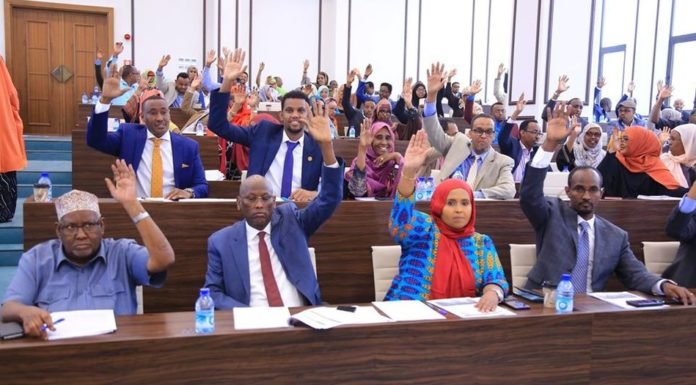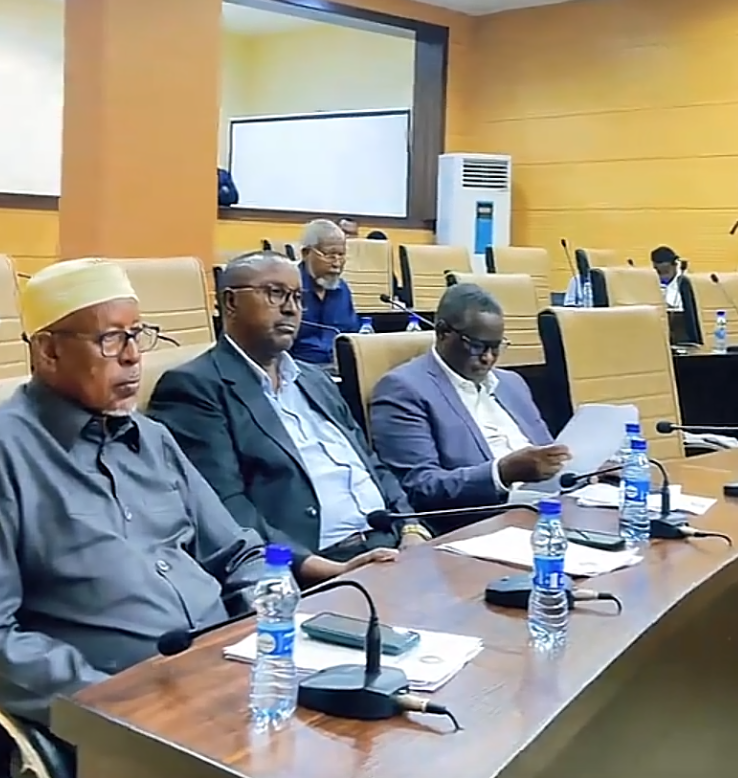
MOGADISHU — Somalia’s Upper House of Parliament has approved the Federal Republic of Somalia Mining Bill with an overwhelming majority, with 28 senators voting in favor and two opposing the legislation.
The bill establishes a legal framework for the exploration, extraction, management, and utilization of Somalia’s mineral resources. The legislation replaces the outdated 1984 Mining Code, which had been in place for over four decades. Following the Senate’s approval, the bill will proceed to the next constitutional stages, including presidential assent, to complete the legislative process.
A Framework for Mineral Governance
The Mining Bill is designed to strengthen transparency and accountability in the management of Somalia’s mineral wealth. The legislation sets out provisions for licensing, revenue-sharing between the federal government and federal member states, and mechanisms to curb illegal mining operations.
According to the Ministry of Petroleum and Mineral Resources, the new law represents a “historic day and a major victory for the development of the country’s natural resources.” Minister Tahir Shire Mohamed described the legislation as a “cornerstone” for economic growth, noting that it would help create jobs while protecting the interests of the Somali people.
Somalia is believed to possess significant reserves of iron ore, copper, and gold, but decades of conflict and the absence of clear regulatory frameworks have hindered the development of industrial-scale mining.
Seeking International Investment
The new legislation is part of Somalia’s broader efforts to attract foreign investment in its mining sector. In January 2026, Somalia’s Deputy Minister of Petroleum and Mineral Resources, Abdiwahab Abdi Omar, attended the Arab League Mining Ministers meeting and the Future Minerals Forum in Riyadh, presenting Somalia as a viable destination for mining investment .
The Deputy Minister highlighted the potential of the mining industry to stimulate economic growth and create employment for Somali workers, emphasizing the nation’s untapped mineral wealth and geographic advantage as a hub for international trade. The Federal Government is focusing on a resource management framework that ensures responsible development while safeguarding national interests.
Federalism and Resource Control
The passage of the Mining Bill comes amid ongoing debates over the balance of power between the federal government and federal member states regarding natural resource management. Article 44 of Somalia’s Provisional Constitution requires that natural resource allocation be negotiated and agreed upon between the federal government and federal member states.
In a parallel effort to strengthen its legal framework for managing national resources, Somalia’s parliament has also passed legislation to combat piracy and maritime crime. The legislation introduces tougher penalties for acts of piracy and kidnapping at sea, aiming to safeguard Somalia’s waters and protect international shipping routes.
The federal government has also called for strengthened international cooperation to combat the resurgence of piracy off the coast of Puntland, warning that it will raise the issue at the United Nations Security Council. The government maintains that international partners are welcome to support Somali maritime forces through a national security framework, in coordination with federal member states.
Critical Note
The passage of the Mining Bill represents a significant legislative achievement for Somalia, providing for the first time in decades a comprehensive legal framework for managing the country’s mineral resources. The legislation’s emphasis on transparency, revenue-sharing, and alignment with international standards is a positive step toward ensuring that Somalia’s natural wealth benefits its citizens.
Nevertheless, the gap between legislation and implementation remains wide. Somalia’s mining sector operates in a context of limited federal reach, competing regional authorities, and security challenges that have allowed informal and unregulated extraction to flourish. The new law’s success will depend not only on its provisions but on the government’s ability to enforce them across a fragmented political landscape.
The federal government must also address the concerns of federal member states, which have shown a willingness to pursue their own mineral agreements and may view the centralizing provisions of the Mining Bill with suspicion. Without a credible and equitable revenue-sharing mechanism, the legislation risks becoming another framework that exists on paper but is not enforced where it matters most, at the extraction sites that generate the wealth.