
WASHINGTON — The United States lifted sanctions on Eritrea’s ruling party, military, and key economic entities on Friday, a decision Washington linked directly to its regional interests as the Red Sea assumes heightened strategic importance amid the war with Iran and Houthi advances in Yemen .
The Treasury Department’s Office of Foreign Assets Control removed sanctions on the People’s Front for Democracy and Justice, the Eritrean Defense Force, the Red Sea Trading Corporation, and Hagos Ghebrehiwet, a key financial adviser to President Isaias Afwerki . The sanctions were originally imposed in 2021 under the Biden administration over Eritrea’s role in the Tigray conflict, where Eritrean forces backed Ethiopian federal troops .
Eritrean Information Minister Yemane Gebremeskel welcomed the move, telling the Associated Press that the sanctions were “unwarranted” and caused considerable damage to his country, adding that Asmara welcomed the “gesture and remedial measures” by the Trump administration .
Red Sea Focus Drives Strategic Recalculation
The State Department said President Trump chose not to renew the sanctions “to advance US regional interests” . Analysts linked the decision to Eritrea’s location on the Red Sea, where its more than 1,000 kilometers of coastline sit opposite Saudi Arabia and near the Bab el-Mandeb Strait .
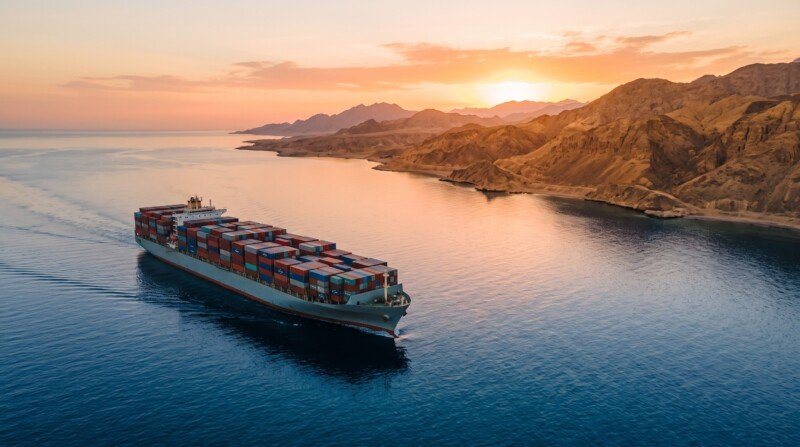
The Houthis completed their takeover of Yemen’s entire Red Sea coast in mid-September, seizing the Bab el-Mandeb Strait and three strategic islands in a lightning offensive that has killed more than 500 people and displaced 46,000 others . The group’s advance has cemented Iranian leverage over a second major shipping corridor after the Strait of Hormuz, threatening Saudi oil exports and global commerce .
Murithi Mutiga, program director for Africa at the International Crisis Group, told Reuters that the closure of the Strait of Hormuz meant the Red Sea would become “an even more contested area,” and that the US move could signal a bigger American interest in the region .
Implications for Somalia and the Horn of Africa
For Somalia, the US opening to Eritrea carries significant strategic implications. Eritrea is a recognized state with a long Red Sea coastline, offering Washington a route to enhanced maritime access without the diplomatic complications of engaging with breakaway Somaliland . The Eritrean port of Assab sits directly across from Yemen and was previously used by the UAE as a military base during the Yemen war .
Somalia’s federal government has consistently argued that outside powers can pursue Red Sea security interests without infringing on Somali sovereignty. Mogadishu is backed by Saudi Arabia, Egypt, and Türkiye, all of which have reaffirmed support for Somalia’s territorial integrity . Egypt has taken a particularly firm line against recognition of Somaliland, while Turkish President Erdogan stated in February that Israel’s recognition of Somaliland would benefit neither Somaliland nor the Horn of Africa .
Eritrea has historically maintained a complicated relationship with Somalia, alternating between estrangement and close cooperation depending on political dynamics in the Horn of Africa, and has expanded its engagement in Somalia, including military training programs for Somali forces.
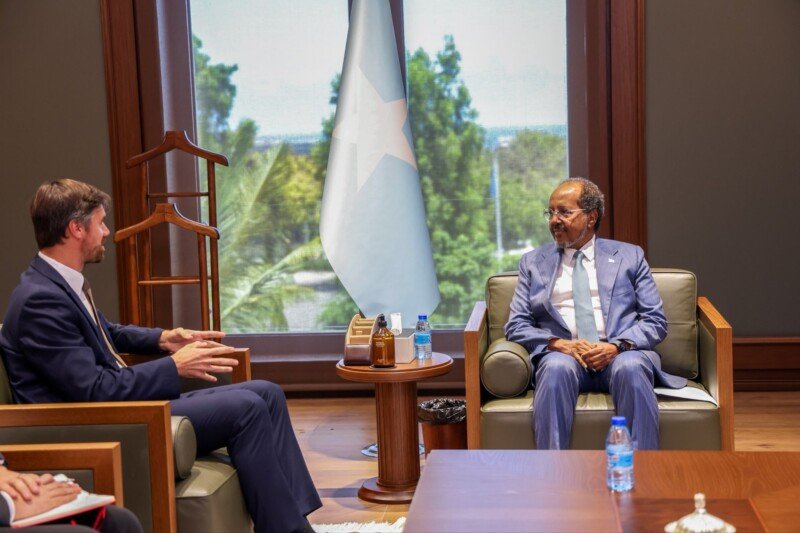
President Hassan Sheikh Mohamud has made multiple official visits to Eritrea since assuming office, underscoring the robust partnership between the two countries, which includes Eritrea’s ongoing support in training the Somali National Army.
For Ethiopia, the US move sends a pointed message. Regional diplomats told Reuters that Washington does not support any forceful quest for sea access by landlocked Ethiopia, which has publicly declared its right to Red Sea access . The US government note said Washington had “repeatedly communicated to Ethiopia that we oppose any attempt to acquire sea access by force” .
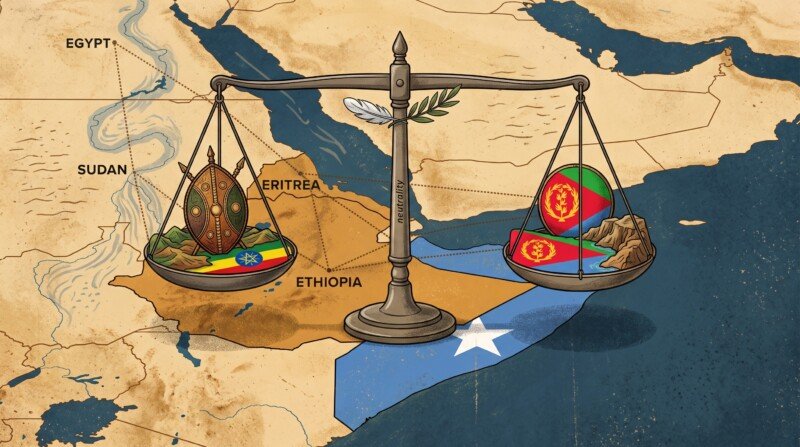
Eritrea repositioned itself as an increasingly divergent regional actor throughout 2025, expanding its military deployments along the Zalambessa and Assab corridors, accusing Ethiopia of pursuing expansionist policies, and deepening coordination with Egypt and Sudan through a series of high-level engagements, including President Isaias Afwerki’s visit to Cairo in October 2025.
Eritrea’s withdrawal from IGAD by the end of 2025 formalized its disengagement from regional multilateralism, while the trilateral coordination mechanism launched in January with Egypt and Somalia provided a balancing framework against Ethiopian influence.
Somaliland’s Declining Strategic Value
The US pivot toward Eritrea comes at the expense of Somaliland, which has spent months pitching Berbera as an alternative Red Sea partner for Washington. A report by the Wall Street Journal, stated that Trump administration was exploring a reset with Eritrea, dealing a fresh strategic blow to Hargeisa’s argument that it is the most useful new American partner on the Red Sea .
Somaliland’s diplomacy has rested heavily on geography, arguing that Berbera’s port and its position near the Gulf of Aden make it a natural alternative to Djibouti. But Eritrea offers Washington strategic coastline without forcing a decision on Somaliland’s contested status .
Political analysts noted that the Eritrea opening reflects the failure of the Israel-led campaign to push for US recognition of Somaliland. They argued that using Eritrea’s Assab port is a “cheaper and more logical option” for the US, as Eritrea is already a recognized state and its port sits at an excellent position near Bab el-Mandeb .
IGAD’s Institutional Challenges
The ministerial session came amid multiple crises in the region, including the ongoing war in Sudan, the fragile peace process in South Sudan, and tensions over Somalia’s federal member state elections. The session also followed Eritrea’s withdrawal from the bloc and Somalia’s ratification of the revised IGAD Treaty in January 2026.
The effectiveness of IGAD as a regional body remains constrained by internal divisions and limited capacity. The withdrawal of Eritrea, the persistent conflicts in Sudan and South Sudan, and the divergent interests of member states make consensus difficult to achieve.
IGAD has previously convened extraordinary summits to address diplomatic tensions between Somalia and Ethiopia, urging the two nations to de-escalate tensions and embrace constructive dialogue.
Critical Note
The US decision to lift sanctions on Eritrea represents a stark recalibration of American priorities in the Horn of Africa, in which strategic geography has clearly overridden the human rights concerns that justified the original sanctions in 2021. Eritrea remains one of the world’s most repressive states, with no elections since independence in 1993, yet Washington has determined that its Red Sea coastline is too valuable to leave isolated .
For Somalia, the move reinforces Mogadishu’s core argument: that external powers can secure Red Sea interests through recognized states without fragmenting Somalia’s sovereignty. The Eritrea opening effectively bypasses the Somaliland recognition debate, offering Washington a lower-cost alternative that does not trigger legal disputes or regional backlash . This development significantly weakens Hargeisa’s bargaining position, as its primary selling point, unique geographic utility, is now being met through a different channel.
The decision also carries implications for the broader regional balance. By signaling opposition to Ethiopia’s forceful acquisition of sea access, Washington is attempting to stabilize a volatile triangle involving Ethiopia, Eritrea, and Somalia. However, the durability of this strategy remains uncertain. Eritrea’s internal governance and its alignment with Egypt and Saudi Arabia in Sudan’s civil war may complicate deeper US engagement, while Ethiopia’s growing ties with the UAE and Israel position it within a competing coalition .
Recommended Reading On ftlsomalia.com
- IGAD Foreign Ministers Hold Special Meeting with Djibouti President on Regional Crises
- Shirdon, Ex-Mogadishu Mayor Visit Eritrea for Talks with Afwerki
- Somali President Travels to Eritrea on Official Visit
- IGAD Urges Somalia and Ethiopia to Engage in Constructive Dialogue
- SoDMA Chief Joins IGAD High-Level Forum on El Niño Preparedness