
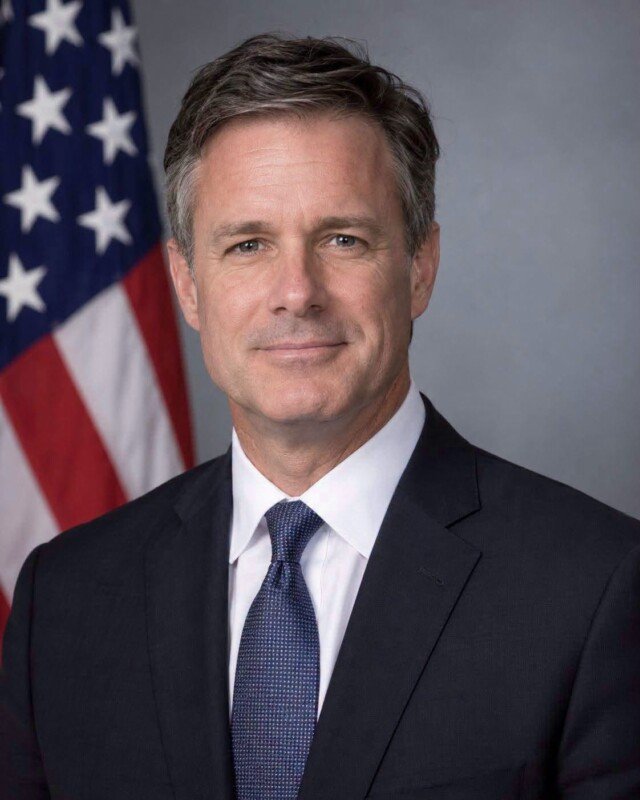
WASHINGTON — President Donald Trump has nominated career diplomat Devin Kennington to serve as the next United States Ambassador to Somalia, moving to fill a post that has remained vacant since the recall of former Ambassador Richard H. Riley in December 2025.
Kennington, of California, was named Ambassador Extraordinary and Plenipotentiary to the Federal Republic of Somalia as part of a slate of diplomatic appointments sent to the U.S. Senate. His nomination requires Senate confirmation before he can formally assume the post in Mogadishu.
Since Riley’s departure, the U.S. Embassy in Mogadishu has been led by chargé d’affaires Justin Davis, who concluded his assignment in September 2026. Ruth Anne Stevens-Klitz, who arrived as deputy chief of mission in August, now holds the mission as the senior American diplomat until the Senate acts on Kennington’s nomination.
A Career Diplomat with African Affairs Experience
Kennington joined the U.S. Foreign Service in 2011 and has held several diplomatic posts, including vice consul in São Paulo, Brazil, consular affairs chief at the U.S. Embassy in Djibouti, and chief of American Citizen Services in Hong Kong.
Most recently, he served as chief of the Great Lakes Unit and senior Democratic Republic of Congo desk officer, focusing on Central Africa at the U.S. Department of State. His portfolio covered U.S. policy toward the Democratic Republic of Congo, Rwanda, and Burundi.
While Kennington’s previous assignments have given him experience in Africa and the Horn of Africa, no previous Somalia-specific diplomatic role has been publicly identified. The White House did not release a detailed biography alongside the nomination, and no date has been set for a Senate Foreign Relations Committee hearing.
The Recall of Ambassador Riley
The ambassadorial post has been vacant since December 2025, when the Trump administration recalled approximately 30 career diplomats from ambassadorial and other senior embassy posts as part of a broader effort to align overseas missions with the president’s “America First” priorities.
Riley, a career diplomat who assumed office in May 2024, was among those recalled. His tenure focused on strengthening bilateral relations in security, governance, and development, and reinforcing U.S. commitment to stability in the Horn of Africa. Africa was the region most heavily impacted by the recalls, with ambassadors recalled from 13 countries, including Somalia, Nigeria, Niger, Rwanda, Senegal, and Uganda.
The State Department defended the decision, stressing that ambassadors serve as the personal representatives of the U.S. president and that the president has the authority to appoint envoys who fully support his foreign policy priorities. The recall raised concerns among some U.S. lawmakers and organizations representing career diplomats, who warned that abrupt changes could strain Washington’s relations with affected countries at a time of heightened geopolitical and security challenges.
The Diplomatic Context in Mogadishu
Following Riley’s departure, Justin Davis took over as chargé d’affaires, becoming Washington’s most senior diplomat in Somalia while the ambassadorial post remained vacant. Davis led the U.S. mission for nearly eight months before concluding his assignment in September.
In a September 10 statement, the U.S. Embassy in Mogadishu thanked Davis for his leadership in advancing U.S. counterterrorism, law enforcement, and immigration priorities. The embassy simultaneously announced that Stevens-Klitz would serve as the incoming chargé d’affaires, saying she would continue to advance the Trump administration’s priorities and strengthen U.S.-Somalia relations.
During the eight-month vacancy, Washington conducted its heaviest Somali business elsewhere, with Africa Command engaging in Bosaso and U.S. special operations meeting with Jubaland President Ahmed Madobe in Nairobi.
High-Level Somali and Somaliland Delegations in Washington
The nomination comes as two high-level delegations from the Horn of Africa are currently in the United States, adding a significant diplomatic dimension to the timing of Kennington’s appointment.
Somali President Hassan Sheikh Mohamud is expected to travel to the United States to attend the 81st session of the United Nations General Assembly in New York [citation:1]. The session formally opened on September 8, with the high-level general debate scheduled to run from September 22 to September 28. President Mohamud is expected to use the gathering to press for greater international support for Somalia’s security, humanitarian needs, and economic development, and to highlight Somalia’s campaign against Al-Shabaab.
Somaliland President Abdirahman Mohamed Abdullahi (Irro) arrived in Washington on September 5 for his first official working visit to the United States since taking office. Irro’s visit is aimed at strengthening diplomatic relations, expanding cooperation in security and economic development, attracting foreign investment, and advancing Somaliland’s campaign for broader international recognition.
Irro is accompanied by Somaliland’s first lady and senior government officials, including the ministers of Foreign Affairs and International Cooperation, Aviation and Airport Development, and Defense, as well as senior advisers on economic and foreign affairs. His delegation was welcomed at Washington Dulles International Airport by members of the Somaliland community and supporters.
According to reports, Irro was scheduled to meet with Senator Ted Cruz, chairman of the Senate Subcommittee on Africa, and Representative Brian Mast, chairman of the House Foreign Affairs Committee, as well as U.S. Assistant Secretary of State for African Affairs Frank Garcia and officials at the Department of Defense.
Irro acknowledged that discussions with Washington had produced no commitment on recognition, stating that there are ongoing talks but no American promises regarding formal recognition. A local source informed Politico that there is “no change” in American policy towards Somaliland.
Security Cooperation and Political Tensions
The nomination also lands as the Trump administration has signaled plans to cut funding for the United Nations Support Office in Somalia (UNSOS) and for African Union peacekeepers deployed against Al-Shabaab under the AUSSOM mission. This backdrop is likely to shape the confirmation debate and, if Kennington is seated, his early agenda in Mogadishu.
The appointment comes during a period of heightened political tensions in Somalia, particularly over the country’s electoral process and the future of its democratic transition. The federal government and opposition political groups have increasingly disagreed over the framework and timing of upcoming elections, with disputes also involving the role of federal member states. Kennington is therefore expected to take up the post at a particularly sensitive moment, and his nomination will be closely watched for indications of how Washington intends to engage with Somalia’s competing political actors.
Critical Note
The nomination of Devin Kennington to serve as U.S. ambassador to Somalia ends an eight-month period in which Washington’s most senior diplomat in Mogadishu lacked Senate confirmation. The vacancy coincided with a period of significant political tension in Somalia, including disputes over the electoral framework and federal-state relations. A confirmed ambassador would provide the United States with a senior diplomatic representative capable of engaging directly with Somali political actors at a critical juncture.
Kennington’s background in African affairs, particularly his experience with the Great Lakes region and the Democratic Republic of Congo, provides relevant preparation for the complexities of Somali politics. His earlier consular posting in Djibouti offers some familiarity with the Horn of Africa. However, his lack of a public Somalia-specific portfolio means his understanding of the country’s intricate clan dynamics, federalism disputes, and security architecture remains untested. The Senate confirmation process, including any public hearing, would offer the first opportunity to assess his grasp of these issues.
The broader context of U.S. policy toward Somalia adds further complexity. The Trump administration’s recalls of career diplomats, its stated intention to cut funding for UNSOS and AUSSOM, and its engagement with regional administrations in Bosaso and Hargeisa suggest a recalibration of Washington’s approach. The simultaneous presence of both Somali and Somaliland delegations in Washington, each pursuing distinct diplomatic agendas, underscores the competing pressures shaping U.S. engagement in the Horn of Africa. Whether Kennington, if confirmed, can effectively coordinate U.S. policy amid these competing priorities and a shrinking resource envelope will be a significant challenge.