MOGADISHU — The World Food Programme (WFP) has warned that flash floods already affecting Somalia could be further intensified by the anticipated El Niño phenomenon, deepening humanitarian needs across vulnerable communities and demanding immediate action to protect lives.
In a statement posted on X, WFP Somalia said: “As flash floods continue to ravage through Somalia, the anticipated El Niño phenomenon could further intensify humanitarian needs in vulnerable communities. We must act now to reduce the impact and protect lives.”
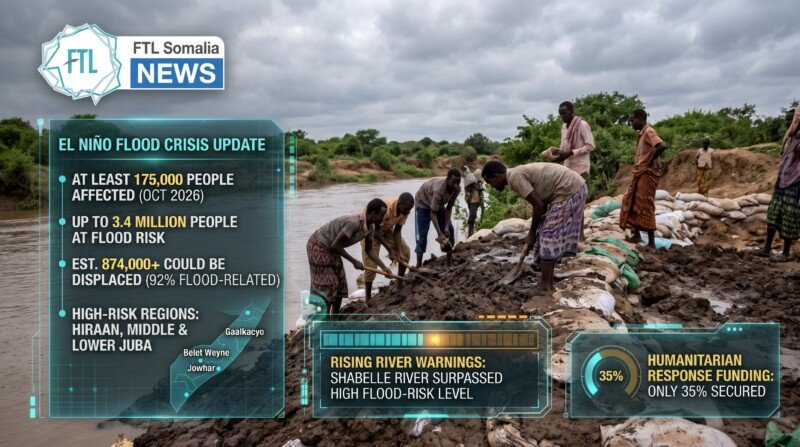
The warning comes as the Deyr rainy season begins under conditions that climate experts have described as a Super El Niño, with forecasts pointing to exceptionally heavy rainfall through December. The Somali Disaster Management Agency (SoDMA) has placed 29 districts across 14 regions on high alert for riverine and flash flooding.
A Crisis Already Underway
The floods have already caused significant displacement and damage. As reported in FTL Somalia’s coverage of the Hudur floods, heavy rainfall in the South West State displaced 37 households. In Xarardheere, local authorities and the Somali National Army delivered emergency relief to affected communities, as detailed in FTL Somalia’s coverage of the relief efforts.
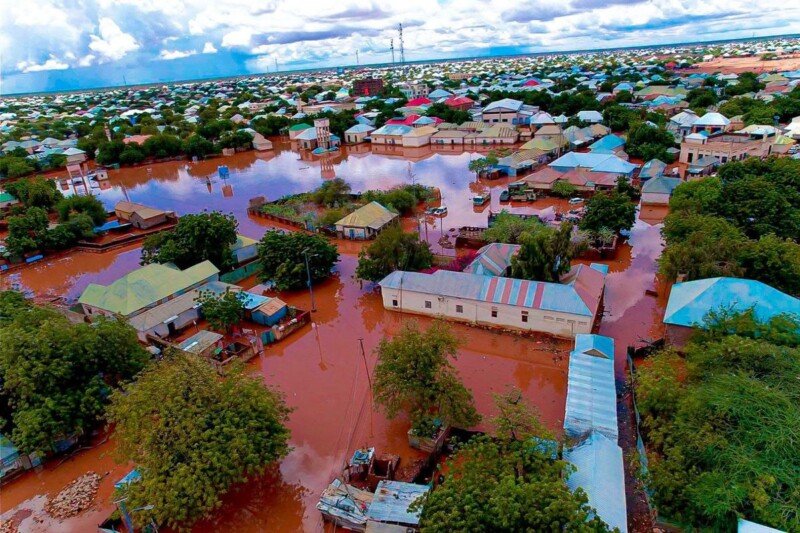
In Mogadishu, heavy rains submerged roads, disrupting schools, businesses and transportation. The Shabelle River at Jowhar remains above its high flood-risk level and is likely to reach bankfull this week, according to the FAO-SWALIM forecast.
A Hunger Crisis Compounded by Climate Shock
The flooding arrives at a moment when Somalia’s humanitarian situation is already dire. According to the Integrated Food Security Phase Classification (IPC) analysis, 5.4 million people are projected to face crisis levels of hunger or worse between October and December 2026, including 1.5 million at emergency levels. Nearly 1.92 million under-five children will require treatment for acute malnutrition, including 433,000 with severe acute malnutrition.
As reported in FTL Somalia’s coverage of the famine risk, about 26,000 internally displaced people in Baidoa could face catastrophic levels of hunger, with a risk of famine under a worst-case scenario involving severe flooding and reduced humanitarian assistance.
WFP has warned that its ability to respond is severely constrained. The agency can currently reach only a fraction of those in need, compared with more than 4 million people per month during the 2022-2023 drought response. Funding for nutrition treatment was expected to be depleted by the end of September.
Preparedness Efforts and the Funding Gap
The Somali government and its partners have taken preparatory steps. SoDMA has signed a two-year cooperation agreement with WFP to strengthen disaster preparedness, early warning systems and anticipatory action, as reported in FTL Somalia’s coverage of the agreement.
However, the humanitarian response plan for 2026 is only 15.2 percent funded. Pre-positioned financing for flood preparedness stands at approximately $17 million against a credible worst-case scenario in the range of the 2023 floods, which cost $176 million in damages and losses alone.
Critical Note
WFP’s warning is not a new alarm; it is the latest in a series of increasingly urgent appeals that have gone largely unheeded. The agency has been consistent in its messaging: the floods are coming, the needs are enormous, and the resources are insufficient.
The flash floods that have already affected Hudur and Xarardheere are a preview of what is to come. The Shabelle River is nearing bankfull at Jowhar. The forecasts are precise and the warnings have been issued for months. What is missing is the funding to act at scale before the situation deteriorates further.
For Somalia, the convergence of conflict, climate shock and funding cuts is creating the conditions for a catastrophe that the international community has been warned about repeatedly. The WFP’s call to “act now” is not rhetorical. The window for anticipatory action is narrowing, and the cost of inaction will be measured in lives.
Share your story. FTL Somalia is continues to cover flood preparedness and response across Somalia. If you have information or insights to share, contact us at info@ftlsomalia.com. Your identity will be protected.
Recommended Reading On ftlsomalia.com
- Flash Floods in Hudur Affect 37 Displaced Households as El Niño Rains Begin
- Harardhere Authorities and SNA Deliver Emergency Relief to Flood-Affected Communities
- SoDMA and WFP Sign Two-Year Deal to Strengthen Somalia’s Disaster Preparedness
- UN: Baidoa Conflict Risks Famine Among Displaced as Aid Funding Dwindles