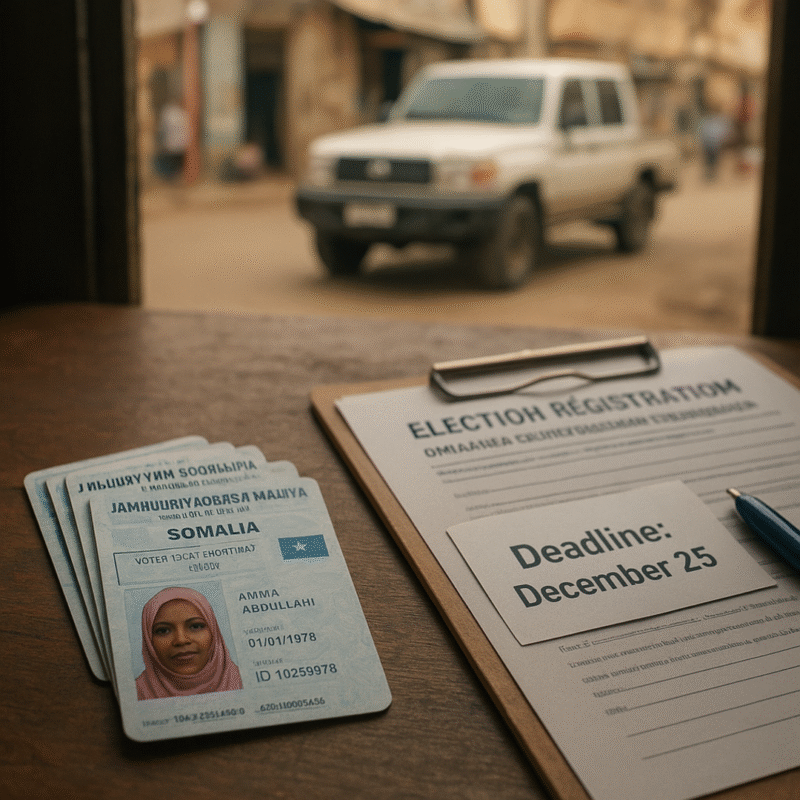


Mogadishu, Somalia – Somalia’s opposition and federal member states of Jubbaland and Puntland are considering establishing a parallel government if President Hassan Sheikh Mohamud proceeds with what they describe as a “unilateral” election process.
The warning was issued by opposition MP Dahir Amin Jesow ahead of a high-level meeting in the southern port city of Kismayo, where opposition leaders and the presidents of Jubbaland and Puntland are due to gather under the banner of the Somali Future Council.
Speaking to reporters, Jesow said the first phase of the Kismayo talks would involve members of the council and would offer President Mohamud what he described as a final opportunity to change course.
However, Jesow warned that if the President continues to pursue plans for a universal suffrage vote – which the opposition argues cannot be organised within the roughly five months remaining in his term – the council would move to a second phase of consultations.
He said this would bring together civil society groups, politicians from across the political spectrum and presidential contenders, with the aim of forming a parallel government.
The Somali Future Council, an alliance of opposition figures and regional leaders, has previously said it would not recognise any election conducted unilaterally by the federal government in Mogadishu. It has also rejected constitutional changes that it says lack broad political agreement.
In addition, the council has warned it would oppose any extension of President Mohamud’s term should a consensus-based election fail to take place before his mandate expires.
The presidency has yet to respond publicly to the latest comments.
President Mohamud’s administration has argued that moving towards universal suffrage is essential for strengthening Somalia’s democratic institutions after decades of indirect, clan-based voting.
Somalia has a long history of political disputes over electoral processes, with disagreements between the federal government and regional states frequently threatening to destabilise fragile political arrangements in the Horn of Africa nation.