

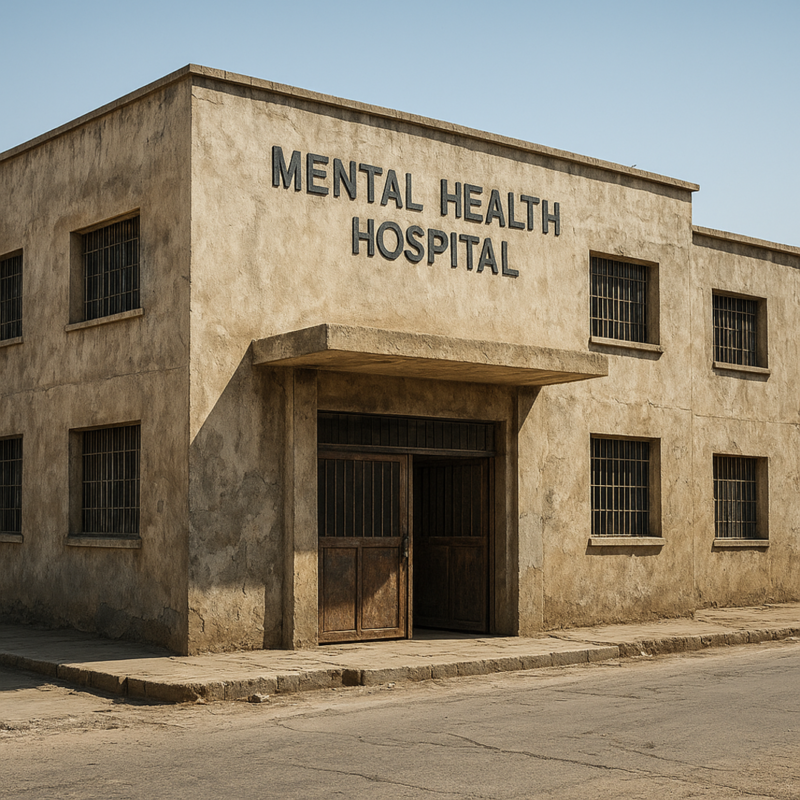
In a nation working to rebuild amid ongoing difficulties, Dr. Abdirahman Ali Awali, commonly called Dr. Habeeb, has risen as a key leader in mental health over the past two decades. This year celebrates the 20th anniversary of founding his organization, Habeeb Mental Health and Rehabilitation, on November 24, 2005.
Over time, this small start has expanded into one of East Africa’s biggest mental health facilities, offering expert and caring treatment to thousands of previously neglected patients who were shackled or homeless.
A Humanitarian Journey Starting on the Streets
Dr. Habeeb remembers the event that sparked his work: “The pivotal moment arrived when I witnessed young girls with mental disorders facing abuse on the streets. Remaining quiet seemed criminal. Creating a dedicated center turned into a moral obligation beyond a career goal.”
From that, he launched the first postwar mental health facility, now an organization running four primary centers in Mogadishu and nearby areas, caring for around 600 residents aged 17 to 33.
Rescuing a Homeless Elderly Man
In April 2025, Dr. Habeeb gained attention for saving an elderly man with mental illness roaming Mogadishu’s streets.
“He was isolated and disoriented… I could not abandon him. We brought him right away to Habeeb Center to start his recovery,” he stated.
This incident supported a broader effort to combat myths surrounding mental illness.
“A person with mental illness requires a physician, medicine, and empathy, not restraints,” Dr. Habeeb noted.
Challenges and Determination
Even with scarce funds, the group persists in its efforts.
“We care for 600 residents, but food sometimes lasts for just 100. Yet we never shut down. Abandoning any patient on the streets would violate our ethical standards,” he described.
345,000 Cases: A Stark Fact
At the World Mental Health Day event on October 10, 2025, Dr. Habeeb disclosed that roughly 345,000 individuals in Somalia deal with diverse mental health issues, many shackled or untreated.
“The shortage of expert training worsens the issue and obstructs recovery work,” he remarked.
Preparing Future Experts
On July 16, 2025, the group graduated 54 new mental health workers following a three-month diploma course partnered with the Ministry of Health and Social Welfare.
“The main obstacle is not the illness alone, but the absence of skilled staff. We are training tomorrow’s mental health experts,” Dr. Habeeb stressed.
Addado: Somalia’s First Modern Mental Hospital
In May 2024, the group opened Addado’s inaugural specialized mental health hospital, treating about 900 patients from Somalia, Puntland, Somaliland, and Ethiopia’s Somali Region. This elevated the organization from a basic volunteer effort to a nationwide health provider.
Stories Driving the Mission
Besides the elderly man, the group offered urgent aid on April 13, 2025, to a young man found aimlessly on the streets.
“Such accounts motivate us. We give back to those who lost their way the chance for a respectful existence,” Dr. Habeeb expressed.
Building Awareness
Dr. Habeeb has initiated extensive education drives in schools, universities, and mosques to break down false beliefs about mental illness.
“Numerous people still link mental illness to spirits or disgrace. Our goal is to present it as a manageable health issue,” he affirmed.
Global Acknowledgment
Dr. Habeeb earned a nomination for the Somali Hero Awards, a top honor for exceptional social and health impacts. The event is set for next month in the United States, drawing attention from Somalis worldwide and beyond.
Twenty Years On
Looking back on two decades, Dr. Habeeb reflected: “Two decades blending hardship and optimism… we have rescued thousands, yet much remains. I envision mental health fully woven into Somalia’s health framework, not as an extra or rarity.”
Conclusion
Over twenty years, Habeeb Mental Health and Rehabilitation has solidified as a vital part of Somalia’s health landscape, a source of light for those once overlooked. Dr. Habeeb proves one determined, compassionate person can reshape a country’s mental health perspective. Mental health is a fundamental right, not a taboo.