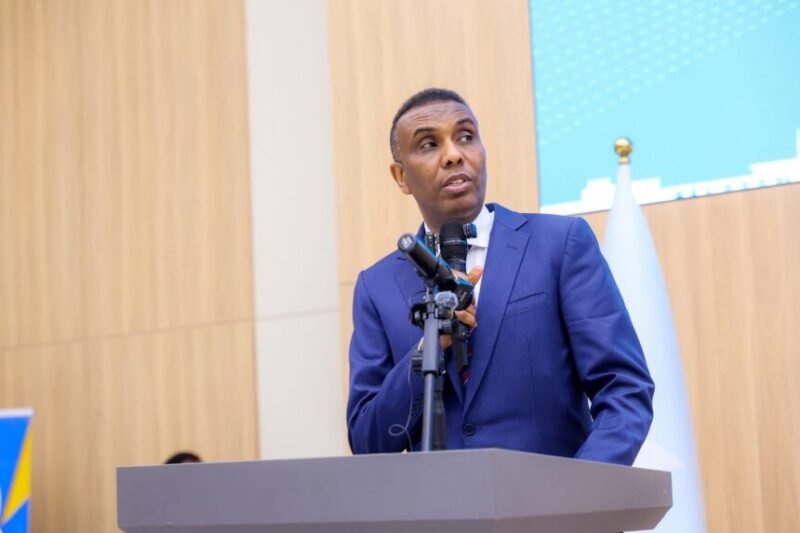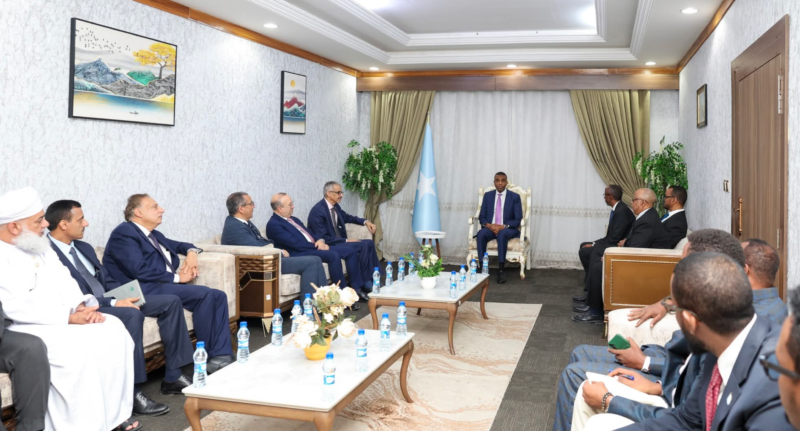

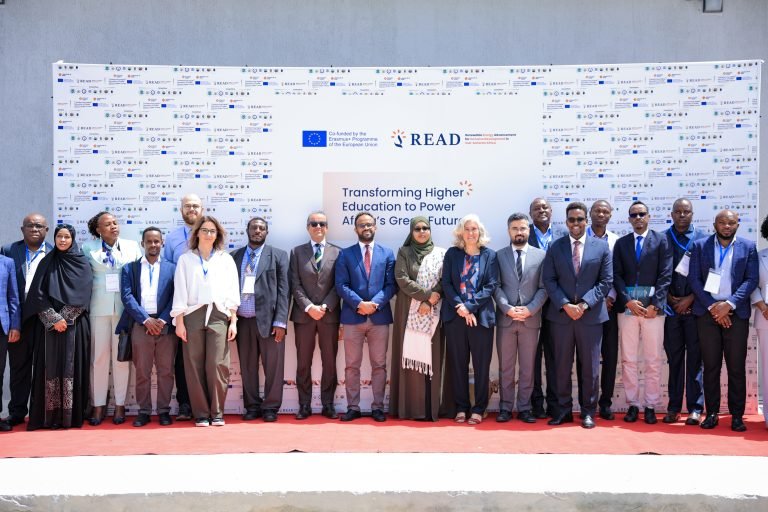
Mogadishu – A new higher education program supported by the European Union and focused on enhancing renewable energy expertise and promoting climate-resilient development across Sub-Saharan Africa was formally introduced on Monday in Somalia’s capital city.
The Renewable Energy Advancement for Inclusive Development Sub-Saharan Africa (READ) Project, jointly financed through the EU’s Erasmus+ Capacity Building in Higher Education program, unites universities from both continents to update renewable energy instruction, advance practical research, and strengthen institutional capabilities in areas vulnerable to climate change.
The commencement occurred during a high-level introductory meeting held from Jan. 12 to 14, with participation from ambassadors representing the European Union, Italy, and Türkiye, along with senior figures from Somalia’s Federal Government, specifically ministers overseeing climate change, energy, education, and cultural affairs.
“Reliable and sustainable energy access represents one of the most significant development challenges of our era,” stated an EU representative at the gathering. “Through initiatives such as READ, the European Union is dedicating resources to education, skill development, and collaborative partnerships that will enable young people and institutions to lead the green transformation.”
Connecting Expertise and Energy Needs
Throughout much of Sub-Saharan Africa, restricted energy availability, obsolete academic programs, and insufficient connections between universities and industry persistently hinder economic advancement and climate adaptation measures. Project collaborators indicate READ is crafted to specifically tackle these issues by synchronizing higher education with rapidly evolving renewable energy sectors.
“Educational institutions must play a central role in the energy transformation,” declared Somalia’s Minister of Energy and Water Resources. “This initiative will assist in guaranteeing that our graduates possess the competencies and hands-on understanding necessary to support national energy objectives and sustainable progress.”
READ concentrates on updating educational curricula, preparing teaching staff, conducting practical and requirement-driven research, and fostering improved cooperation among universities, governmental bodies, and commercial enterprises.
Academic Collaboration Between Africa and Europe
The initiative is guided by SIMAD University in Somalia and carried out in cooperation with universities from Italy, Türkiye, Tanzania, and Malawi, in addition to various Somali educational establishments. Organizers note that the partnership aims to facilitate ongoing knowledge sharing and innovation originating from local contexts.
“This collaboration demonstrates a mutual dedication from Africa and Europe to invest in human capital and institutional development,” expressed a representative from one of the European partner universities. “Through joint efforts, we can create approaches that combine global insights with local applicability.”
Anticipated Future Outcomes
Throughout its execution phase, READ is projected to elevate the quality and significance of renewable energy instruction, fortify institutional research capabilities and digital education infrastructure, and increase employment prospects for young people within the expanding green economy. The initiative also intends to bolster national energy transition plans and climate resilience initiatives across all participating nations.
“READ transcends being merely an educational endeavor; it represents a strategic allocation of resources toward human capital, institutional growth, and the sustainable development prospects of our region,” stated Dr. Abdikarim Mohaidin Ahmed, Rector of SIMAD University and the project’s principal coordinator. “By enhancing renewable energy education now, we are positioning African universities and emerging generations to guide tomorrow’s energy transformation with assurance, capability, and meaningful influence.”
Event organizers emphasized that the initiative places considerable importance on inclusivity, adaptability, and environmental sustainability, ensuring that renewable energy education delivers concrete advantages for communities and aligns with national advancement targets.