

Al-Miskaad, Puntland – Abdulkadir Mumin, the emir of Islamic State in Somalia, is confirmed trapped and hiding in the Al-Miskaad mountain range amid a major joint offensive by Puntland Darwish forces and U.S. Special Operations Command reaching a critical stage.
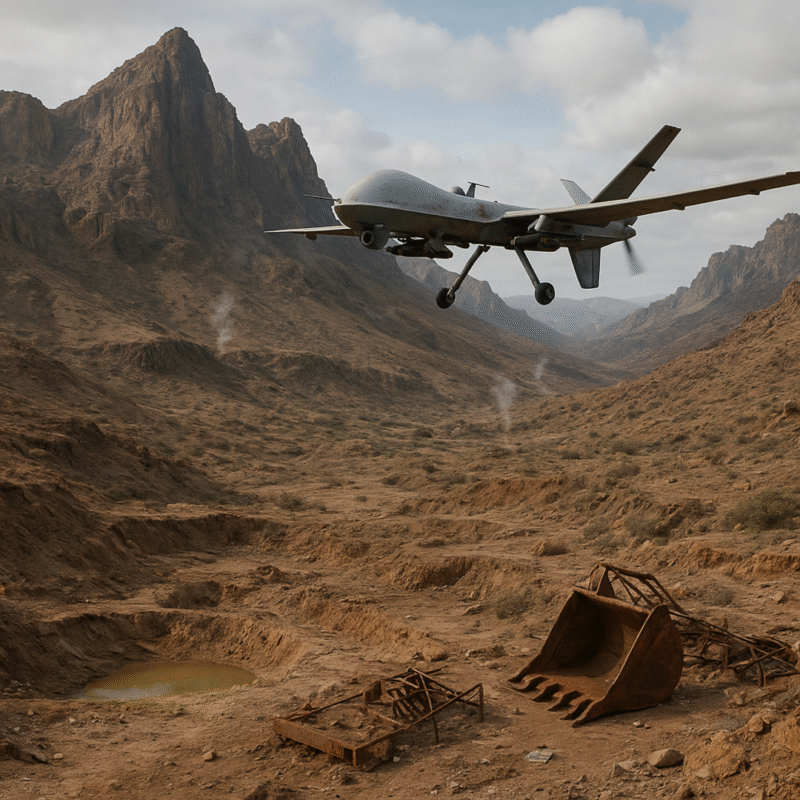
The effort intensified on November 25 through a large-scale ground-air attack with more than 200 U.S. special forces personnel striking ISIS strongholds in the Baalade hills. MQ-9 Reaper drone strikes targeted leadership sites, killing a top ISIS commander and about 15 foreign fighters from Syria, Turkiye, and Ethiopia.
Puntland forces concurrently shut down an illegal gold mining site, which is a key funding source for the group and eliminated linked weapons stockpiles. This undermines the faction’s financial base.
Intelligence indicates around 200 fighters are now surrounded, suffering acute shortages of food, ammunition, and medical aid. Their dependence on scavenged food signals a major logistical breakdown. Officials state Mumin is dodging capture by shifting between mountain caves, but his movement and leadership are heavily impaired.
Mumin, once an imam in the United Kingdom known for radical sermons, embodies the global, ideology-driven ISIS danger in Somalia, setting it apart from the more localized Al-Shabaab.
A high-ranking Puntland Maritime Police Force commander stated the group is in its final phase, with actions persisting to block any escape for Mumin.
This mission represents a notable tactical surge and deliberate strategy. By deploying special forces for ongoing ground support with Puntland units, the U.S. emphasizes dismantling the ISIS branch ahead of the larger Al-Shabaab.
This implies a vanguard threat view: despite its size, ISS poses a sharper global risk via ties to ISIS central and foreign fighter appeal, endangering Western security more acutely. It also highlights close ties with Puntland, leveraging its stability and extending its reach, potentially reshaping Somalia’s federal dynamics.
The Economics of Insurgency Under Siege
Disrupting the gold mining is vital operationally. ISIS branches worldwide depend on resource extraction like oil in Syria or minerals in Africa. Cutting this in a remote mountain area follows proven disruption tactics. Continued pressure could compel surrenders, starvation, or desperate flights into enemy lands.
The Leadership Question and Whack-a-Mole Dynamics
Eliminating or capturing Mumin would deliver a strong symbolic and practical blow. Yet past efforts reveal decapitation risks spawning splits or harder-line replacements. Success demands concurrent dismantling of mid-level leaders, recruitment, and finances to halt recovery.
The Al-Shabaab Factor
Heavy emphasis on ISS risks opening gaps for Al-Shabaab. With U.S. and Puntland assets fixed in Bari, Al-Shabaab might expand control, extract funds, or strike elsewhere. As rivals, weakening one could bolster the other absent reinforcements from Somali National Army and African Union Transition Mission in Somalia forces.
Long-Term Implications for Somalia
A victory would remove a disruptive third player from the conflict, elevate Puntland’s standing in talks with Mogadishu on resources and politics, and gauge U.S. commitment. Risks include a hit-and-withdraw approach; enduring security needs reliable local presence to bar returns, relying on Puntland’s strength and resolve.
Bottom Line
Beyond a simple raid, this is a targeted drive to eradicate a terrorist group. Outcome rests on prolonged cooperation, smart prevention of rebounds, and handling wider conflict ripples. Control of Al-Miskaad could decide ISIS endurance in the Horn of Africa.