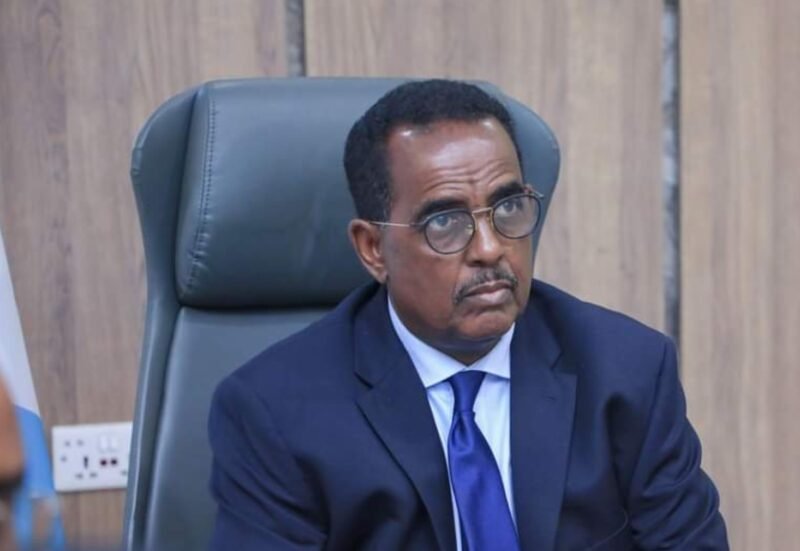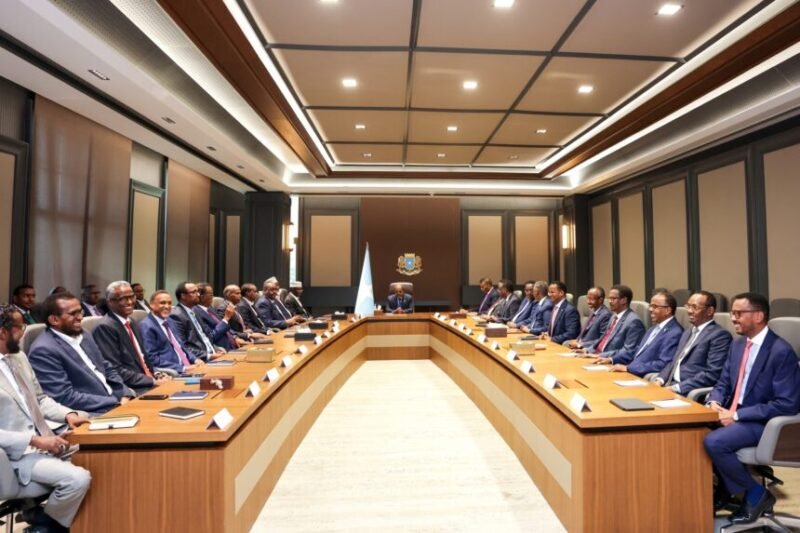

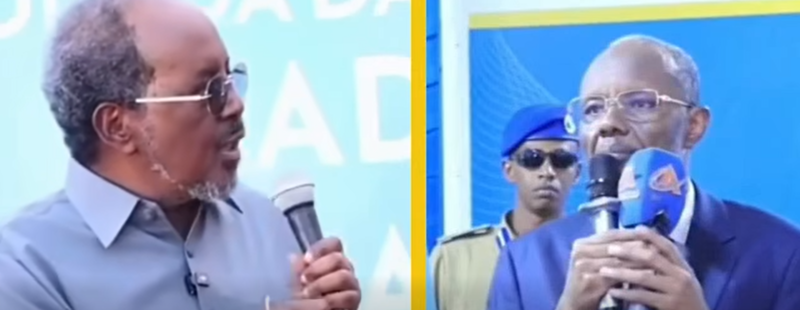
BAIDOA — In a move that has sharply defined Somalia’s current political fault lines, Abdiaziz Hassan Mohamed (Laftagareen) has been re-elected as the President of South West State amid a dangerous military buildup by the federal government.
Re-election and Opposition Backing
According to the regional electoral commission, Laftagareen secured his re-election today after receiving a decisive 66 votes from the administration’s lawmakers. The victory arrives at a critical juncture, as his administration remains locked in a severe political confrontation with the Federal Government of Somalia in Mogadishu.
The election results were immediately welcomed by prominent members of the Somali opposition. Former President Mohamed Abdullahi Mohamed (Farmaajo) issued a press release congratulating Laftagareen, urging him to accelerate regional reconciliation and the liberation of terrorist-held areas.
Similarly, former President Sheikh Sharif Sheikh Ahmed and former Prime Minister Hassan Ali Khaire praised the swift electoral process. “The SWS election has eliminated the political uncertainty of the administration’s institutions,” Sheikh Sharif stated. Both leaders, alongside former NISA director Fahad Yasin and lawmaker Abdirahman Abdishakur Warsame, utilized the occasion to urge Galmudug and Hirshabelle states to urgently hold their own state-level elections to prevent widespread administrative vacuums.
Federal Military Mobilization
The regional election occurs against the backdrop of a rapidly deteriorating security environment. The federal administration, led by a president approaching the end of his term, appears increasingly inclined toward direct confrontation. What began as a political disagreement toward the end of Ramadan has quickly expanded into a coordinated federal military buildup.
Recent intelligence indicates that federal forces have been aggressively stationed in Buurhakaba, a town approximately 60-70 kilometers from Baidoa. Security sources confirm that these units originated from the Middle Shabelle region and Mogadishu. The troops reportedly moved along the Afgooye-Buurhakaba route and briefly engaged Al-Shabaab fighters in the Yaqbiriweyne area overnight.
In response to what they view as an impending offensive, South West authorities have deployed substantial defensive forces around the outskirts of Baidoa, signaling preparations for a potential clash.
International Dimensions and Regional Risks
The escalating crisis has drawn in complex international dynamics. Diplomatic sources suggest that the federal troops involved in the current mobilization may be equipped with weapons recently supplied by Egypt, with reports also indicating the presence of Egyptian military advisers assisting with tactical coordination.
Meanwhile, the role of Ethiopian peacekeeping forces—who have maintained a constant presence in Baidoa and other key areas for over 14 years—remains a critical variable. Previous federal efforts to convince Addis Ababa to permit Villa Somalia to militarily challenge Laftagareen within Baidoa have proven entirely unsuccessful, echoing recent regional warnings of a direct military war initiated by Mogadishu.
Security experts and political analysts warn that these developments represent a dangerous turning point. Any outbreak of fighting in Baidoa could permanently jeopardize Somalia’s fragile federal system and create a massive security vacuum, providing Al-Shabaab with a prime opportunity to retake control of a region that Ethiopia considers a frontline in its battle against the militant group.