
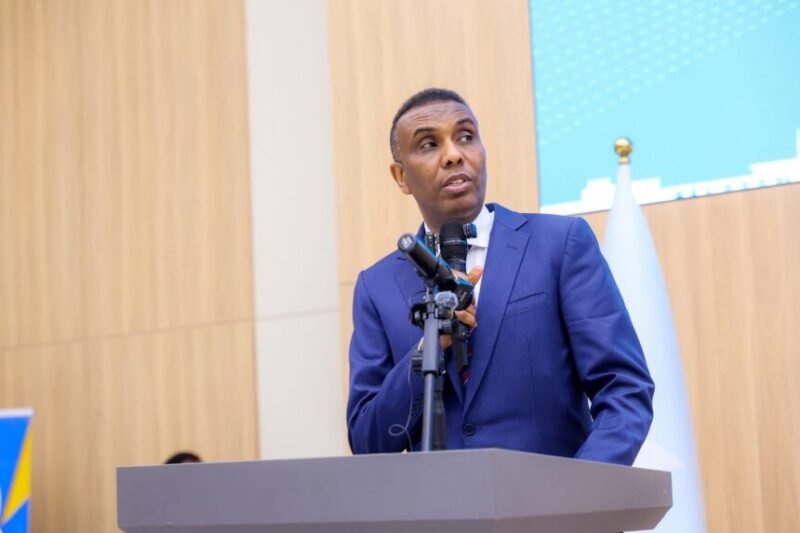
MOGADISHU — The Prime Minister of Somalia, Hamza Abdi Barre, has unveiled a comprehensive reform of the national education system, highlighting the recent federal recruitment drive as a significant achievement in structural reform and state sovereignty.
Over the past 45 months, the administration has implemented a focused strategy to rebuild the teaching workforce, significantly improving the operational capacity of the country’s educational institutions. Upon taking office, the educational infrastructure was critically underfunded, with only 900 teachers on the official government payroll and less than a quarter of children enrolled in school nationwide.
[Image of a bar chart showing the increase in Somali student enrollment and teacher recruitment from 2022 to 2026]
Rebuilding the Teaching Workforce
Through a nationwide initiative, the government has recruited and deployed 10,000 qualified teachers across both urban centers and remote areas. The Prime Minister announced that the federal aim is to increase this essential workforce to 12,000 government-employed educators by 2026.
A crucial element of this sector expansion is its complete independence from external financial support. The Prime Minister emphasized that for the first time in contemporary Somali history, the salaries of these newly hired teachers are fully funded through domestic national revenues. This financial autonomy marks a significant advancement in state capability, demonstrating the Federal Government’s capacity to sustainably manage its fundamental public services while exercising full sovereignty over its long-term development objectives.
Academic Standardization and National Unity
These federal reforms have restored public confidence and standardized the academic pathway. National higher education registries now record nearly 250,000 graduates and 200,000 current students. Additionally, participation in the