
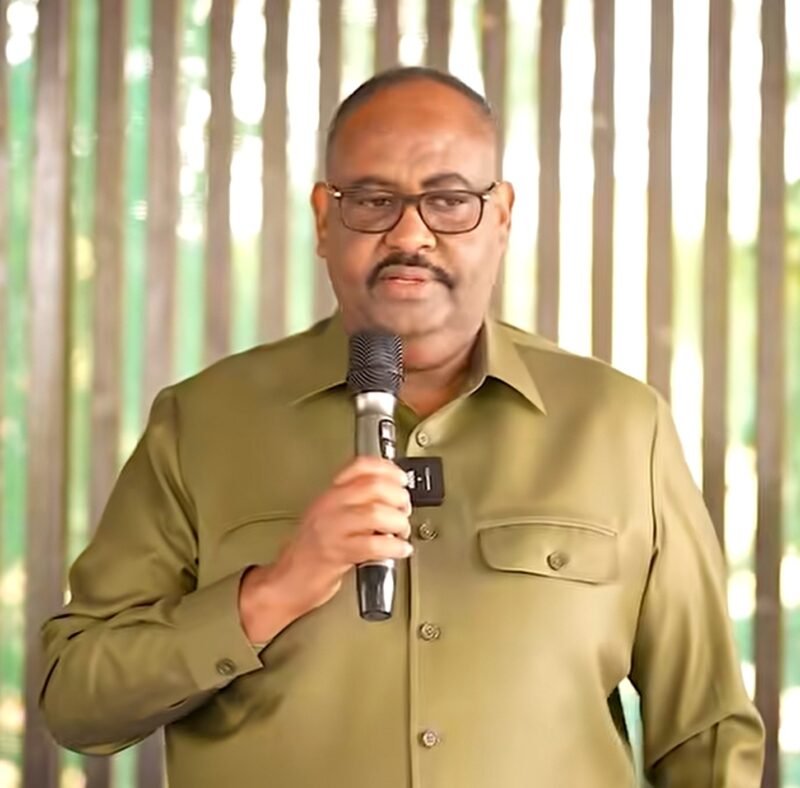
QARDHO — Puntland’s President, Said Abdullahi Deni, delivered a sharp critique on Tuesday against the Somali federal government, accusing it of attempting to dismantle the nation’s federal framework. Speaking to military officials in Qardho, Deni cautioned that policies purportedly backed by allies of President Hassan Sheikh Mohamud threaten to fracture Somalia regionally.
Specifically, Deni pointed to comments allegedly made by presidential adviser Sheikh Ali Wajiis. According to Deni, these remarks advocate for direct federal administration over Somalia’s regions, which he views as an existential threat to the current federal system.
“The rhetoric from Ali Wajiis, which I suspect mirrors President Hassan Sheikh’s own stance, suggests placing Puntland’s territories under direct, region-by-region federal authority,” stated Deni.
Defending Puntland’s Institutional Autonomy
He argued that such centralization would reverse years of painstaking political dialogue and institutional development. Having built its own governance and security infrastructure over more than two decades, Puntland stands to lose hard-won stability if these institutions are dismantled, he warned.
Furthermore, Deni emphasized that Somalia’s unity relies heavily on mutual consent, asserting that enforcing an unwanted system of governance is not viable. He stood firm on Puntland’s dedication to protecting federalism and opposing contradictory measures.
Additionally, the Puntland leader accused Mogadishu of attempting to seize direct control over the region’s natural resources, labeling the alleged plan as an unacceptable breach of foundational state-building agreements. As of now, the federal government has not issued a response to these claims.
Related: Puntland’s Political Counter-Mobilization in Mogadishu
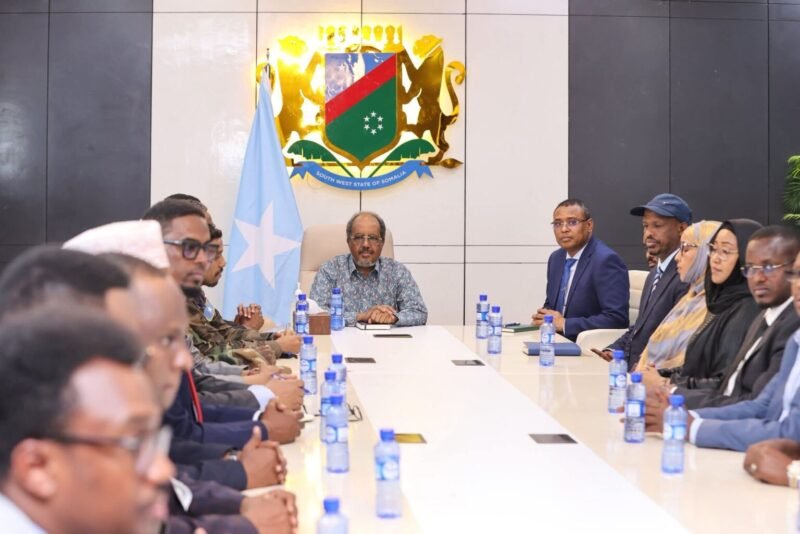
The escalating confrontation between Garowe and Mogadishu extends beyond rhetoric. In directly related developments, President Deni has vowed to remain in Mogadishu until President Hassan Sheikh Mohamud’s current term concludes. This strategic decision coincides with the formation of the Somali Future Council, a political coalition uniting Puntland and Jubaland leaders with key opposition figures.
Deni has accused Villa Somalia of attempting to “monopolize power” and push unilateral constitutional amendments without consensus from federal member states. The dispute extends to the 2026 election model, with opposition groups rejecting the “one-person-one-vote” framework, arguing that such a fundamental change requires broader agreement among all federal stakeholders.
Federalism Under Pressure
The Puntland leader’s recent actions represent a significant escalation from his earlier warnings. While his Qardho address to military officials framed the federal government’s policies as an existential threat, his ongoing stay in Mogadishu demonstrates a concrete political strategy to challenge what he views as executive overreach from within the capital.
These tensions highlight the fragile nature of Somalia’s federal compact, established in the 2012 Provisional Constitution. As the federal government pushes for greater centralization — including direct administration over regional affairs and management of natural resources — Puntland continues to position itself as a defender of the federal principle, insisting that Somalia’s unity must be built on mutual consent rather than imposed authority.
The federal government has yet to issue an official response to President Deni’s latest accusations from Qardho.