

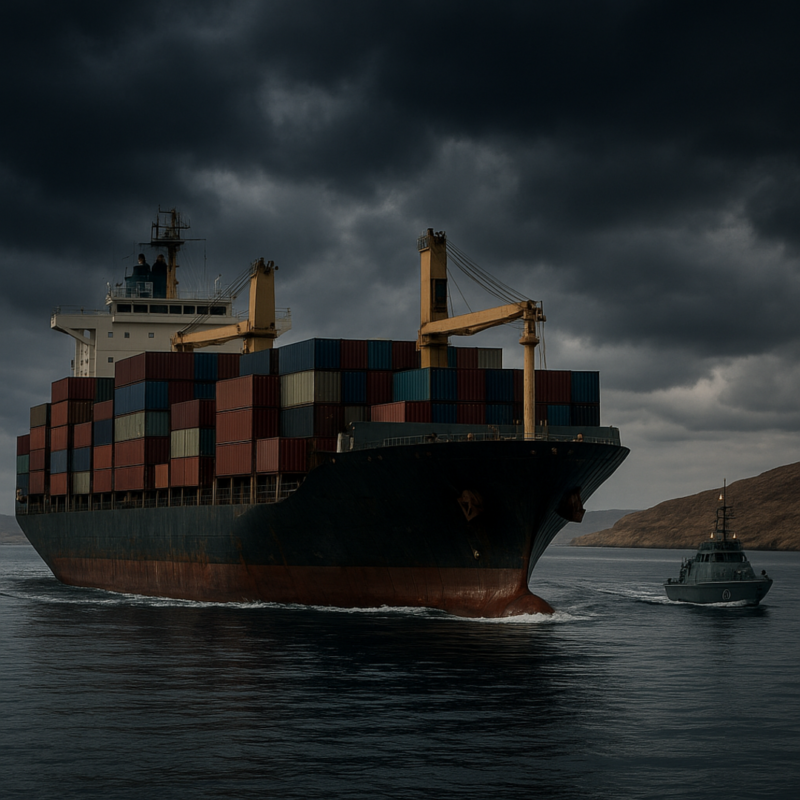
NEW YORK: The United Nations Security Council has approved a resolution extending the Secretary-General’s monthly reports on Houthi attacks in the Red Sea for an additional six months, with members reiterating concerns about threats to commercial shipping and global supply chains.
Somalia’s representative, speaking in his national capacity during the Council’s January presidency, stated that instability in the Red Sea extends beyond regional boundaries and is closely connected to global peace and prosperity. He emphasized the need for complete respect for the sovereignty of Red Sea coastal states and neighboring countries, and condemned Israel’s recognition of what he termed a breakaway faction in Somalia, noting this could establish a hazardous precedent.
Resolution 2812 (2026) received 13 affirmative votes with no opposition, while China and Russia abstained. The resolution references earlier Council decisions on Yemen and maritime security, including resolution 2722 (2024), and mandates continued monthly written reports on any additional Houthi attacks in the Red Sea until July 15, 2026.
The United States, which co-negotiated the resolution with Greece, stated that it reinforces the Council’s responsibility to remain alert against what it characterized as a Houthi ‘terrorist threat’ to navigation freedom in the Red Sea and adjacent waterways. The US delegation also emphasized that all UN Member States must implement sanctions against the Houthis, including prohibiting transfers of weapons and dual-use items that might support Houthi weapon systems.
Greece issued a warning that the security situation in the Red Sea continues to be ‘extremely volatile,’ citing recent developments in southern Yemen and Somalia. The delegation noted that shipping firms are increasingly rerouting vessels through longer, more expensive pathways to mitigate risks, and stressed that rebuilding confidence in vital international maritime channels remains crucial.
China and Russia expressed skepticism about extending the monitoring period. Russia characterized the extension as a mere ‘technical rollover’ with limited value, pointing out no incidents had been reported since September 2025 and asserting that attacks were directly connected to the Gaza conflict. China shared similar concerns, indicating that previous military actions against Yemen heightened tensions and suggesting the Council should now address other peace and security matters.