
MOGADISHU — Somalia’s Defence Minister, Ahmed Moallim Fiqi, celebrated a decade of vital advancements in bolstering the nation’s security sector at the official closing event of the “Strengthening Somali National Security Architecture” program.
Rebuilding the National Security Framework
Addressing participants in Mogadishu, Minister Fiqi characterized the initiative as a fundamental element in reconstructing Somalia’s security infrastructure over the last ten years. He emphasized its crucial function in harmonizing national security policies, reinforcing vital institutions, and significantly enhancing the expertise and operational preparedness of Somali military and intelligence organizations.
“This initiative has substantially contributed to the creation and enhancement of our National Security Architecture,” stated the Minister, pointing out that the program has successfully laid the groundwork for a more integrated and effective security apparatus capable of actively countering Islamist militant groups.
These architectural reforms directly complement ongoing field initiatives, such as the recent push by the army chief to mandate advanced international training and strict operational discipline across all units of the Somali National Army.
UK Partnership and Future Readiness
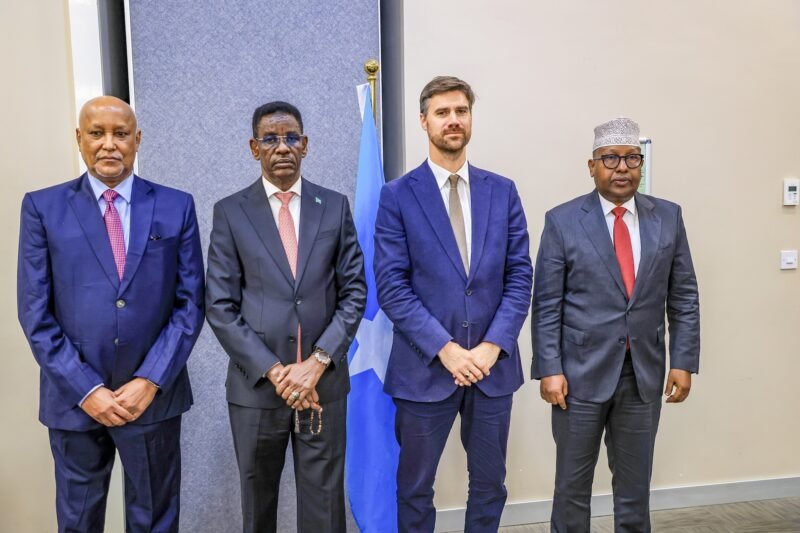
The high-level gathering was attended by several senior government figures, including Minister of Internal Security Abdullahi Sheikh Ismail ‘Fartaag’ and National Security Advisor Aweys Haji, alongside the UK Ambassador to Somalia, Charles King.
Minister Fiqi formally conveyed his profound gratitude to the United Kingdom for its continuous, decade-long assistance in progressing Somalia’s defense and security institutions. He noted that the collaboration powerfully exemplifies the UK’s enduring dedication to backing Somalia’s pursuit of sustained peace and stability following years of severe conflict.
According to federal officials, the formal completion of this initiative represents a noteworthy achievement in Somalia’s continuous endeavor to develop robust, self-sufficient national institutions capable of preserving domestic peace and rapidly responding to emerging security challenges.