
MOGADISHU — The highly anticipated second round of direct, high-level negotiations between Somalia’s Federal Government and the opposition alliance, the Somali Future Council (Kutlada Mustaqbal), has concluded without a resolution, revealing deep, ongoing disagreements regarding the nation’s electoral trajectory.
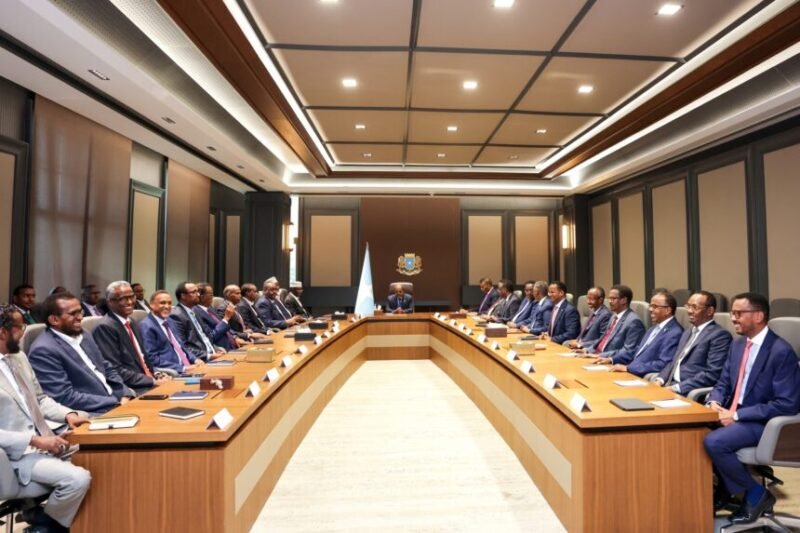
The collective meeting, held at Villa Somalia on Sunday, was convened after unsuccessful attempts to settle electoral differences through lower-level committee discussions. Leadership from both sides had recognized that direct dialogue was essential to expedite an agreement before current mandates expire. However, the discussions ended in a critical impasse.
The Core Disagreement: Universal Suffrage vs. Indirect Elections
The primary source of conflict centers on the proposed electoral models. The federal administration, led by President Hassan Sheikh Mohamud, maintains steadfast support for a nationwide “one-person, one-vote” (1P1V) system. The government insists this universal suffrage approach—which was previously approved by the National Consultative Council (NCC) and aligns with the developing constitutional framework—should direct Somalia’s political transition.
Conversely, the Somali Future Council, comprising key opposition figures and regional leaders, vehemently rejected this plan. They dismissed what they termed “unilateral governmental decisions” being pushed as the administration’s constitutional period nears its conclusion. The Council maintained a unified stance endorsing an alternative, indirect electoral approach featuring wider representation than previous cycles, targeting completion prior to May.
Demands for Regional Consistency
Furthermore, the Future Council stressed that electoral processes in South West State, Galmudug, and Hirshabelle must not be isolated. They demanded these processes occur under arrangements aligned with those implemented in other Federal Member States to ensure procedural consistency and preserve national unity.
Government sources indicated that if consensus on direct parliamentary elections remains unattainable, an alternative contingency under consideration might involve returning to a traditional selection method, similar to the 2012 transition process, where clan elders assist in nominating parliamentary members.
Fears of Deepening Instability
The collapse of Sunday’s talks has heightened political instability in the country. Opposition leaders have issued stark warnings about the dangers of attempting to force a contested election or engineering a prolongation of the current government’s term. At present, no date has been set for when, or if discussions between the two sides will resume.