
TRIPOLI — Somalia’s Minister of Foreign Affairs and International Cooperation, Abdisalam Abdi Ali, has arrived in Tripoli for a high-level diplomatic visit aimed at strengthening bilateral ties with Libya and securing the protection of Somali citizens stranded in the country.
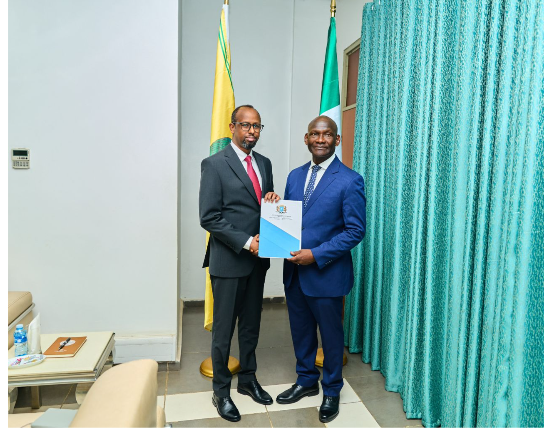
The minister was received at Tripoli’s international airport by Libya’s Minister of State for African Affairs, Fathallah Abdel-Latif Al-Zani, alongside other senior officials.
Strategic Consultations with Libyan Counterpart
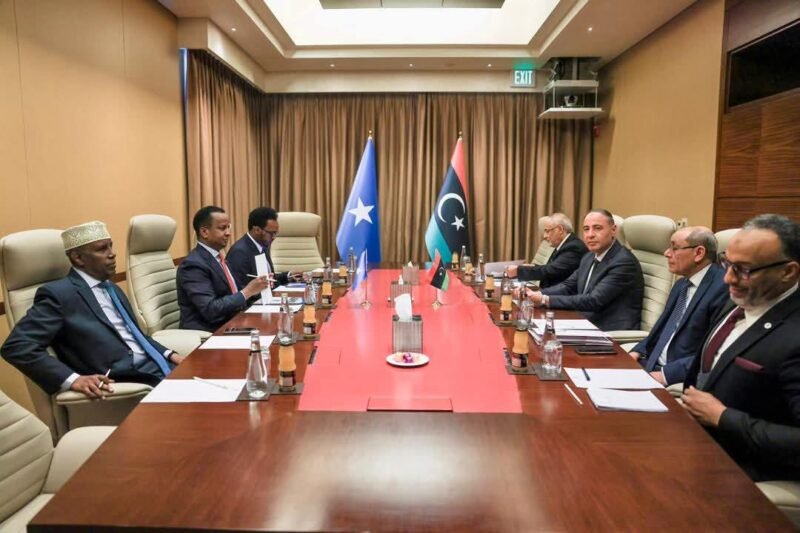
During the visit, Minister Abdisalam held crucial strategic talks with his Libyan counterpart, Acting Foreign Minister Taher Al-Baour, focusing on pressing transnational security and humanitarian challenges.
A primary objective of the executive dialogue was addressing the severe crisis generated by irregular migration networks operating across North Africa. Minister Abdisalam emphasized the absolute necessity of protecting Somali citizens from exploitation, firmly rejecting the human cost associated with unregulated transit routes.
Both delegations committed to coordinated actions to dismantle the transnational criminal syndicates driving human trafficking. By targeting the infrastructure of these illicit networks, the two countries aim to eliminate the physical and financial exploitation of vulnerable individuals and prevent tragedies caused by unsafe transport operations.
The ministers also established a sustained coordination mechanism to guarantee mutual stability and actively advance the shared geopolitical interests of both sovereign states.
Embassy Inspection and Citizen Protection Mandate
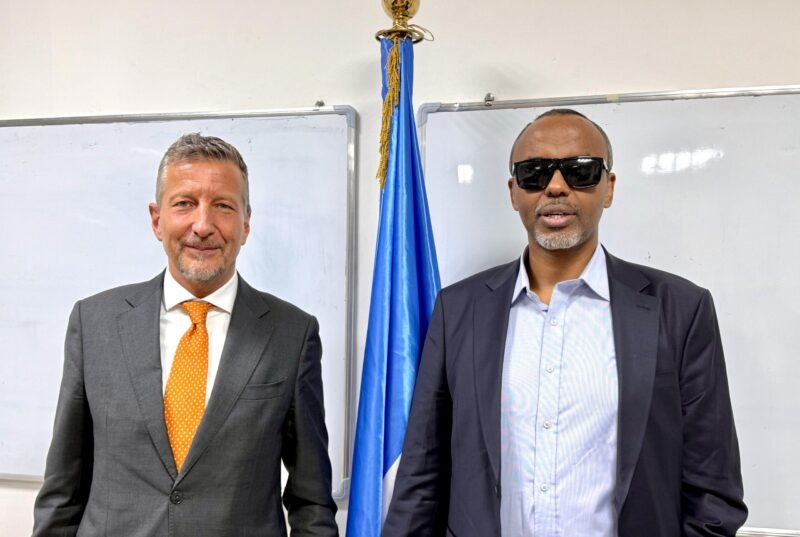
As part of the visit, Minister Abdisalam conducted an official inspection of the Somali Embassy in Tripoli, where he was received by Ambassador Abdi Aden Diriye and senior diplomatic staff.
During a closed-door briefing, the embassy team provided a comprehensive situational report detailing the current status of the Somali diaspora in Libya, with particular focus on the security and legal conditions of detained citizens and distressed migrants.
Minister Abdisalam issued a directive to the embassy leadership, calling for an immediate intensification of all measures designed to defend and secure Somali nationals within their jurisdiction.
“The Federal Government maintains an absolute, uncompromising commitment to the rescue, legal protection, and continuous support of its citizens, regardless of their global location,” the minister said.
He urged the mission to strengthen consular services and prioritize support for vulnerable nationals, emphasizing the government’s commitment to improving legal assistance, protection measures, and coordination with local authorities.
Repatriation of Stranded Citizens
Demonstrating a definitive commitment to citizen protection, the Somali government utilized the summit to coordinate the imminent repatriation of approximately 400 Somali youth currently stranded in Libya.
This organized extraction operation builds upon the successful return of more than 2,000 nationals executed over the past few years.
In September 2025, the federal government brought home 184 of its citizens who had been stranded in Libya aboard a special flight organized by the Ministry of Foreign Affairs in partnership with humanitarian agencies. Many of those evacuees had been trapped in Libya for months, some detained in overcrowded facilities while others were left stranded after failed attempts to transit toward Europe.
Authorities said the government will provide immediate assistance, including medical checks, psychosocial support, and temporary accommodation, to help returnees reintegrate into their communities. Officials have emphasized that further repatriation missions are being planned to rescue more Somalis facing similar hardships abroad.
Ongoing Migrant Crisis in Libya
Libya remains a key transit route for migrants attempting to reach Europe, with many Somali nationals facing risks including detention, exploitation, and unsafe conditions. Strengthening embassy support is critical to addressing these challenges and ensuring the safety and rights of Somali citizens overseas.
In May 2025, dozens of Somali migrants were reported abandoned in Libya after being deserted by smugglers. Among the stranded was Nor Cadow from Baidoa, who spoke about the group’s worsening humanitarian situation.
“We are suffering terribly. We have no food, shelter, or medical help,” he said.
The migrants, many of whom were attempting to reach Europe, found themselves trapped in unsafe conditions, vulnerable to abuse, extortion, and violence.
Broader Diplomatic Engagement
The Tripoli visit is part of broader efforts by the Federal Government of Somalia to improve diplomatic services and respond to the needs of its diaspora.
In September 2025, Minister Abdisalam called for deeper coordination between the United Nations and the League of Arab States to address escalating global and regional crises, warning that fragmented diplomacy is no longer sufficient in today’s volatile geopolitical climate.
Speaking at a UN-LAS cooperation dialogue held on the sidelines of the 80th session of the UN General Assembly in New York, the minister stressed that many of the world’s most protracted conflicts demand collective frameworks rather than bilateral interventions.
By expanding its diplomatic presence and securing strategic partnerships, Somalia is working to protect its citizens abroad while strengthening its position on the continental and international stage.