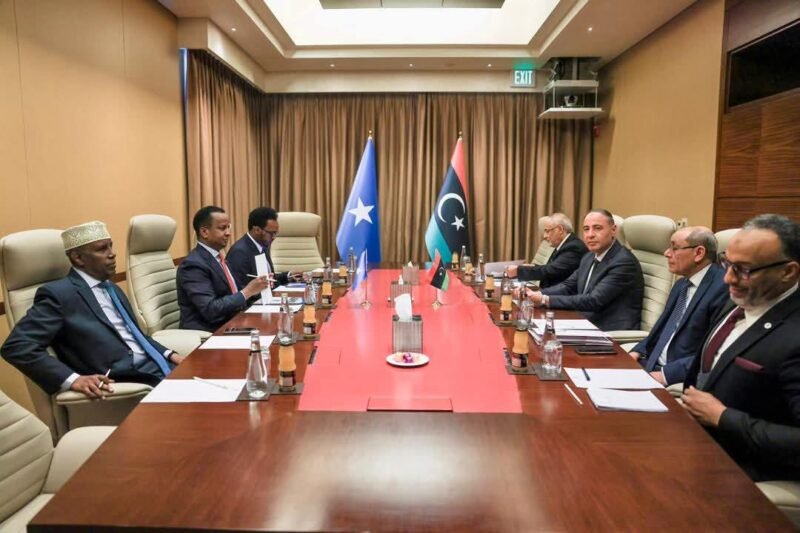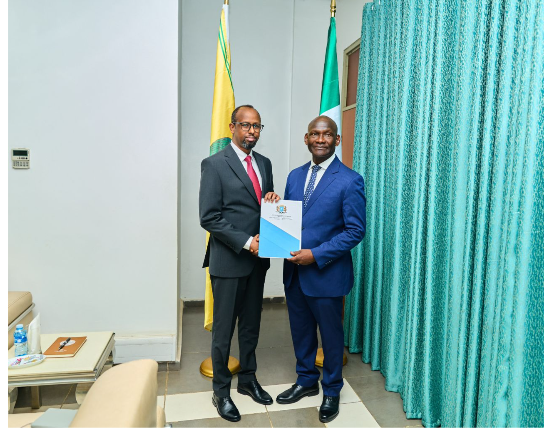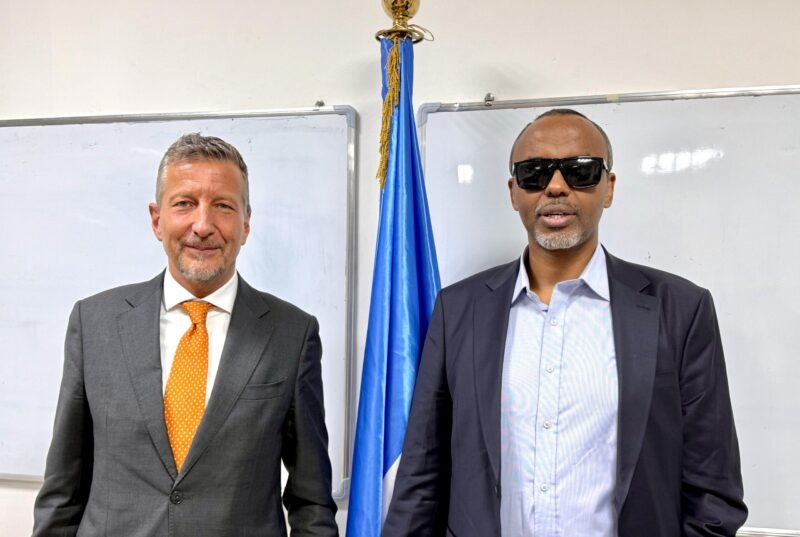


Doha, Qatar – The Minister of Foreign Affairs and International Cooperation for Somalia, Abdisalam Abdi Ali, headed a senior delegation to Doha today for the initial meeting of the Somalia-Qatar Joint Committee.
Formed to enhance bilateral relations and strategic collaboration, the committee’s inaugural session was jointly led by Abdisalam and Qatar’s Minister of State for Foreign Affairs, Soltan bin Saad Al-Muraikhi.
The high-level discussions concluded with the signing of four comprehensive agreements targeting development in cultural, financial, youth, and agricultural sectors.
Heritage and Culture Agreement
Under the supervision of the Ministry of Education, Culture, and Higher Education, the two countries will collaborate on library and historical archive management. The deal includes arrangements for cultural festivals, art exhibitions, and knowledge exchange initiatives. Both parties also pledged to jointly participate in international book fairs to foster cultural communication.
Customs Cooperation Agreement
Finalized by the Ministry of Finance, this agreement concentrates on improving customs law enforcement and addressing smuggling and financial offenses. The structure seeks to guarantee proper tax and tariff assessment while simplifying customs processes following regional and global standards.
Youth and Sports Development
Managed by the Ministry of Youth and Sports, this agreement aims to strengthen ties between young people from both nations. It includes youth organization exchange programs, joint conferences, and the creation of youth camps. Furthermore, the agreement emphasizes training in project management and leadership abilities to develop future leaders.
Agricultural Partnership
The Ministry of Agriculture and Irrigation established an agreement to enhance domestic food production. The partnership involves exchanging scientific agricultural information and expertise. It also details cooperation in adopting advanced agricultural technologies, optimizing fertilizer use, and improving greenhouse methods and storage facilities.
These agreements represent a significant advancement in the bilateral partnership, demonstrating both governments’ commitment to sustainable development and stronger strategic connections.