

ANKARA: Turkish President Recep Tayyip Erdogan has announced that Turkey expects to complete its offshore oil drilling operations in Somali waters within six to nine months, contingent on favorable weather conditions. Erdogan characterized the venture as having “historical importance,” emphasizing that it represents Turkey’s first deep-sea drilling initiative beyond its own national borders. “We look forward to delivering much-awaited positive developments to our Somali brethren, who have faced persistent internal conflicts and food scarcity,” Erdogan stated during a formal gathering in the Turkish capital.
Historic Offshore Drilling Campaign
The offshore drilling operation in waters near central Somalia’s Galmudug region underscores Turkey’s expanding economic and military presence in the Horn of Africa. The Turkish government confirmed in late 2025 that exploratory drilling for oil and gas along Somalia’s maritime boundary would commence in 2026, following an extensive 3D seismic survey conducted by the research vessel Oruç Reis that produced highly promising outcomes. The arrival of Turkey’s deep-water drilling vessel, the Çağrı Bey, in Somali waters signaled the realization of this new paradigm, with President Hassan Sheikh Mohamud officially launching the advanced Turkish offshore drilling vessel during a high-level ceremony at the Port of Mogadishu.
ERDOGAN: “The projects we are implementing along Somalia’s shoreline are historically important, marking Turkey’s inaugural deep-sea exploration drilling venture outside our borders. Providing weather conditions allow, we anticipate concluding the drilling process within a six to nine month timeframe.” The Turkish president positioned the energy venture as a beneficial and stabilizing initiative for the country. “We aim to bring the positive news that the Somali people have long desired, who have faced years of turmoil and food insecurity.”
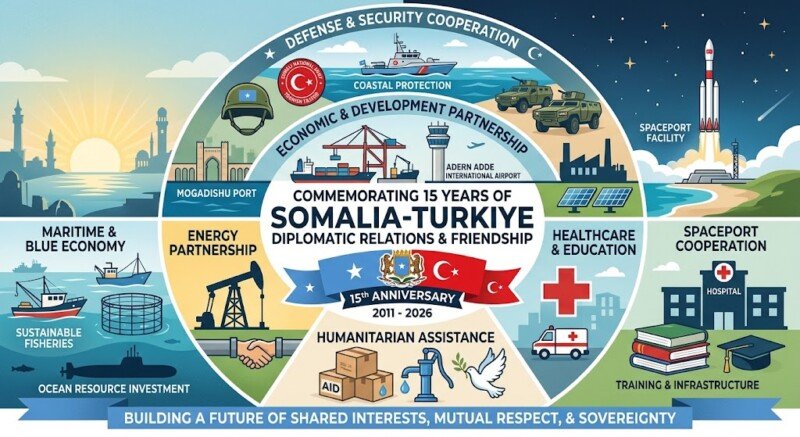
Over the past decade, Turkey has significantly expanded its footprint in the Horn of Africa nation, heavily investing in infrastructure projects, healthcare, education, and the training of Somali security forces. The ongoing Turkish-led drilling operations are seen as a critical pillar in the Somali government’s efforts to leverage its natural resources to revive an economy long battered by chronic security challenges and recurring humanitarian crises.
Opposition Critics Condemn Oil Deal as Unfair and Illegal
Nevertheless, the petroleum initiative coincides with significant internal political tensions in Mogadishu. Somali opposition figures have alleged that Ankara openly favors President Hassan Sheikh Mohamud, whose term officially ended on May 15, suggesting that Turkey’s measures could support an authoritarian regime during a critical constitutional period.
Detractors assert that the defense and commercial agreements supporting the offshore drilling have no legal validity. Somali Member of Parliament Abdirahman Abdishakur Warsame has expressed significant concerns regarding the oil exploration pact between Somalia and Turkey, characterizing the agreement as “profoundly imbalanced” and warning that it might jeopardize Somalia’s national interests. Warsame disclosed that the present terms grant more than 90 percent of the advantages to one party, leaving Somalia with minimal to no substantial earnings from its own natural resources.
Somali Senator Professor Abdi Ismail Samatar delivered harsh condemnation of Ankara’s independent actions. “Turkish vessels are prospecting and drilling for oil in Somali waters. This is exceptionally alarming as the entire affair is illegal. President Erdogan and his people know that the so-called defense and petroleum agreements between Türkiye and Somalia are fraudulent.” Samatar noted that the Somali Parliament has yet to scrutinize, let alone endorse, the agreements in question. “No amount of masquerading will alter the facts as well as Ankara’s guilt in conniving with an illegitimate and derelict regime in Mogadishu.”
Transparency Watchdogs Warn of ‘Resource Curse’
Warsame’s concerns align with warnings issued by governance watchdogs. The Somalia Transparency Initiative has cautioned that while the arrival of the Çağrı Bey indicates tangible progress toward oil production, severe risks stem from improper resource management. The watchdog organization called on federal authorities to maintain absolute transparency through the immediate public disclosure of oil contracts, the clarification of corporate ownership structures, and the implementation of clear, accountable revenue management systems to safeguard national interests.
Somalia-Iran Relations Face Strain Amid Regional Realignment
Amid the deepening Turkey-Somalia energy partnership, relations between Somalia and Iran have come under significant strain. Iran has strongly condemned Israel’s appointment of a diplomatic envoy to the breakaway Somaliland region, calling it a flagrant violation of Somalia’s sovereignty and a conspiracy to destabilize Islamic countries. The diplomatic cooling has coincided with Somalia’s intensified pursuit of foreign investment and security cooperation with Turkey, a NATO member and regional rival of Iran. Somali officials have sought to downplay any rupture, insisting that Mogadishu maintains balanced ties with Tehran, yet reports suggest Iran has quietly reduced its development assistance and diplomatic engagement in response to Somalia’s overtures to Turkey.
Ankara’s Strategic Gamble in the Horn of Africa
Ankara has been progressively strengthening its strategic bilateral relations with Somalia over more than a decade. The drilling initiative extends beyond merely an energy project; it constitutes a strategic wager on Somalia’s future, as Turkey positions itself to assume a central role in defining the nation’s evolving energy landscape. The favorable seismic findings lend substantial credence to long-standing hypotheses regarding Somalia’s offshore energy resources, with researchers estimating the country holds billions of barrels of untapped petroleum reserves.
However, the prospect of petroleum wealth presents an extraordinary challenge for Somalia’s vulnerable institutions. Without transparent legal frameworks, robust revenue-sharing mechanisms between the federal government and federal member states, and effective anti-corruption safeguards, this opportunity risks intensifying existing political conflicts and could fall victim to the notorious “resource curse.”
Recommended Reading On ftlsomalia.com:
- Türkiye Set to Launch Somalia Offshore Oil Drilling in 2026
- Somalia’s Oil Discovery Transforms Global Energy and Regional Dynamics
- MP Warns of Imbalanced Oil Deal with Turkey
- Iran Condemns Israel’s Diplomatic Move in Somaliland
- Somalia Issues Ultimatum to Oil Companies: Begin Exploration or Lose Licenses