
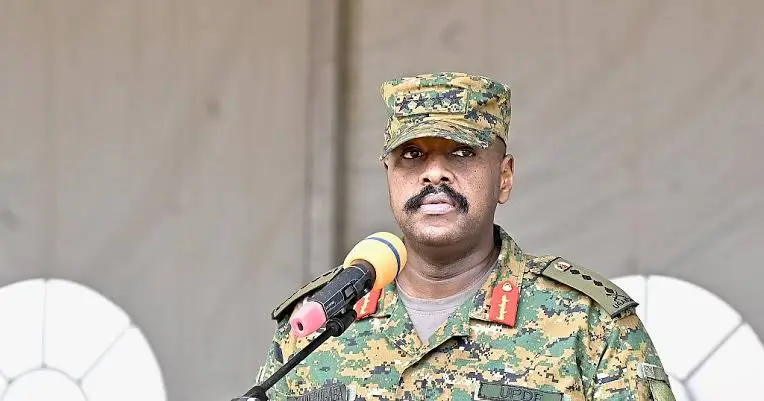
KAMPALA — The Commander of Uganda’s armed forces, Muhoozi Kainerugaba, has sparked controversy with a series of provocative statements about foreign involvement in Somalia, including demands directed at Turkey and an announcement of planned troop withdrawal from the country.
Kainerugaba, the son of President Yoweri Museveni, claimed Ugandan forces played a crucial role in stabilizing Mogadishu between 2007 and 2011, noting that support at that time came primarily from the United States, the United Kingdom, and France. He criticized Turkey’s participation in Somalia, arguing that Ankara was not active during earlier years of intense conflict but became involved later.
Demands for Compensation
In a series of posts on social media platform X, Kainerugaba demanded $1 billion from Turkey, along with what he described as “the most beautiful woman in that country for a wife.” He warned that if these demands were not met within 30 days, Uganda could sever diplomatic ties with Turkey, close its embassy in Kampala, and potentially ban Turkish Airlines from operating in the country.
“Let them pay us and surrender the wives! They’ll be at peace,” Kainerugaba wrote in a now-deleted post. “For Turkey it’s a really simple deal… Either they pay us or I close their embassy here.”
He justified the financial demand by referring to Uganda’s role in regional security operations in Somalia, accusing Turkey of benefiting from infrastructure, port, and airport projects in Mogadishu while Uganda bore the burden of combating Al-Shabaab militants.
Troop Withdrawal Announcement
Separately, Kainerugaba announced that Uganda plans to withdraw its troops from Somalia after nearly two decades of continuous peacekeeping operations.
“After 19 years of presence in Somalia, we plan to fully withdraw in the near future,” Kainerugaba said, without providing a detailed timeline.
Ugandan troops make up the largest contingent within the African Union Support and Stabilization Mission in Somalia (AUSSOM), with estimates placing the number of Ugandan soldiers in Somalia between 5,000 and 6,000. Uganda has been a cornerstone of international peacekeeping efforts in Somalia since 2007, when it became the first country to deploy troops under the African Union mission.
President Mohamud Defends Uganda’s Role
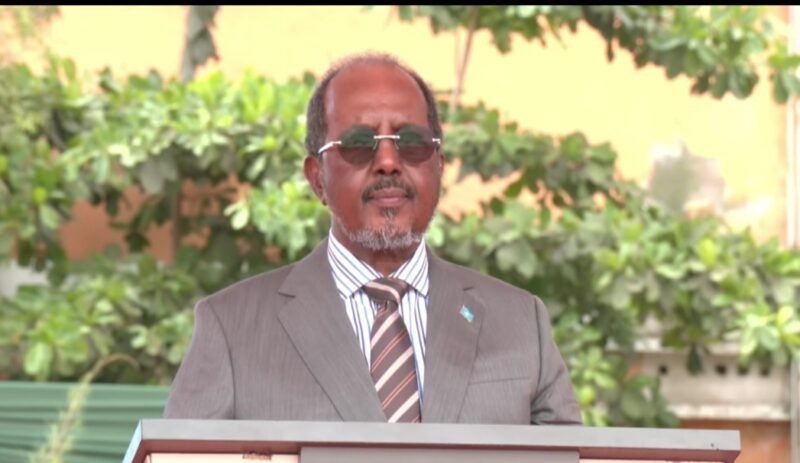
President Hassan Sheikh Mohamud has highlighted Uganda’s long-standing military commitment to Somalia, noting that Kampala independently finances troop deployments outside the African Union mandate and has suffered significant uncompensated losses of military hardware during operations against Al-Shabaab.
The president’s remarks provided a diplomatic counterpoint to Kainerugaba’s controversial statements, acknowledging the high price paid by Ugandan forces who were the first to deploy under the original African Union mission in 2007. Mohamud specifically noted that Uganda has incurred the destruction of expensive military equipment without receiving financial reimbursement from international partners.
Diplomatic observers say Mohamud’s statement appeared aimed at soothing tensions with Kampala, a critical security partner, while maintaining Somalia’s strategic alliance with Turkey amid an increasingly complex regional security landscape.
Turkey’s Expanding Role in Somalia
Kainerugaba’s remarks come as Turkey has emerged as a major partner for Somalia in recent years, providing military training, infrastructure development, and economic assistance.
Turkey’s engagement in Somalia began as humanitarian outreach in 2011 when then-Prime Minister Recep Tayyip Erdogan became the first non-African leader to visit the country in nearly two decades. Since then, the partnership has evolved significantly.
Turkey’s Ministry of National Defense has categorically rejected recent reports suggesting that Russian-made S-400 air defense systems had been deployed to Somalia, confirming that the missile batteries remain fully under Turkish jurisdiction and are maintained strictly for Turkey’s internal security needs. The defense ministry reiterated that the strategic defense cooperation between Turkey and Somalia continues unabated under previously established bilateral accords.
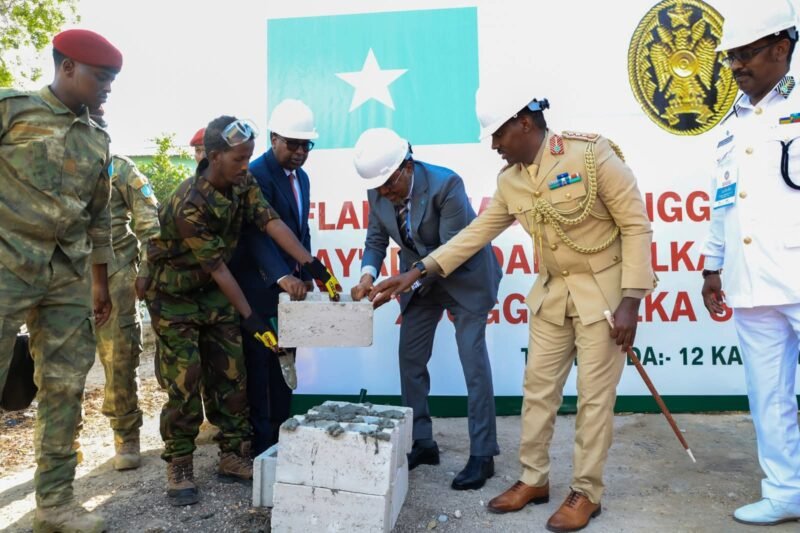
Somalia’s Minister of Defence, Ahmed Moallim Fiqi, paid an official visit to the TURKSOM Military Academy in Mogadishu, reaffirming the growing defense ties between Somalia and Turkey. During his tour of the facility, Fiqi commended the Turkish government for training and equipping Somali National Armed Forces.
“TURKSOM remains a cornerstone in our journey towards building a capable, self-reliant, and professional national army,” Fiqi said. “This partnership with Türkiye is not only strengthening our security institutions but also advancing our shared commitment to regional stability.”
Established in 2017, the TURKSOM Academy has played a pivotal role in developing Somalia’s military leadership through comprehensive training programs.
Deepening Security Cooperation
Over recent years, Turkey has massively increased its footprint in Somalia’s security and defense domains. From operating its largest overseas military academy to deploying specialized troops to support major security missions, Ankara remains a cornerstone ally in developing Somalia’s sovereign military capabilities.
The enduring cooperation concentrates heavily on training Somali national forces, enhancing their operational battlefield capabilities, and coordinating vital counter-terrorism efforts. Furthermore, the partnership is increasingly focused on safeguarding Somalia’s vast economic resources and strategic maritime assets.
Official Government Response and Context
No official response has yet come from Ankara regarding Kainerugaba’s statements. It remains unclear whether his remarks reflect Uganda’s official government position or his personal views.
Kainerugaba has frequently made controversial statements in the past. In 2022, he suggested Uganda could invade Kenya and “capture Nairobi in two weeks,” leading to a public apology from his father’s government and his temporary removal from command. He has also previously offered 100 cows in exchange for marrying Italian Prime Minister Giorgia Meloni.
Impact on Somalia’s Security Situation
The announcement of Uganda’s planned withdrawal comes as AUSSOM faces mounting financial pressure. The mission, which began its current mandate on January 1, 2025, is grappling with major funding gaps and limited initial commitments. The European Union has reduced its support, while the United States has suspended funding over concerns about burden-sharing.
Under the AUSSOM troop distribution agreement, Uganda is slated to contribute a significant number of troops to the mission. A Ugandan withdrawal could significantly impact the fight against Al-Shabaab, which remains active across central and southern Somalia.
Kainerugaba’s statements, particularly his criticism of Turkey’s role and demands for compensation, are likely to draw significant attention given Turkey’s increasing influence in Somalia. Such rhetoric could hinder cooperation within international missions and raise concerns about future military coordination in Somalia.
No official withdrawal schedule has been announced, and Somali authorities and the African Union have not yet commented on how Uganda’s exit would be managed or what impact it could have on AUSSOM’s operations and Somalia’s fragile security landscape.