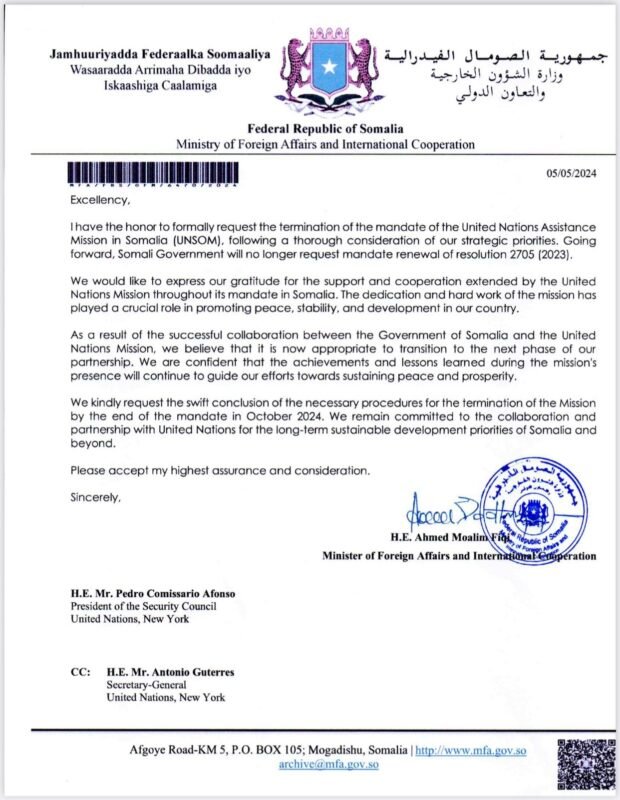

In a landmark shift for East African diplomacy, the United Nations Security Council has unanimously voted to overhaul its presence in Somalia, signaling a move toward ‘full national sovereignty’ while maintaining a robust military shield against insurgency, as per FGS request.
A New Chapter for ‘Full Sovereignty’
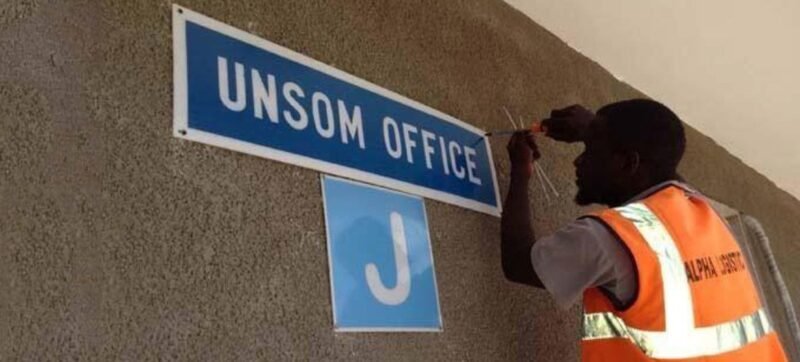
The dissolution of the UN Assistance Mission in Somalia (UNSOM) stands as a major diplomatic win for President Hassan Sheikh Mohamud. For over thirty years, the UN office acted as a central pillar for constitutional development and donor coordination, a role the Somali government increasingly viewed as an infringement on its domestic affairs. By October 31, 2026, the UN will officially shutter its political doors in Mogadishu.
This transition moves the country away from a “guardian-led” model toward a “Somali-managed, Somali-directed” framework. While this grants the Federal Government of Somalia (FGS) unprecedented autonomy to engage with global partners like the U.S., Turkey, and the UAE, it also removes the neutral “buffer” the UN provided during domestic disputes with Federal Member States.
Security Realities vs. Political Aspirations
Despite the political exit, the Security Council acknowledged that Somalia is not yet ready to stand alone militarily. The council approved the continuation of the African Union Transition Mission in Somalia (AUSSOM) through December 2026, but no sufficient funding is secured for this mission.
| Mission | Status | Objective |
| UNSOM (Political) | Terminating Oct 2026 | Handing over mediation and governance to the FGS. |
| AUSSOM (Military) | Extended to Dec 2026 | Maintaining 11,826 personnel to combat Al-Shabaab. |
The resolution, spearheaded by the United Kingdom (pen holder), maintains a force of nearly 12,000 troops and police. This extension highlights a sobering reality: while Mogadishu has won its political independence, the Somali National Army (SNA) still relies on African Union support to hold territory against Al-Shabaab militants.
The Risks of a “Lighter Footprint”
The shift to a “lighter footprint” model brings both opportunity and peril. Without a UN mediator, the FGS must now handle escalating friction with regional states, such as Puntland and Jubaland, entirely on its own.
-
Internal Governance: The FGS now bears sole responsibility for national reconciliation; failures can no longer be blamed on international oversight.
-
Regional Influence: Troop-contributing neighbors like Ethiopia and Kenya may see their influence grow as the UN’s central coordinating role fades.
-
Propaganda: Experts warn that Al-Shabaab may frame the UN’s departure as an “abandonment,” using it as a recruitment tool even as military pressure from AUSSOM continues.
This reconfiguration represents the most significant change in international involvement in Somalia in over a decades. The global community is betting on Somalia’s leadership to govern inclusively and manage its own crises.
The countdown to October 2026 has begun. Somalia has asked and secured the political freedom it sought; now, it must prove it can maintain stability without the safety net of UN mediation.