
UNITED NATIONS, New York – The United Nations Security Council held an urgent session to address the geopolitical fallout from Israel’s formal recognition of Somaliland as a sovereign state. The decision, which makes Israel the first UN member state to recognize the self-declared republic since its 1991 secession from Somalia, has sparked a firestorm of international debate and accusations of violating Somalia’s territorial integrity.
Israeli Prime Minister Benjamin Netanyahu framed the move as an extension of the “spirit of the Abraham Accords,” citing plans for deep cooperation in technology, agriculture, and security, alongside the establishment of formal embassies. However, the move was met with immediate and fierce resistance from the Federal Government of Somalia.
Somalia’s Territorial and Historical Rebuttal
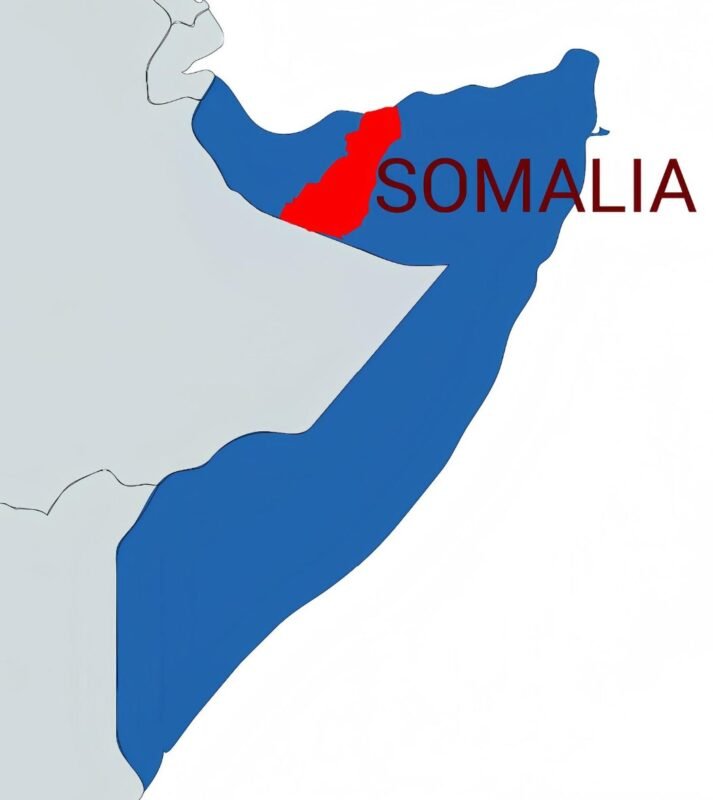
In a forceful address to the Council, Somalia’s representative challenged the very geographic and historical basis of the recognition. He argued that the “Somaliland” claim is far more fractured than portrayed by proponents of independence.
The representative pointed out that the former British Somaliland protectorate comprised two distinct areas: the Northeast and the Northwest. He noted that the Northeast region, which accounts for 45% of the land and population, remains firmly under the Federal Government of Somalia. Furthermore, he highlighted internal dissent within the Northwest itself, specifically noting that the Awdal region near the Djibouti border is “totally against” the secessionist movement.
Addressing the historical narrative of the 1980s, the envoy denied that a state-led genocide took place against the Isaaq people. He instead characterized the period as a “civil war” that was “financed from outside,” maintaining that Somalia remains “one country, one people, one religion.”
A Sharp Diplomatic Exchange
The Somali envoy saved his sharpest criticism for the Israeli delegation, dismissing their human rights justifications as a hypocritical “insult” to the Council.
“To come to this place and lecture us on humanity and genocide and human rights… is just an insult,” the envoy stated. “If we want to talk about genocide, it’s Israel that’s committing it before our eyes every day.”
He cited the humanitarian crisis in Gaza, accusing the Israeli government of killing tens of thousands of civilians and “deliberately starving” the population. To have such a government accuse Somalia of genocide, he argued, was “ridiculous” and “unbelievable.”
Global Powers Divided
The session highlighted a significant rift among the Council’s permanent members:
-
The United States defended Israel’s sovereign right to conduct its own diplomatic relations, noting a “double standard” compared to the international recognition of a Palestinian state. Nevertheless, the U.S. envoy clarified that there has been “no change in American policy” and that Washington continues to affirm Somalia’s territorial integrity.
-
The United Kingdom remained steadfast in its opposition, asserting that any change to Somaliland’s status must be the result of a mutual agreement between Mogadishu and Hargeisa.
-
Regional Blocs, including the African Union, the Arab League, and the Organization of Islamic Cooperation, echoed Somalia’s condemnation, viewing the recognition as a destabilizing precedent for the Horn of Africa.
As Somalia prepares to assume the UNSC Presidency on January 1, this diplomatic crisis marks a volatile start to the new year, with Mogadishu vowing to defend its sovereignty against what it labels “illegal aggression.”