
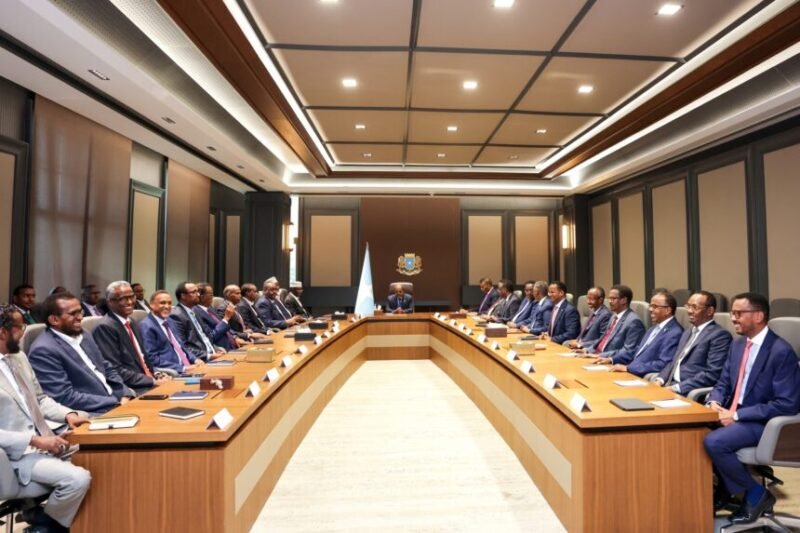
MOGADISHU — High-level electoral negotiations between Somalia’s Federal Government and the opposition alliance, the Somali Future Council (Kutlada Mustaqbal), were temporarily suspended over the weekend after reaching a critical impasse regarding agenda priorities.
The discussions, which initially began Thursday at the presidential palace, stalled as both sides refused to yield on their respective positions. However, after separate internal consultations on Saturday, Council members consented to participate in a highly anticipated unified session at Villa Somalia scheduled for Sunday, recognizing that direct, high-level dialogue is essential to avert a constitutional crisis.
Universal Suffrage vs. Indirect Elections
The core of the political deadlock centers on the nation’s proposed electoral model. The federal administration, led by President Hassan Sheikh Mohamud, is advocating strongly to implement universal suffrage—a “one person, one vote” system—starting from local districts up to the federal level. This proposal is part of the administration’s broader, ongoing constitutional review aimed at moving away from Somalia’s long-standing clan-based indirect voting model.
Conversely, the Somali Future Council—which comprises the leaders of Jubaland and Puntland along with key opposition figures—has rejected the timeline and feasibility of the government’s plan. They argue that enforcing an unagreed system without sufficient preparation time could intensify political divisions and destabilize the fragile federal structure.
Regional Alignment and Timelines
The opposition is calling for an alternative, indirect electoral framework with wider representation, demanding the national process be completed prior to May 15. Crucially, the Council stressed that electoral processes in South West State, Galmudug, and Hirshabelle must take precedence and occur under arrangements aligned with those implemented in other Federal Member States to ensure procedural consistency and national unity.
Alternative Plans and International Scrutiny
Government sources suggest that if consensus on direct parliamentary elections cannot be reached, an alternative contingency under consideration might involve returning to a traditional selection method. This would see clan elders assist in nominating parliamentary members, similar to the process utilized during the 2012 electoral transition.
The impending Sunday meeting is widely regarded as a make-or-break juncture that will determine the trajectory of the negotiations. The talks are occurring under significant international scrutiny from the United States, the European Union, and the United Nations. Both parties entered into these negotiations largely due to this external pressure, raising doubts about the outcome if neither side demonstrates a readiness to compromise.