
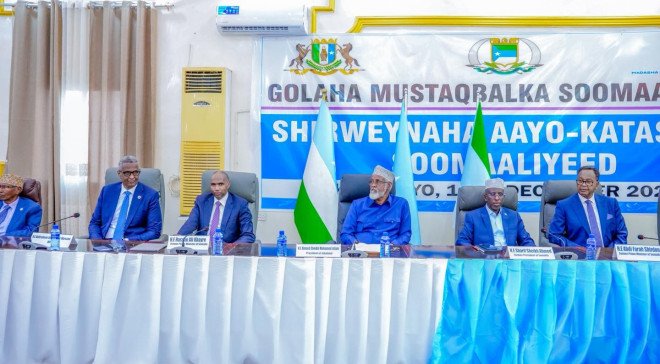
MOGADISHU — The Somali Future Council (Golaha Mustaqbalka Soomaaliyeed) announced on Saturday that it has accepted an invitation from the Federal Government of Somalia to participate in a dialogue platform scheduled for next month in Mogadishu, averting a potential standoff over the nation’s electoral future.
In a press release issued today, January 24, the Council confirmed its attendance at the talks set for February 1, 2026, but outlined specific conditions for its participation, including an immediate halt to the ongoing constitutional review process.
Bridging the Divide
The decision follows a period of heightened political tension. During a convention held in Kismayo last December, the Council had issued an ultimatum calling on President Hassan Sheikh Mohamud to convene an election conference by January 20.
Instead, the Federal Government issued a formal invitation on January 19 for a dialogue meeting in the capital.
The Council stated that after extensive consultations, it chose to accept the government’s overture to “prevent a constitutional vacuum” and find an inclusive solution to safeguard the country’s statehood. The group highlighted the critical timing, noting that only three months remain in the current term of Federal Government institutions.
Preconditions for Dialogue
Despite agreeing to the meeting, the Somali Future Council emphasized that for the talks to be fruitful and conducted in an atmosphere of trust, President Hassan Sheikh Mohamud must take specific confidence-building measures.
The Council’s primary demand is the immediate cessation of amendments to the Provisional Federal Constitution of 2012.
Furthermore, the opposition group insisted that the agenda for the February 1 dialogue must prioritize the nation’s most urgent challenges:
-
Security: Specifically strengthening the fight against terrorist groups such as Al-Shabaab and ISIS.
-
Elections: Reaching a broad-based political agreement on an election process to facilitate a peaceful transfer of power.
Risks to Stability
The press statement painted a stark picture of the country’s current trajectory, citing economic hardship, widespread drought, and political disputes as major threats to national unity. The Council warned that prolonged constitutional rifts and the expired legitimacy of some Federal Member States place Somalia at a “dangerous crossroads.”
“Current political and constitutional disputes could further weaken territorial and social unity,” the statement read, warning that such divisions offer opportunities for insurgent groups to exploit the fragility of the state.
The upcoming meeting in Mogadishu is viewed by analysts as a critical test for the nation’s political elite to consensus before the electoral calendar lapses.