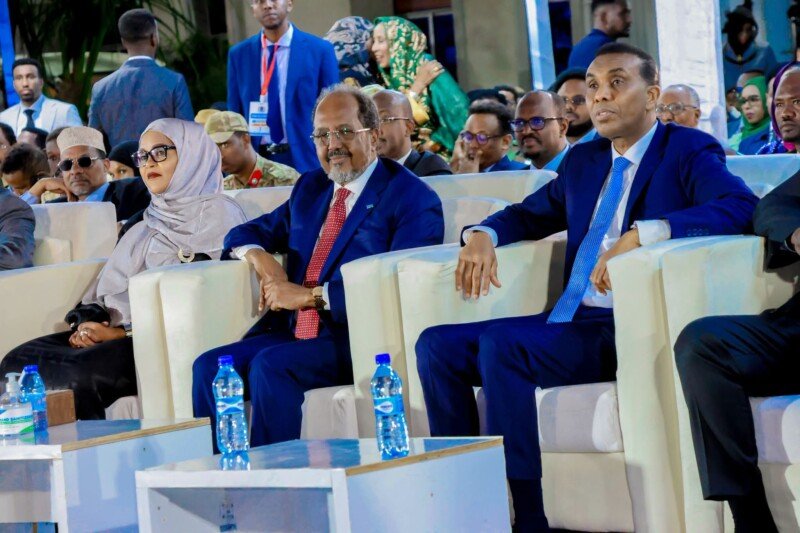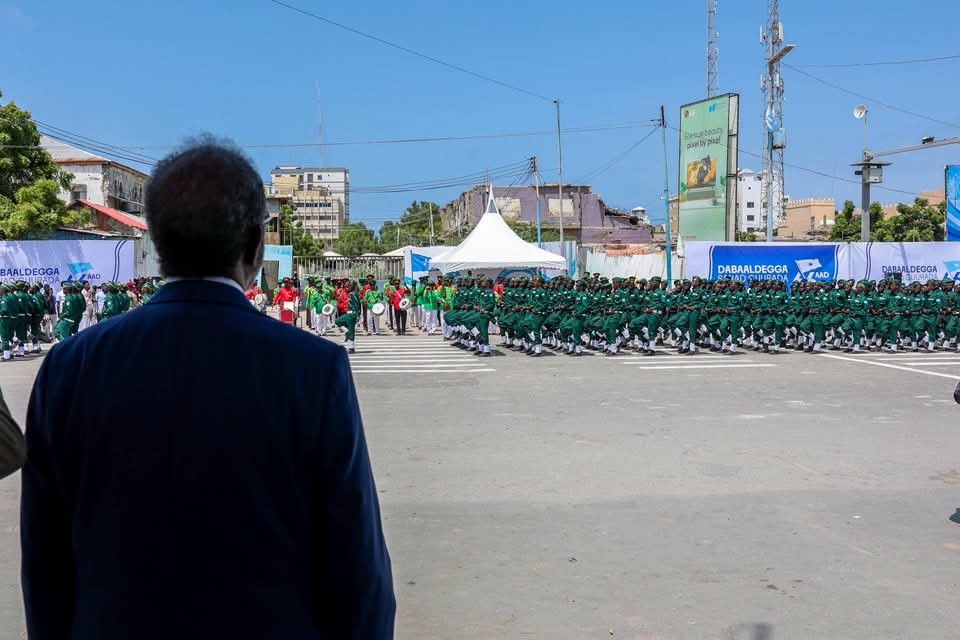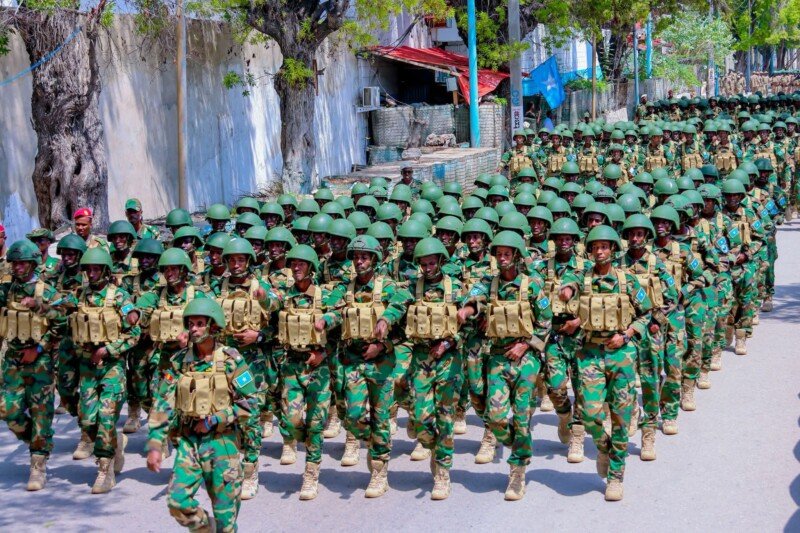

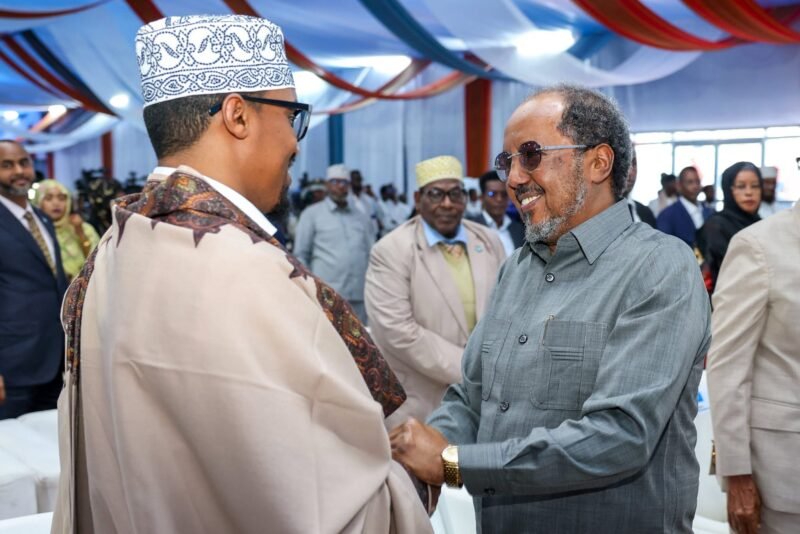
MOGADISHU — President Hassan Sheikh Mohamud has presided over the official inauguration of Ugaas Abdirisaq Ugaas Abdullahi (Fara-Adde) as the traditional chief of the Murusade clan in Mogadishu, delivering a keynote address that underscored the critical role of traditional elders in advancing national unity, peace, and state-building.
The ceremony brought together a wide array of traditional leaders, government officials, and distinguished guests from across the Somali territories, reflecting the national significance of the event. Senior government figures including the Minister of Information, Culture and Tourism, Da’ud Aweis Jama, the Minister of Interior, Ali Yusuf Ali Hosh, and the Minister of Planning, Mahmud Abdirahman Benabene, were in attendance.
President Hassan Sheikh Mohamud extended his congratulations to Ugaas Abdirisaq on his official inauguration, describing the gathering as a unique opportunity to strengthen cultural cohesion and reinforce the bonds that unite the Somali people.
“This is a very encouraging and positive sign. It reflects a unity that does not divide the Somali people—neither by culture, nor by religion—and demonstrates that even in politics, we can move forward together, God willing,” President Hassan Sheikh stated.
Traditional Leadership as a Cornerstone of State-Building
In his remarks, the President highlighted that the convergence of traditional elders and leaders from across the Somali regions demonstrates the enduring strength and relevance of Somali culture in national life. The gathering also included opposition figures, reflecting the rare coming together of rival political leaders at a public event.
“The fact that leaders from across the Somali territories have gathered here today speaks to the strength, dignity, and respected place of our culture. It is this shared heritage that continues to unite our people and guide our nation,” he added.
President Mohamud reaffirmed the Federal Government’s recognition of traditional leadership as a cornerstone of peacebuilding and governance, emphasizing its function in fostering reconciliation, strengthening social cohesion, and supporting the nation’s ongoing state-building initiatives. He called on traditional leaders to dedicate their efforts to uniting communities and safeguarding Somali values in order to build a peaceful, developed, prosperous, and united Somalia.
Federal Efforts to Formalize Traditional Leadership
The inauguration aligns with broader federal initiatives to institutionalize the role of traditional leaders in national governance. In September 2025, the Minister of Interior, Federal Affairs, and Reconciliation, Ali Yusuf Ali Hosh, chaired a high-level consultative meeting with prominent clan elders on the proposed National Traditional Elders Policy, bringing together influential elders from across the Federal Member States to deliberate on solidifying their longstanding role in reconciliation, peacebuilding, and local administration. The discussions centered on establishing a unified framework that recognizes elders as key partners in governance and community stabilization.
“Our elders have always been the first responders in resolving disputes and maintaining peace at the grassroots level. This policy seeks to honor that legacy by providing them with formal recognition and support,” Minister Hosh stated. The policy aims to standardize how elders are selected, consulted, and empowered — ensuring transparency while preserving cultural authenticity, and proposes capacity-building programs to equip elders with tools to navigate modern governance challenges without undermining traditional authority.
President’s Engagement with Traditional Leaders in Baidoa
President Mohamud’s commitment to engaging traditional leaders was further demonstrated in early April 2026, when he convened a significant strategic meeting with senior traditional elders in Baidoa alongside the newly appointed Interim Leader of South West State.
The comprehensive dialogue was specifically dedicated to enhancing regional peace, community reconciliation, and robust governance. Key agenda items included reinforcing the nationwide democratization process, coordinating vital logistics to tackle the persistent, ongoing drought crisis, and vigorously promoting localized state-building initiatives. During his address in Baidoa, the president heavily stressed the absolute importance of traditional leaders maintaining active involvement in Somalia’s historic transition to a “one-person, one-vote” electoral system. He formally praised the elders for their vital historical role in maintaining community unity, mediating localized conflicts, and consistently supporting the expansion of national governance.
President Calls for Enhanced Elder Role in Unity and Reconciliation
President Mohamud has previously emphasized the need for traditional elders to play a more significant role in fostering unity and reconciliation during a gathering with Puntland representatives at the presidential palace. The president indicated that continuous partnership with traditional governance frameworks would be essential in building confidence between local communities and the central government, especially in areas experiencing political and security difficulties.
Prime Minister’s Engagement with Traditional Leaders
In January 2026, Prime Minister Hamza Abdi Barre held a high-level meeting with traditional elders in Las Anod, the administrative capital of the newly recognized North Eastern State, where he expressed gratitude to the traditional leaders for their crucial role in peacebuilding, particularly in resolving inter-clan conflicts across the nation. “Traditional elders and intellectuals carry both religious and constitutional duties to protect peace, maintain national unity, and address conflicts arising from clan divisions,” the Prime Minister stated.
Minister Hosh’s Engagement with Traditional Leaders
In January 2026, Minister Hosh paid a courtesy visit to the residence of Sultan Said Mohamed Garase in Las Anod, accompanied by a high-level security and political delegation including the Commissioner of the Somali Police Force, General Asad Osman Abdullahi (Diyaano). The visit was part of broader efforts to promote reconciliation and deepen federal cooperation with local communities, with engaging influential elders described as a key component of the Federal Government’s strategy to ensure social cohesion.
Somalia Moves to Formalize Traditional Leadership Role
The National Traditional Elders Policy represents a significant step toward formalizing the role of traditional leaders in Somalia’s governance architecture. Elders at the consultative meeting welcomed the initiative, noting that their contribution to nation-building has often been undervalued despite their critical role in past peace processes. “A nation without its elders is like a tree without roots,” said one elder, urging the government to ensure that the policy is backed by practical implementation rather than symbolism.
If adopted, the National Traditional Elders Policy could become a cornerstone of Somalia’s reconciliation architecture — blending ancestral wisdom with modern state-building efforts to secure lasting peace and unity.
Unity and Cultural Cohesion
Traditional leaders who addressed the gathering stressed the unifying power of Somali customs and heritage. Ugaas Mahmoud Ali Ugaas noted that the inauguration has brought together national leaders, former officials, and representatives from all segments of society.
“This gathering reflects the unity of our nation, bringing together leaders past and present, and all segments of Somali society under one shared cultural identity,” he said.
Political Context and Challenges
This dialogue occurs as Somalia continues to manage persistent political conflicts and security concerns, with the government progressively depending on community-centered strategies to strengthen stability and national unity. Despite these political tensions, the government continues to prioritize engagement with traditional leaders as a cornerstone of its peace-building and state-building strategy.
Ugaas Abdirisaq, in his remarks, thanked the community for its trust and pledged to work for peace, unity and development for both the Murusade people and Somali society more broadly. Traditional elders continue to play a central role in Somalia, particularly in mediation, reconciliation and maintaining harmony within communities.