
DOHA / MOGADISHU / HARGEISA – A significant diplomatic division has emerged between Somalia’s federal government and Somaliland’s administration, as both parties issued conflicting reports regarding the status of their bilateral relations.
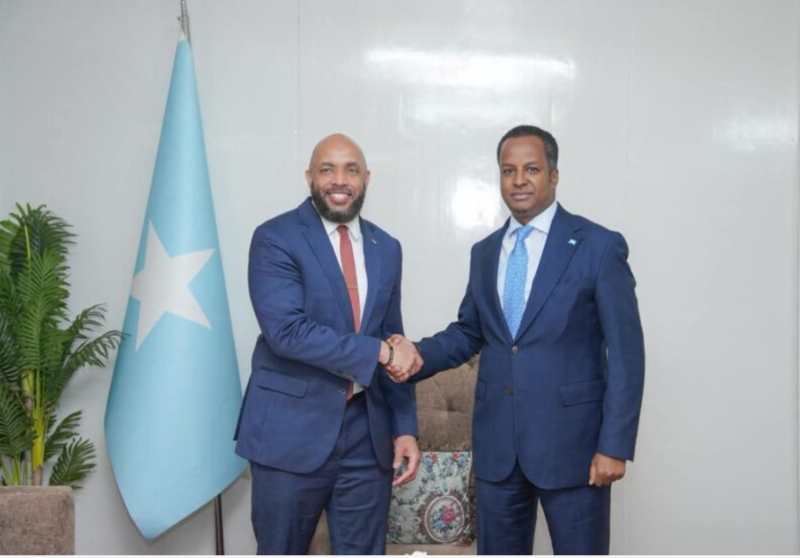
In an exclusive interview with Doha News, Somalia’s State Minister for Foreign Affairs, Ali Omar Balcad, claimed that Mogadishu maintains “direct and ongoing” communication channels with Hargeisa and continues to exert “tangible influence.”
He reiterated the FGS position that Somaliland remains an integral part of Somalia and expressed optimism about resuming dialogue to achieve a “lasting and serious resolution.”
Somaliland responded promptly and firmly through an official statement from its Ministry of Political Affairs. The statement completely rejected any notion of ongoing talks or relations with Somalia, declaring that all dialogue had been “officially suspended” earlier in the year.
It accused the FGS of “meddling in Somaliland’s internal affairs” and characterized Mogadishu’s claims as “unfounded statements” aimed at creating internal division. The communiqué concluded by asserting there is no authorized representative to engage with Somalia on this matter, effectively declaring the negotiation process terminated.
The contradictory announcements reveal a divide as wide as ever, with no signs of formal talks resuming soon.
This public confrontation is less about communication and more about a battle of narratives targeting different audiences.
By claiming an active and influential dialogue, the FGS projects an image of engagement and sovereignty. It reassures international partners (such as Qatar, a known mediator) that it is pursuing a peaceful, diplomatic approach, while signaling to Somali nationalists that reunification remains the steadfast objective.
Somaliland’s strong denial serves to reinforce its fundamental narrative of complete independence and sovereignty. It must publicly refute any implication of subordination or ongoing negotiations about its status to preserve domestic unity and the legitimacy of its three-decade state-building endeavor.
The Somali minister’s remarks in Doha carry particular significance. Qatar has previously mediated between the two parties. Mogadishu’s statement could be an attempt to demonstrate openness to Qatari re-engagement or to pressure Hargeisa by suggesting unofficial talks are occurring.
Somaliland’s blunt rejection sends a clear message to any external mediator that the previous framework is invalid unless it begins with the premise of recognition.
Somaliland’s language signifies an escalation. Declaring that no one is authorized to discuss the matter creates a diplomatic impasse. It goes beyond pausing negotiations to de-legitimizing the very foundation of discussion under current terms.
This hardens positions, making any future resumption of dialogue even informal ones exponentially more challenging and politically risky for Hargeisa’s leadership.
Both statements are likely driven by internal political considerations.
In Mogadishu, President Hassan Sheikh Mohamud confronts the considerable task of finalizing a controversial constitution and managing federal states. Asserting authority over Somaliland serves as a unifying point for nationalist sentiment.
In Hargeisa, President Abdirahman Mohamed Abdillahi Irro is navigating the consequences of recent violent unrest in the Awdal region and economic challenges. A firm, uncompromising stance against Mogadishu is a conventional method to consolidate domestic support and divert attention from internal difficulties.
This public dispute further diminishes the already slim prospects for a negotiated settlement in the near future. For Somaliland, it reinforces its independent strategy, potentially driving it to pursue more concrete security and economic partnerships with entities like Ethiopia or Taiwan as alternatives to dialogue with Mogadishu. For Somalia and its allies (including Turkey and Arab Gulf states), it highlights the intractability of one of the Horn’s most persistent conflicts.
This is not a diplomatic misunderstanding; it is a deliberate, simultaneous assertion of two mutually exclusive realities. Mogadishu speaks the language of unity and an ongoing process to maintain its constitutional claim and international diplomatic momentum.
Hargeisa speaks the language of finality and sovereignty to protect its de facto independence and domestic legitimacy. The gap is not narrowing; the rhetorical barriers are being reinforced, making the prospect of a bridgeor even a conversation about constructing oneincreasingly distant. The conflict has entered a new phase of overt, uncompromising narrative confrontation.