
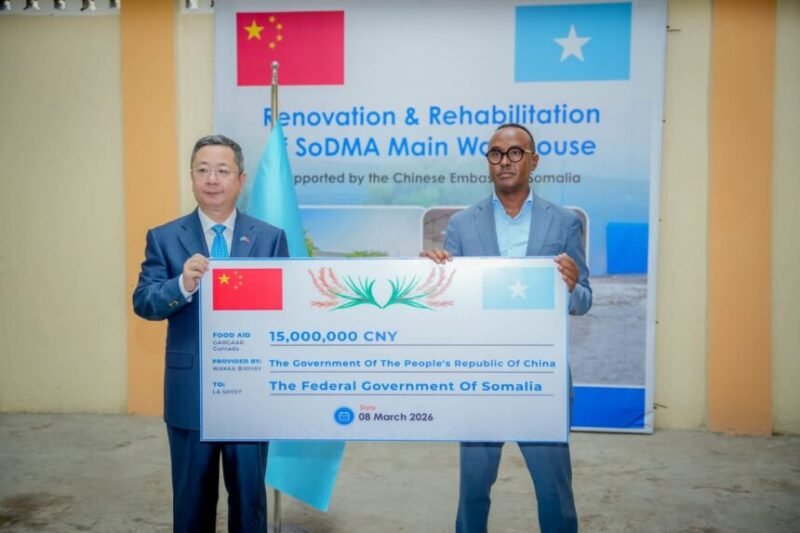
MOGADISHU — The People’s Republic of China has officially approved an emergency relief package consisting of $2 million USD in direct financial assistance and 15 million RMB for essential food supplies to support Somalia’s escalating drought response efforts.
Bilateral Cooperation for Crisis Mitigation
The Somali Disaster Management Agency (SoDMA) officially received this substantial humanitarian contribution on Sunday. The intervention represents a crucial lifeline aimed at stabilizing food security throughout the Horn of Africa nation.
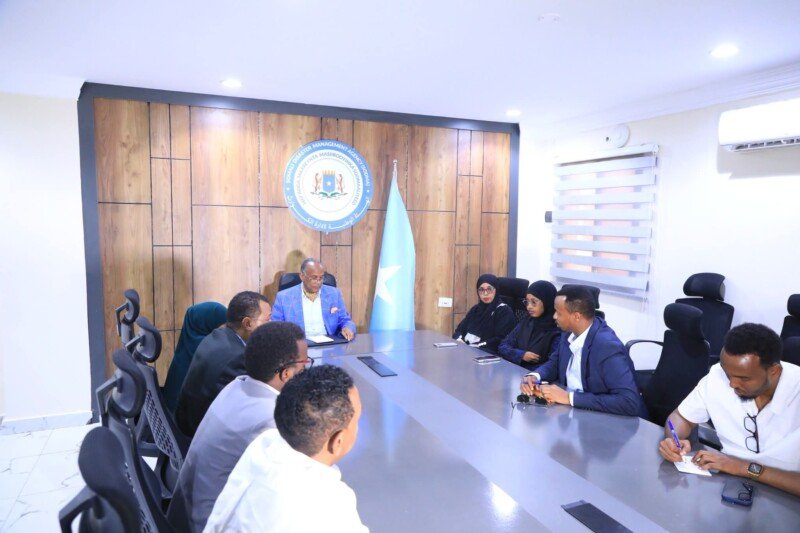
The Commissioner of SoDMA, Mahamuud Moallim Abdulle, formally accepted the bilateral contribution from the Chinese Ambassador to Somalia, Wang Yu, during a high-level diplomatic meeting in the capital. This strategic transfer of resources demonstrates a strengthening operational alignment between Beijing and Mogadishu, emphasizing disaster risk reduction, climate resilience, and immediate crisis mitigation.
Targeted Relief for Vulnerable Districts
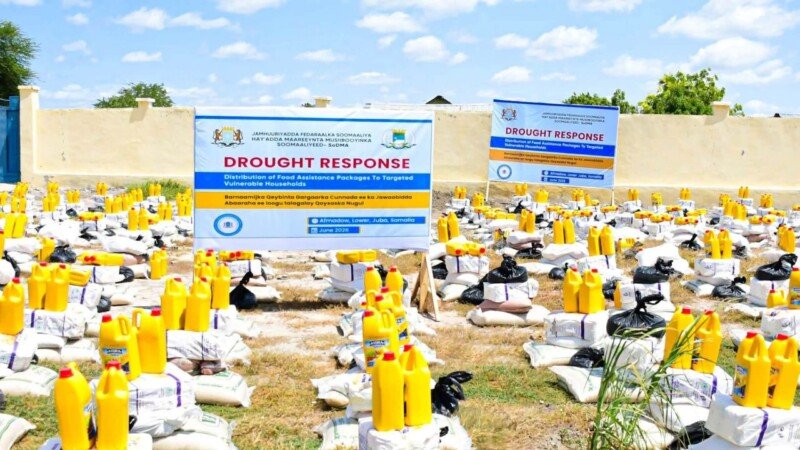
According to the strategic deployment plan outlined by SoDMA, the financial allocation and corresponding food supplies will be directly channeled to 72 districts severely affected by unpredictable weather patterns and consecutive failed rainy seasons. This aligns with broader national efforts to aid hard-hit areas, much like the recent delivery of critical water resources to drought committees in the Galmudug State.
Current operational data reveals that 45 of these designated districts are operating under strict state-of-emergency protocols. The Chinese-backed intervention is specifically designed to reduce mortality risks among the most vulnerable populations, prioritizing women, children, and elderly individuals residing in marginalized and hard-to-reach communities.
Building Long-Term Structural Resilience
Addressing the urgent need for rapid logistical deployment, Commissioner Abdulle expressed deep appreciation for the swift international support. He noted that the dual-currency and material assistance will sustain life-saving operations in regions where local agricultural and economic resources have been completely exhausted. This support guarantees that emergency response teams can maintain critical service delivery to populations rapidly approaching a survival crisis point, complementing other recent economic safety nets like the multi-million dollar drought insurance payouts provided to Somali pastoralists.
Ambassador Wang Yu characterized the contribution as an extension of Beijing’s long-term commitment to Somalia’s sovereign recovery and institutional state-building processes. He indicated that China’s engagement strategy relies on consistent, dependable cooperation, moving beyond reactive aid to build structural resilience against future climate shocks.
With the Horn of Africa continually vulnerable to climate-induced emergencies, international observers consistently highlight that targeted foreign assistance—combined with domestic infrastructure development—is required to break the cycle of recurring humanitarian crises. This latest contribution serves as a vital stabilization mechanism, enabling Somali authorities to execute localized crisis management while actively pursuing broader national recovery goals.