
MOGADISHU — President Hassan Sheikh Mohamud has privately signaled his intention to proceed with elections in three allied regional states before initiating broader federal electoral negotiations, according to sources within his political inner circle.
During a private meeting with three core political allies this week, the President reportedly outlined a strategy to first secure the leadership of Galmudug, Hirshabelle, and South West State. This marks the second time in recent weeks that Mohamud has voiced this phased approach to addressing the country’s prolonged electoral deadlock.
According to participants, the President plans to engage in federal-level talks about the national election framework only after the regional processes are completed. He reportedly stated that he would then consult with stakeholders claiming legal jurisdiction over the federal process.
Official Election Dates Announced
The National Independent Electoral Commission has announced official election dates for the three federal member states. According to a commission statement, elections in South West State will be held on April 28, 2026, while Galmudug and Hirshabelle will vote on May 13, 2026. The commission said the contests in Galmudug and Hirshabelle would be held simultaneously, with voting for both the House of Representatives and local councils taking place on the same day in each state.
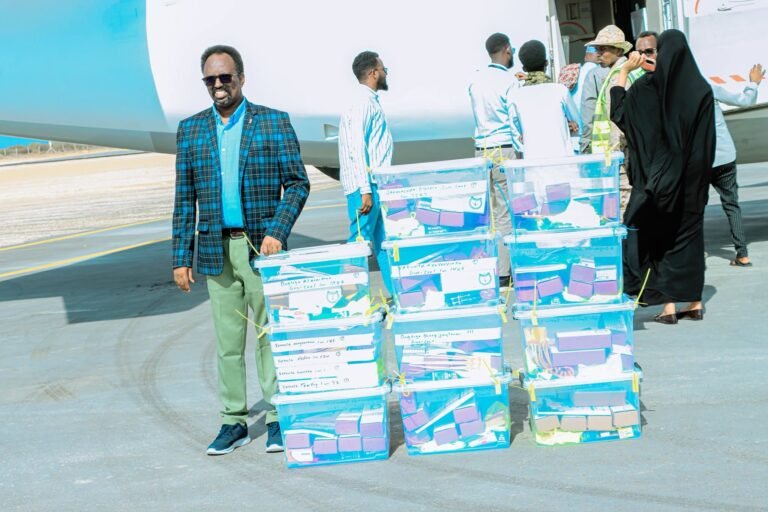
The electoral commission has already delivered the first batch of previously registered voter cards to Dhusamareb, the administrative capital of Galmudug State, marking a crucial step in preparations for upcoming direct local council elections. The designated distribution zones include the districts of Dhusamareb, Guriel, Herale, Harardhere, Adado, and Galkayo, ensuring broad civic participation across the region.
Hirshabelle’s Historic Voter Registration Drive
Hirshabelle State continues its preparations for historic one-person, one-vote local elections. In July 2025, President Ali Gudlawe Hussein officially launched voter registration for what he declared the region’s first-ever universal suffrage local elections, marking a bold step away from Somalia’s long-standing clan-based power-sharing system.
“This is a proud day for the people of Hirshabelle. For the first time, every eligible citizen will have a voice and a vote in determining their local leaders,” President Gudlawe stated during the launch.
The Hirshabelle Council of Ministers, under the leadership of President Ali Hussein Guudlaawe, has convened to discuss preparations for the upcoming regional elections. During the session, Ismail Hassan Nur was appointed as Minister of Planning, and Ahmed Bariise Heydar was selected as Deputy Minister of Interior.
South West State Election Rejected by Federal Government
The federal government has previously rejected electoral processes in South West State. In March 2026, the Ministry of Interior officially and vehemently rejected the hasty election that took place in Baidoa, which resulted in the re-election of South West State President Abdiaziz Hassan Mohamed (Laftagareen).
The Ministry characterized the event as a “pre-planned self-appointment” rather than a legitimate democratic exercise, stating that a procedure concluded within 24 hours fundamentally lacks the transparency, free competition, and legality required to be recognized under the country’s system of governance.
Exclusive Influence Asserted
During the discussions, President Mohamud reportedly rejected the involvement of other high-ranking politicians from the same sub-clans in the regional election debates for Galmudug and Hirshabelle. Sources indicate he asserted exclusive influence over these administrations, claiming he was the primary architect of their current structures.
Members of the President’s team stated that the strategic goal is to ensure the election of regional leaders strictly aligned with the President’s camp. By consolidating power in these three states, Mohamud’s faction intends to enter federal negotiations with a dominant position, allowing them to dictate the terms of the upcoming national elections.
Galmudug Presidential Candidate Supports Direct Elections
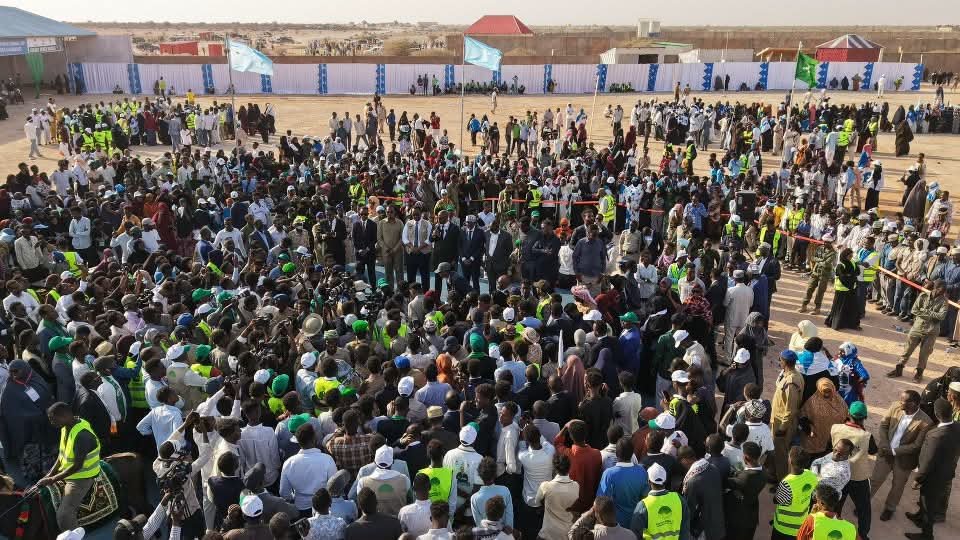
Galmudug presidential candidate Liban Ahmed Hassan has voiced his support for Somalia’s planned direct elections. In December 2025, he joined senior government officials and residents at a rally in Mogadishu widely seen as an attempt to demonstrate public support for direct elections. Hassan, regarded as one of the leading contenders for the Galmudug presidency, has characterized the upcoming elections as a critical milestone in strengthening democratic governance and expanding citizen participation in public affairs.
Opposition Threatens Parallel Government
Some opposition groups have already rejected the current approach to local elections, arguing that the process lacks broad political consensus. Somalia’s opposition and federal member states of Jubbaland and Puntland are considering establishing a parallel government if President Mohamud proceeds with what they describe as a “unilateral” election process.
Opposition MP Dahir Amin Jesow warned that if the President continues to pursue plans for a universal suffrage vote — which the opposition argues cannot be organized within the remaining months of his term — the Somali Future Council would move to a second phase of consultations with the aim of forming a parallel government.
Sharmarke Urges Neutral Oversight
Former Prime Minister Omar Abdirashid Ali Sharmarke has voiced deep concern over the growing influence of federal member states in shaping upcoming parliamentary elections. Sharmarke urged the federal government to establish an impartial and nationally recognized committee to manage the electoral process, arguing that the system used in previous elections had enabled political manipulation and entrenched personal interests.
Government Extends Mandate Under New Constitution
The federal government maintains that the extension is a constitutional necessity under the new constitution, which was ratified in March 2026. Speaker of Parliament Adan Madobe has announced that Parliament would extend its stay in office by one year, a move aimed at facilitating the federal government’s transition to a “one-person, one-vote” electoral system.
However, the extension has drawn immediate criticism from opposition figures and regional leaders. Several members of Parliament are possibly considering announcing their resignations as their legal mandate ended.
Contrasting Signals on Democratic Reform
Former Foreign Minister and opposition leader Ambassador Ahmed Isse Awad has voiced concerns over President Mohamud’s recent political maneuvers. Awad criticized the president’s support for the newly endorsed Northeastern State leadership, which emerged through an indirect selection process rather than a popular vote, arguing that this move contradicts Mohamud’s long-standing promises to deliver a “one-person, one-vote” electoral framework.
“Somalis have waited for years for a democratic system that gives every citizen an equal say. When the government endorses leadership chosen by indirect means, it sends a mixed signal about its seriousness in achieving that goal,” Awad said.
Outlook
This move is viewed as a high-stakes effort to centralize political leverage ahead of what is expected to be a contentious debate over Somalia’s federal electoral model. The outcome of the ongoing talks between the Federal Government and the Somali Future Council is seen as crucial in determining Somalia’s electoral path.
As the president’s term enters its final weeks, the phased regional election strategy signals mounting political maneuvering ahead of the May 15 term deadline. Critics argue that consolidating power in allied states before federal negotiations undermines the inclusive consensus needed for a legitimate national electoral framework. The coming weeks will be critical in determining whether this strategy succeeds or further deepens Somalia’s political divisions.