
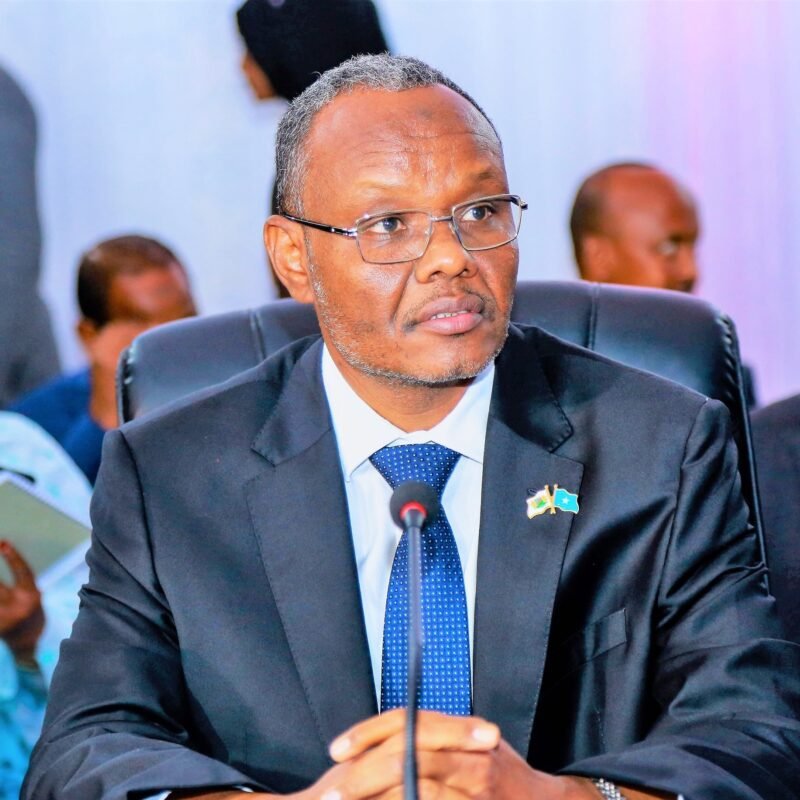
NAIROBI, Kenya — Abdiaziz Hassan Mohamed, the former president of Somalia’s Southwest State who is widely known as Laftagareen, has made a notable political resurgence in the Kenyan capital by hosting a luncheon gathering for political loyalists, less than a month after resigning from his position.
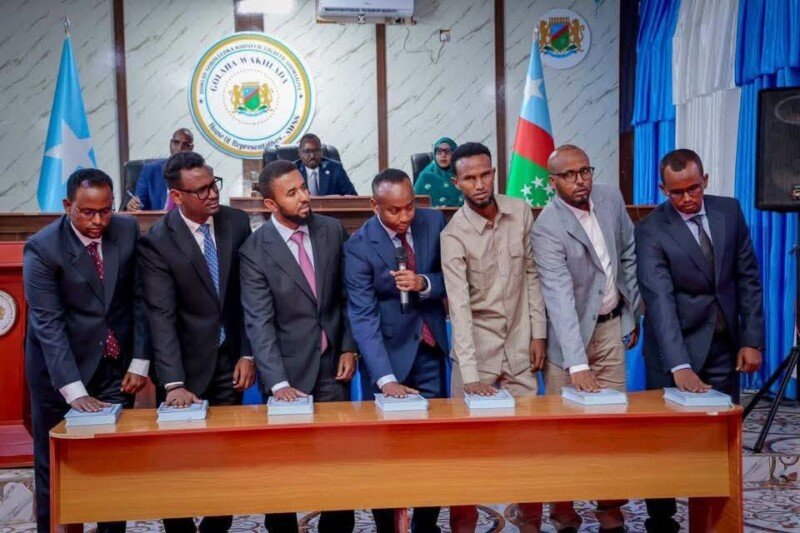
The event, held in Nairobi, brought together federal lawmakers, influential political figures, and close associates who supported him during a contentious power struggle with the federal government at Villa Somalia. Notably present was Mohamed Mursal, the former Speaker of the House of the People, who accompanied the former regional leader from Baidoa.
In a statement shared via his official Facebook page, Lafta-Gareen expressed deep gratitude to his supporters, specifically praising regional ministers who resigned from their posts in a show of solidarity before his administration ultimately collapsed. He characterized their actions as a testament to shared principles and a common political vision.
Former Regional Leader Signals Political Continuity
During the gathering, the former regional leader signaled that his departure from office was not an exit from politics. He pledged to his allies that their political partnership would remain intact and announced that they would move forward as a unified bloc in upcoming election campaigns.
The reemergence of the former regional heavyweight in Kenya comes at a critical juncture as Somalia faces a deepening constitutional vacuum and a persistent standoff over the framework for federal elections. Analysts view the move as a strategic effort to consolidate his political base from abroad and position himself as a significant power broker in the looming national transition.
By maintaining a unified front with influential figures like Mursal, Laftagareen appears to be signaling his intention to remain a central player in the country’s turbulent political landscape, despite no longer holding regional executive power.
Context of Lafta-Gareen’s Resignation
Lafta-Gareen resigned on March 30, 2026, after Somali National Army troops took control of Baidoa, the capital of Southwest State. He had been re-elected just days earlier, securing 66 votes from regional lawmakers, at a time when the federal government had already mobilized military forces around Baidoa. The re-election was immediately welcomed by former President Mohamed Abdullahi Farmaajo, former President Sheikh Sharif Sheikh Ahmed, and former Prime Minister Hassan Ali Khaire.
The federal government’s intervention followed escalating political tensions. Prime Minister Hamza Abdi Barre issued a decree appointing Second Deputy Prime Minister Jibril Abdirashid Haji Abdi as interim leader to manage the transition and prepare for one-person, one-vote elections.
Federal Transition and Security Measures in Baidoa
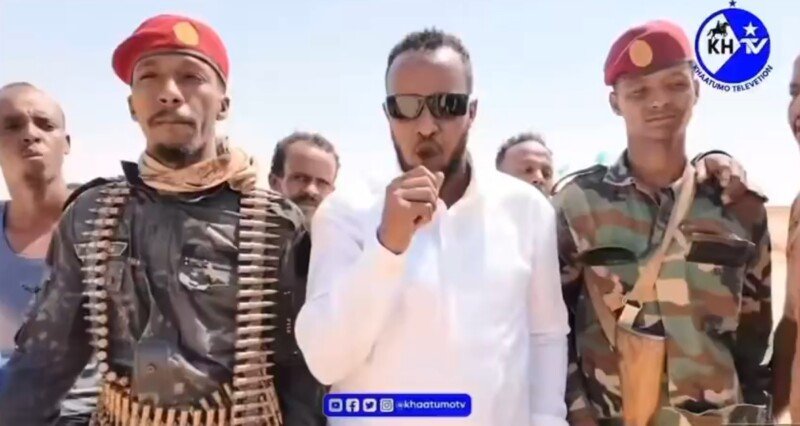
Following the power shift, a high-level federal delegation led by Speaker of the House of the People, Sheikh Adan Mohamed Nur (Madobe), arrived in Baidoa. Speaker Madobe convened a strategic meeting with Somali National Army commanders to evaluate security conditions and bolster stabilization initiatives. During the briefing, frontline military commanders confirmed that tactical operations had successfully secured the vital arterial road connecting Mogadishu directly to Baidoa, which had long been under threat and intermittent blockade by Al-Shabaab militants.
Speaker Madobe issued a strong call for unity and cooperation among residents of South West State, emphasizing that broad public support is crucial for strengthening stability and governance during the transition. Speaking upon his arrival at Shati Gaduud Airport in Baidoa, he urged local communities to work closely with authorities to advance peace and regional development.
Security Crackdown and Opposition Criticism
The federal government subsequently enacted a nighttime curfew in Baidoa, prohibiting civilians from carrying weapons during evening hours. Police Commissioner Asad Osman Abdullahi convened a high-level strategic gathering with all police personnel deployed in Baidoa to update commanding officers on prevailing security conditions following the political developments.
However, the federal takeover has drawn sharp criticism. Member of Parliament Abdirahman Abdishakur Warsame condemned the Federal Government’s decision to unilaterally appoint an interim administration, describing it as a blatant and illegal breach of both the Federal and State Constitutions. He accused President Hassan Sheikh Mohamud of strategically planning the intervention to secure his own re-election.
President’s Engagement in Baidoa
President Hassan Sheikh Mohamud arrived in Baidoa with a high-level federal delegation to oversee the transition, aiming to accelerate essential social services, strengthen grassroots peace and reconciliation, and advance the democratization process.
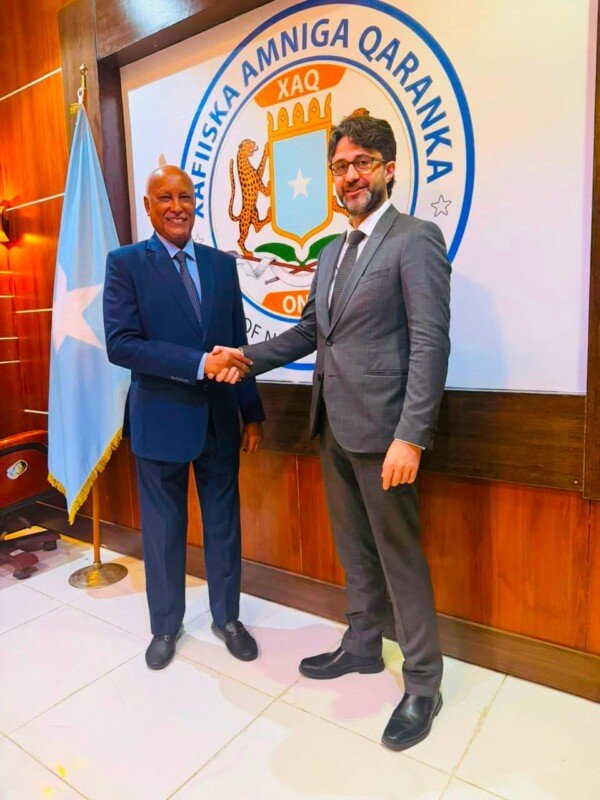
The President held a strategic briefing with Baidoa Mayor Abdullahi Ali Watiin, receiving a detailed situational report on urban security enhancement operations and improvements in local social services. The meeting was attended by Speaker Madobe, Interim Leader Jibril Abdirashid, and Interior Minister Ali Yusuf Ali.
President Mohamud, alongside Interim Leader Abdi, co-chaired a massive security and administrative summit in Baidoa, bringing together the South West State Council of Ministers and top security chiefs including senior representatives from the SNA, Police Force, and NISA.
Police Chief’s Security Conference
Police Chief Brigadier General Asad Osman Abdullahi convened a high-level strategic gathering with all police personnel deployed in Baidoa, updating commanding officers on security conditions and directing law enforcement to enhance tactical collaboration with other federal security entities. The police command implemented an absolute ban forbidding non-security personnel from carrying weapons after dark within city limits.
Electoral Disputes and Regional Opposition
Federal authorities remain committed to implementing universal suffrage in South West State. Prime Minister Hamza Abdi Barre has declared that there will be no elections in Baidoa or across Southwest other than a one-person, one-vote process, warning opposition politicians against attempting any alternative electoral framework.
“We will not allow, in any way, disorder, revenge, clan-based discrimination or any trouble in Baidoa,” Prime Minister Hamza stated.
The push for direct elections faces strong opposition from the presidents of Puntland and Jubaland, who are united in the Somali Future Council, reflecting deeper fissures within Somalia’s federal system as the nation approaches highly contentious national elections due this year.
Political Fallout and Displacement Crisis
The political clashes in Southwest State have had significant humanitarian consequences. The United Nations High Commissioner for Refugees (UNHCR) reported that escalating political tensions and confrontations between the Somali government and the Southwest State authorities significantly increased insecurity in Baidoa, displacing more than 50,000 people over a two-week period.
Although large-scale armed clashes did not occur following the withdrawal of state forces and a largely peaceful takeover, prolonged tension and the fear of imminent fighting triggered pre-emptive mass displacement. Public services were severely disrupted, with schools, health centers, and local businesses temporarily closed.
Implications for Somalia’s Political Future
The dispute comes ahead of a highly contentious national election due this year. The current proposal involves voters electing MPs, who in turn vote for the president — a process that has raised concerns among regional leaders and opposition groups about potential electoral manipulation.
Laftagareen’s reappearance in Kenya represents a calculated move to reinforce his political support from abroad and position himself as a key influencer in the impending national transition. By maintaining a united front with influential figures such as former Speaker Mursal, he appears to be conveying his determination to continue as a major participant in the nation’s unstable political arena, despite having lost regional executive authority.