
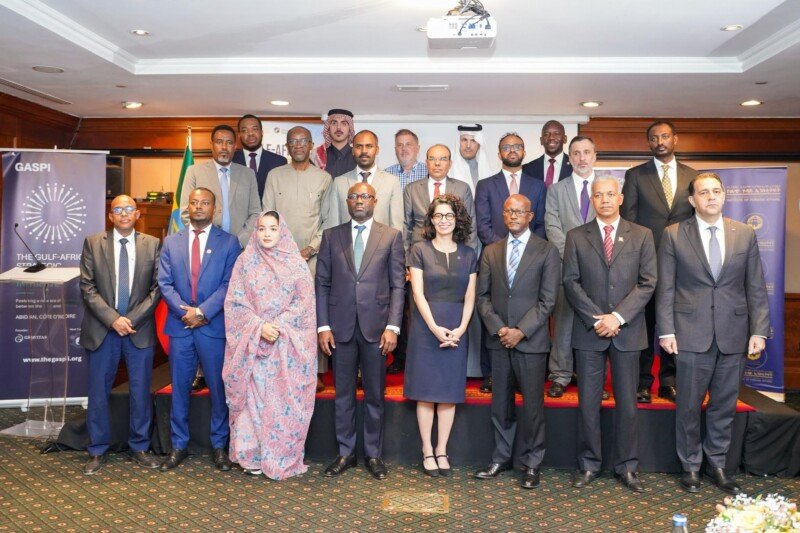
ADDIS ABABA – The inaugural regional convening of the Gulf–Africa Strategic Partnership Initiative (GASPI) has concluded in Addis Ababa, with Somalia using the platform to advocate for increased Gulf investment in infrastructure, climate resilience and regional economic integration.
The high-level forum brought together senior officials, policymakers, experts and representatives from Africa and Gulf states to discuss deepening economic cooperation, trade and investment in climate finance. Somalia’s delegation was led by Liban Dahir Cabsiiye, Executive Director of the Somali National Climate Fund and Head of the Horn of Africa Initiative Secretariat, who actively participated in discussions on fostering mutually beneficial partnerships between the two regions.
Somalia’s Pitch: Clarity, Trust and Long-Term Vision
During the discussions, Cabsiiye emphasised that African nations must clearly define their development priorities and objectives to attract investment and capital from Gulf states. He stressed that investment should contribute to the development of economic infrastructure, social and environmental resilience, workforce quality improvement, and human capacity development at national, regional and continental levels.
He also noted that investment in Africa requires cooperation built on trust, tolerance and long-term vision to ensure sustainable outcomes that benefit both sides. Representing Somalia’s Finance Minister Bihi Iman Egeh, who chairs the Horn of Africa Initiative, Cabsiiye reaffirmed Somalia’s commitment to working with all member states to strengthen regional trade integration, enhance private investment opportunities, and support the implementation of ongoing and future development projects in collaboration with development partners.
The Gulf–Africa Strategic Partnership Initiative aims to establish a permanent platform for strategic dialogue between African leaders and their Gulf counterparts, featuring high-level sessions on investments, infrastructure financing, food security, connectivity and energy transitions. The inaugural summit is scheduled to take place in Abidjan, Côte d’Ivoire, in March 2027, with the Addis Ababa convening serving as one of four African regional forums leading up to the main event.
Climate Finance and the Horn of Africa Initiative
Cabsiiye also underscored the critical importance of financing efforts to combat the impacts of climate change. He noted that climate change poses severe challenges to communities, livelihoods and economies across the Horn of Africa Initiative member states, requiring sustained cooperation and investment to strengthen community resilience and reduce future risks.
The Horn of Africa Initiative, which Somalia currently chairs, has been positioning itself as a platform for regional economic integration and climate resilience. Somalia has intensified its push to secure Gulf investment for reconstruction and infrastructure projects, with officials emphasising that the country considers its alliance with Gulf countries strategically significant, particularly regarding infrastructure financing and economic progress.
However, the Gulf’s growing interest in the Horn of Africa is not purely altruistic. The region has become a battleground for rival Gulf monarchies, with Saudi Arabia, the UAE, Qatar and others vying for influence over strategic Red Sea shipping lanes and regional alliances. Somalia has been actively courting Gulf support for urban reconstruction and infrastructure projects, while also navigating a complex web of competing Gulf interests. As Somalia moves away from the UAE’s orbit, it is cementing a new alliance with Saudi Arabia, Turkey and Egypt, a “Stability Bloc” aimed at countering the fragmentation of the Horn of Africa.
A Strategic Opportunity or a Debt Trap?
While Gulf investment offers significant potential for Somalia’s reconstruction, the terms of engagement remain a subject of concern. Somalia’s engagement with Gulf states comes at a time when the country is emerging from decades of conflict and remains heavily dependent on external financing. The risk of unsustainable debt accumulation, opaque deal-making and geopolitical entanglement looms large.
Gulf states have historically prioritised strategic influence over developmental outcomes in the region, and Somalia’s ability to negotiate favourable terms remains limited. The Horn of Africa Initiative’s emphasis on “self-sufficiency” and “economic integration” is commendable, but translating these principles into practice will require not only Gulf capital but also genuine reform, transparency and accountability on the Somali side.
The inaugural GASPI convening in Addis Ababa represents a step toward institutionalising Africa-Gulf cooperation, but the initiative’s success will depend on whether it can move beyond rhetoric to deliver tangible, equitable and sustainable outcomes. For Somalia, the challenge is to ensure that Gulf investment serves the country’s long-term development interests rather than simply advancing the geopolitical ambitions of external powers.
Way Forward
Somalia’s participation in the Gulf–Africa Strategic Partnership Initiative reflects its growing engagement with Gulf states as a source of investment, trade and diplomatic support. However, the country’s ability to benefit from this partnership will depend on its capacity to negotiate effectively, ensure transparency in deal-making, and align external financing with national development priorities. The Addis Ababa convening was a useful platform for dialogue, but the real test lies in the implementation of the partnerships it aims to foster.