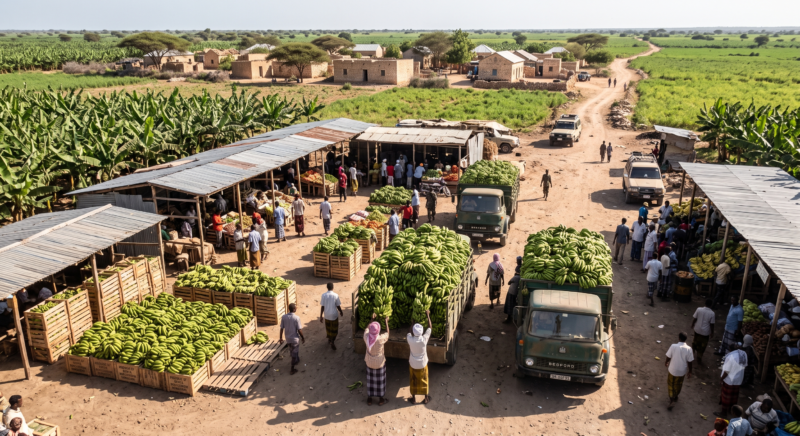

MOGADISHU – The escalating conflict between the United States and Iran has spilled directly into Somalia’s economic life, with fuel prices surging 77 percent overnight and renewed fears of Somali piracy as international naval patrols are stretched thin across the Red Sea and the Strait of Hormuz.
The crisis deepened on July 23 when Yemen’s Iran-backed Houthi movement claimed responsibility for attacking two Saudi oil tankers in the Red Sea, the Encelia and Layla, using ballistic missiles, cruise missiles and drones. The group imposed a maritime blockade on Saudi Arabia on July 20, declaring it a response to what they called an unjust siege. Saudi authorities confirmed that one vessel was hit, though all crew members were reported safe. The Houthis also claimed to have forced nearly 10 other ships to change course or turn back.
Somalia’s Diplomatic Response and Vulnerability
Somalia’s Ministry of Foreign Affairs strongly condemned the Houthi threats against Saudi Arabia, denouncing actions that undermine maritime security, freedom of navigation and international trade. The statement reaffirmed Somalia’s commitment to the sovereignty and territorial integrity of states and respect for international law.
Yet Somalia’s position is precarious. The country sits astride the Gulf of Aden and the Indian Ocean, one of the world’s most critical maritime corridors. The federal government has repeatedly raised concerns at the United Nations Security Council that instability in the Red Sea extends beyond regional boundaries and is closely connected to global peace and prosperity. However, Mogadishu’s diplomatic influence is limited, and its economy remains acutely vulnerable to disruptions it cannot control.
Economic Shock: Fuel Prices Surge 77%
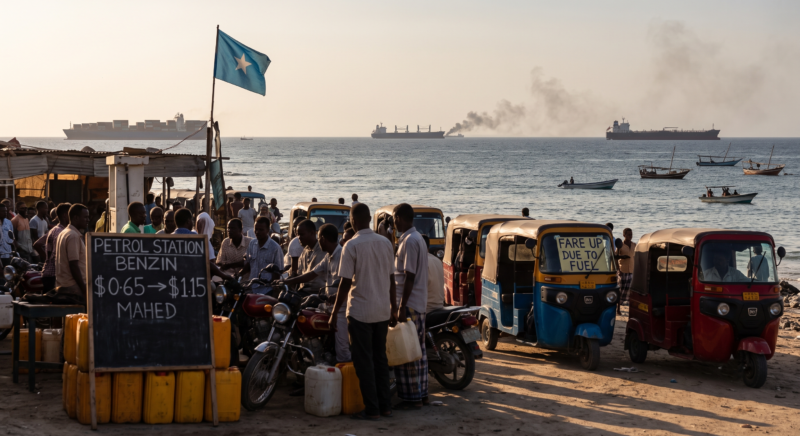
The most immediate impact has been economic. In Mogadishu, fuel prices jumped from $0.65 to $1.15 per liter overnight. The spike is a direct consequence of the intensifying military confrontation between Iran and the U.S.-Israeli coalition. Somalia is substantially dependent on imported refined petroleum products, making it exceptionally susceptible to interruptions in worldwide supply chains and oceanic security.
Market analysts have identified multiple compounding factors: elevated insurance costs for vessels traveling through the volatile Red Sea and Gulf of Aden, growing apprehensions regarding the operational stability of regional petroleum refineries, and erratic global crude oil prices responding to the possibility of an extended regional conflict. The economic repercussions were felt immediately across Mogadishu’s streets, with public transport operators warning that higher fares would place additional strain on a populace already confronting substantial inflation.
Piracy Returns as Naval Patrols Are Stretched
The Red Sea crisis has also triggered a resurgence of Somali piracy. Attacks by Iran-backed Houthi militants have reinvigorated piracy networks, with criminal groups growing in both number and force. A European naval commander has warned that pirates “think there is a window of opportunity due to the Houthis’ presence,” with increased traffic along Somalia’s coast and pirates venturing further out into the Indian Ocean. Recent attacks have been carried out by groups that are “well armed, organized and bigger in numbers” than ever before.
Three vessels were hijacked off Somalia’s coast within a week in April 2026 alone. The UK Maritime Trade Operations has raised the piracy threat level to “substantial”. Experts attribute the uptick to a period of heightened regional tension that has diverted international naval assets to the Red Sea to counter Houthi threats, leaving parts of the Indian Ocean more vulnerable.
Geopolitical Realignments and Somaliland
The crisis has also exposed deeper geopolitical fractures. Reports indicate Israel is seeking to monitor Houthi activities near the Bab el-Mandeb strait, potentially utilizing logistical access to Berbera Port in Somaliland. Houthi leaders have warned that any Israeli presence in Somali territorial waters would directly threaten Yemen.
Somaliland’s growing engagement with Israel, including its controversial recognition by Jerusalem in December 2025, has placed Mogadishu in an uncomfortable position. The Houthis have explicitly warned against expanded Israeli engagement in Somaliland, cautioning that such developments could threaten Somali sovereignty and the stability of the Red Sea corridor. For Mogadishu, this represents a diplomatic tightrope: condemning Houthi attacks while opposing external influence in Somaliland, all while maintaining relations with Saudi Arabia and other Gulf states that are themselves embroiled in the conflict.
Way Forward
The Red Sea crisis has exposed Somalia’s profound vulnerability to external shocks. The country’s position across the Gulf of Aden and along a major maritime corridor leaves it directly exposed to escalation across the Red Sea and beyond. The 77 percent fuel price hike is not an isolated event but a harbinger of deeper economic strain. Food prices are likely to follow, and the resurgence of piracy threatens to undermine Somalia’s fragile maritime security.
Somalia’s diplomatic statements are necessary but insufficient. The federal government’s ability to protect its economic interests, secure its maritime domain and navigate the competing pressures of Gulf rivalries remains severely constrained. As the Iran-US conflict intensifies and the Houthi blockade continues, Somalia’s hard-won recovery faces its most serious test since the end of the civil war.
Recommended Reading On ftlsomalia.com
- Fuel Prices Surge 77% in Somalia Due to Middle East Conflict
- Security Council Extends Red Sea Houthi Reporting Amid Somali Sovereignty Concerns
- Piracy Fears Grow as Three Vessels Hijacked Off Somalia in Week
- Somalia Welcomes US-Iran Memorandum of Understanding
- Somalia Excludes UAE from Condemnation of Iranian Attacks on Gulf States