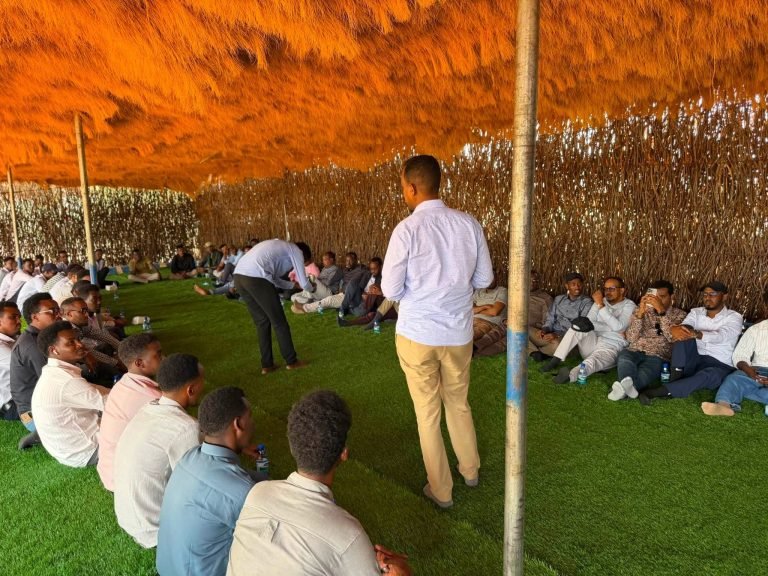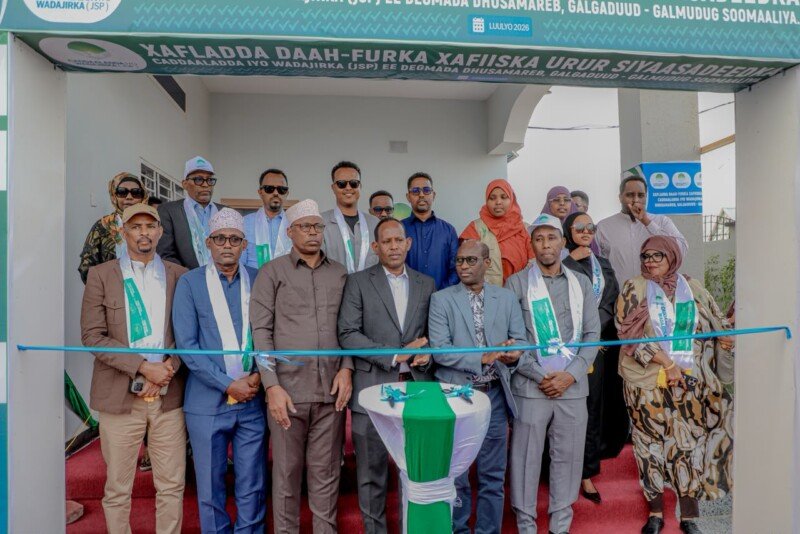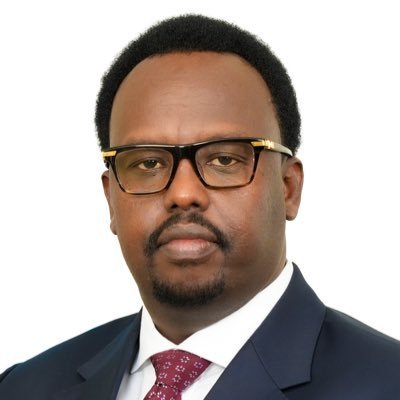

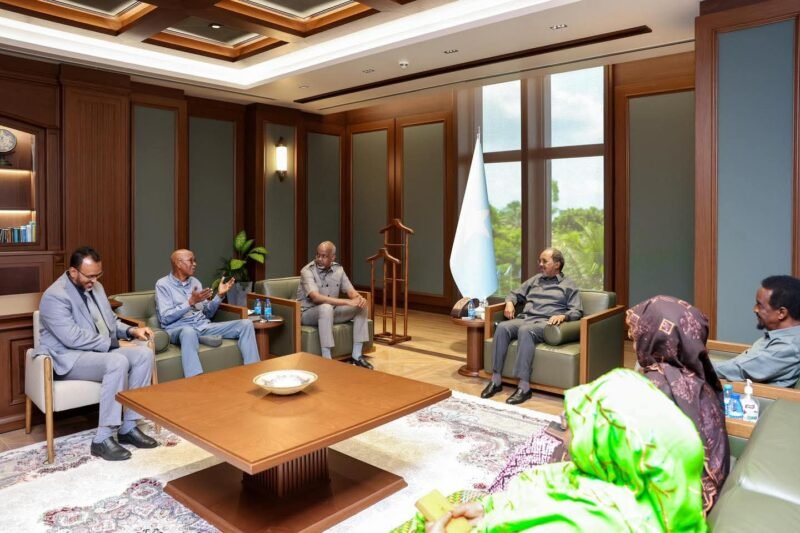
MOGADISHU – President Hassan Sheikh Mohamud convened a high-level meeting with a broad coalition of civil society representatives on Monday at Villa Somalia to review the completion of Somalia’s democratic transition, state-building milestones, and the roadmap toward universal direct elections. The gathering brought together leaders from women’s associations, youth networks, human rights organizations, and community development groups to assess progress in security, governance, and the planned shift to a one-person, one-vote electoral system.
President Mohamud has previously briefed civil society on his government’s top priorities, including job creation, increasing domestic revenue, eradicating terrorists, and completing the drafting of the country’s transitional constitution. Monday’s meeting reinforced the administration’s commitment to inclusive governance and highlighted the vital role of civil society in consolidating state institutions and fostering active citizen participation.
Universal Suffrage at the Heart of Democratic Transition
The president reaffirmed that Somalia is ready to move beyond its traditional clan-based politics. Mohamud has urged traditional leaders to endorse universal suffrage, stating that restoring citizens’ voting rights is vital for the nation’s advancement. During a state dinner for elders from various regions, the president emphasized that Somalia must transition to a “one person, one vote” system after years of indirect elections. “The country is ready for a ‘one-person, one-vote’ system. Indirect elections are a relic of the past; they are no longer relevant,” the president has stated.
President Mohamud has steadfastly defended universal suffrage, contending that previous indirect elections fueled extended political conflicts and instability. “We can never abandon the Somali people’s constitutional right to select their preferred leader after 57 years,” the president emphasized. “The incomplete elections held in the country have resulted in numerous challenges, with insecurity being the most significant.” The president also revealed that preparations for the one-person, one-vote electoral process have been entirely funded through domestic sources, clarifying that “no foreign currency whatsoever” was utilized to finance the initiative.
Civil Society’s Role in Peacebuilding and Governance
Monday’s meeting focused on building consensus on key national priorities, including federalism, constitutional reform, elections, and security. President Mohamud held similar talks with civil society representatives ahead of a proposed national dialogue set for June 15, reaffirming his commitment to inclusive participation and democratization. The president has consistently emphasized the need for continued consultation with all stakeholders to strengthen Somalia’s state-building process.
The Ministry of Interior, Federal Affairs and Reconciliation previously took part in a vital consultative meeting bringing together Civil Society Organizations and the National Independent Electoral and Boundaries Commission to discuss progress and challenges in Somalia’s local council elections process. Discussions centered on strengthening collaboration, ensuring transparency, and promoting inclusive participation, particularly for women and youth.
Recent Progress and Political Pushback
South West State recently successfully conducted one-person, one-vote elections across 13 districts. President Mohamud praised the peaceful conduct of these elections, describing the polls as “a new chapter in Somalia’s history.” Thousands of citizens, including elders, youth, and persons with disabilities, participated in casting ballots without any major security incidents reported.
However, the president’s push for universal suffrage has faced significant political opposition. The highly anticipated second round of direct negotiations between the Federal Government and the opposition Somali Future Council ended without a resolution. The primary source of conflict centers on the proposed electoral models: the federal administration maintains steadfast support for a nationwide “one-person, one-vote” system, while the opposition alliance has rejected this plan and endorsed an alternative, indirect electoral approach.
President Mohamud has declared that Somalia is ready to move beyond the politics of clan and personality. “We want to fulfill the promise we made: to finalize our provisional constitution and hold ‘One Person, One Vote’ elections,” the president declared at the 25th anniversary of the Arta Peace Conference in Djibouti, drawing applause from dignitaries and regional partners.
Commitment to Youth Engagement and Democratic Participation
President Mohamud has also directly engaged the country’s youth in the democratic process, presiding over the closing ceremony of the 6th Somali Youth Leadership and Innovation Summit in Mogadishu. Addressing young leaders, innovators, and policymakers, the president declared that the nation has reached a significant turning point and encouraged the youth to assume leadership positions. “The country today greatly needs youth leadership. For this reason, I believe that you have the potential to accomplish great things for development,” Mohamud stated.
The meeting concluded with a shared understanding that continued cooperation among state institutions, electoral bodies, and civil society is essential for achieving fair and representative local governance. The government has restated its dedication to collaborating with civil society and international partners to support a trustworthy and comprehensive electoral process.
Recommended Reading On ftlsomalia.com:
- Somali President Backs Direct Elections, Dismisses Indirect Voting System
- President Mohamud Appeals to Elders for Support of Universal Voting Rights
- President Stands Firm on One-Person, One-Vote Elections
- Somalia Election Talks Collapse Amid Dispute
- President Mohamud Says Somalia Poised to Move Beyond Clan Politics