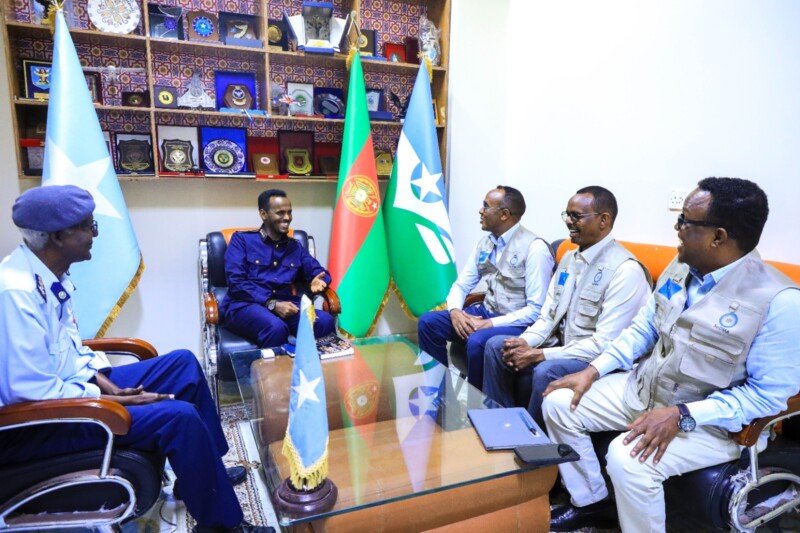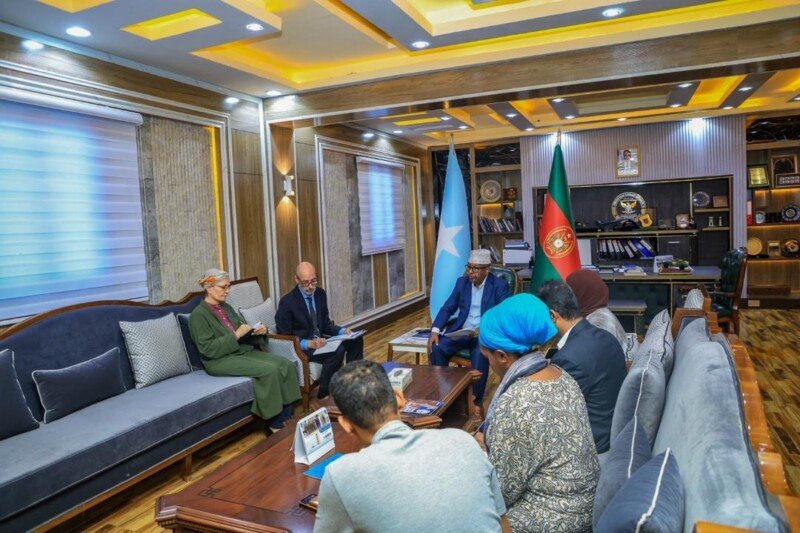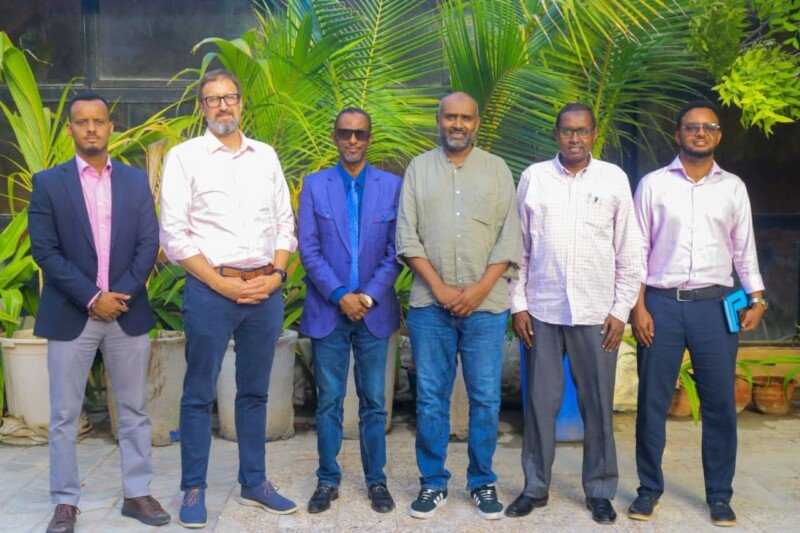

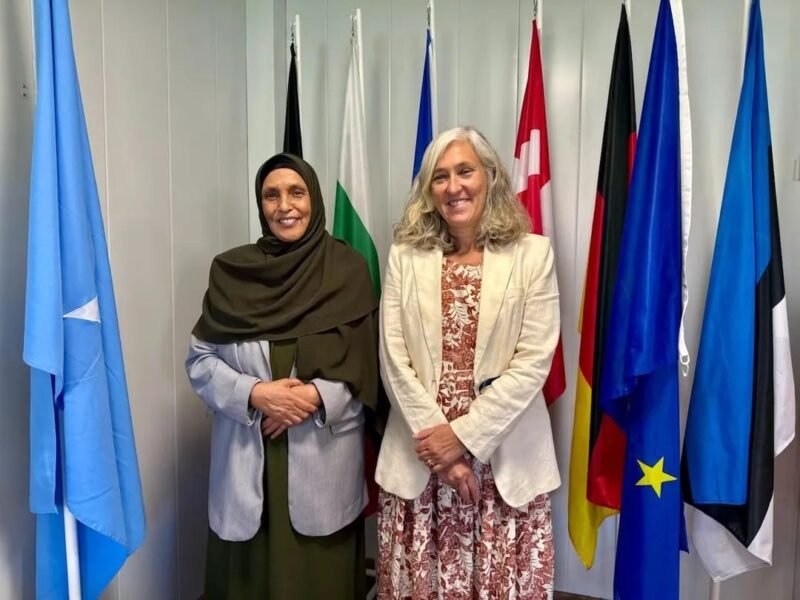
MOGADISHU: Somalia’s Independent National Human Rights Commission and the European Union have agreed to deepen their cooperation on human rights, accountability, and governance following high-level talks in the capital. The meeting, held on Wednesday, brought together Commission Chairperson Dr. Maryam Qasim Ahmed and the EU Ambassador to Somalia, Francesca Di Mauro, to discuss ways to strengthen the country’s human rights framework as part of ongoing federal reforms.
The discussions centered on broadening support for the Commission’s activities, improving its institutional capacity, and fostering collaboration on rule of law, transparency, and protection of vulnerable communities. The partnership with the EU is expected to help Somalia enhance oversight mechanisms and public accountability at a time when the government is under growing pressure to demonstrate progress on governance and human rights. The bloc’s steadfast support for Somalia’s transition has been reaffirmed through various high-level engagements, including a recent Partnership Dialogue in Mogadishu.
The meeting follows the formal establishment of the Independent National Human Rights Commission, which was finalized in December 2025 when President Hassan Sheikh Mohamud signed a decree appointing its members, coinciding with International Human Rights Day. The creation of the Commission fulfills a key requirement of the Provisional Constitution and represents a significant milestone in Somalia’s state-building process. Dr. Maryam Qasim Ahmed was elected as the first Chairperson of the Commission in February 2026, bringing over four decades of experience in human rights, social services, and public leadership.
The talks also build on broader diplomatic engagements between Mogadishu and Brussels. Somalia and the EU held their first Partnership Dialogue on May 10, 2026, under the Samoa Agreement, addressing security, governance, migration, and economic development. The EU delegation was led by Ambassador Di Mauro, who has also emphasized the importance of inclusive politics and democratization in line with the EU-Somalia Joint Operational Roadmap. These engagements are part of the Federal Government’s broader strategy to rebuild civilian institutions while balancing security operations against Al-Shabaab.
The collaboration comes as Somalia pursues constitutional reforms and political transition, with international partners increasingly linking sustained development and funding support to institutional improvements and stronger democratic frameworks. The European Union remains one of Somalia’s primary international partners, backing initiatives in governance, elections, stabilization, and judicial system reforms. For the newly established Human Rights Commission, the partnership with the EU provides critical technical and financial resources to help the body fulfill its mandate of monitoring human rights standards, investigating violations, and ensuring the nation adheres to international conventions.
Recommended Reading on ftlsomalia.com:
- Somalia, EU Hold High-Level Partnership Dialogue in Mogadishu
- EU Reassures Somalia of Steadfast Support as New Phase of Partnership Takes Shape
- EU Envoy Meets Somali Speaker, Backs Inclusive Politics and Democratization
- Justice Minister and Human Rights Commission Discuss Prison Reforms
- Somali Human Rights Commission Calls for Release of Detained Journalists
- Minister Welcomes Presidential Action on Human Rights Commission