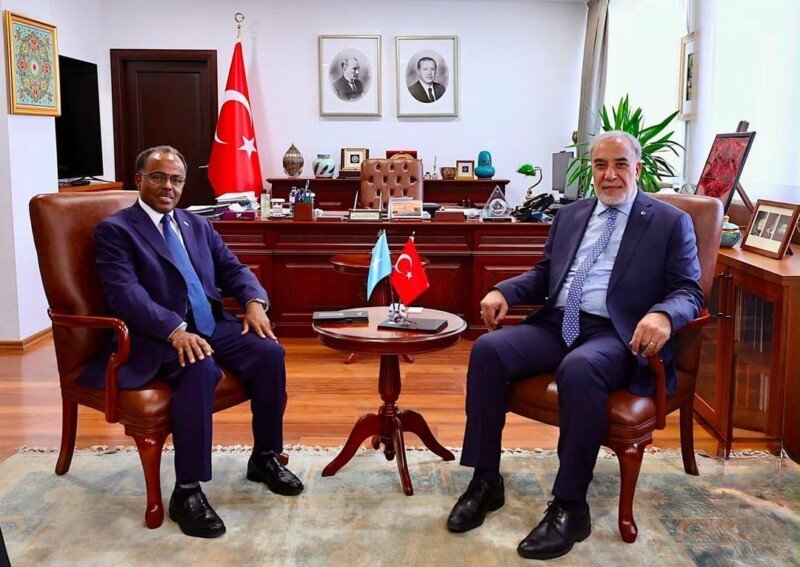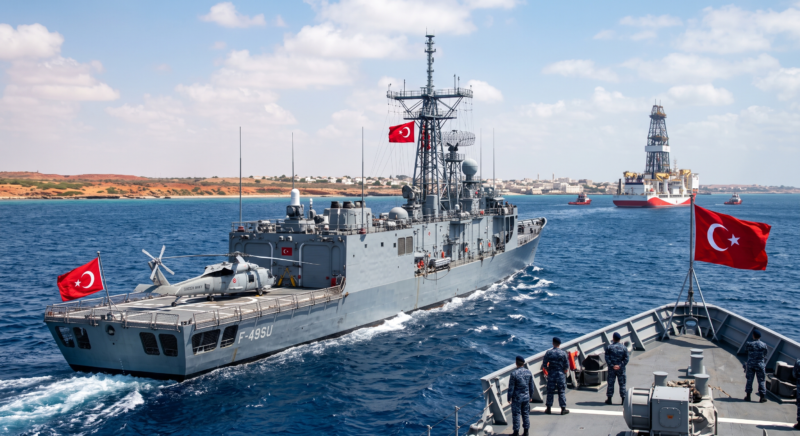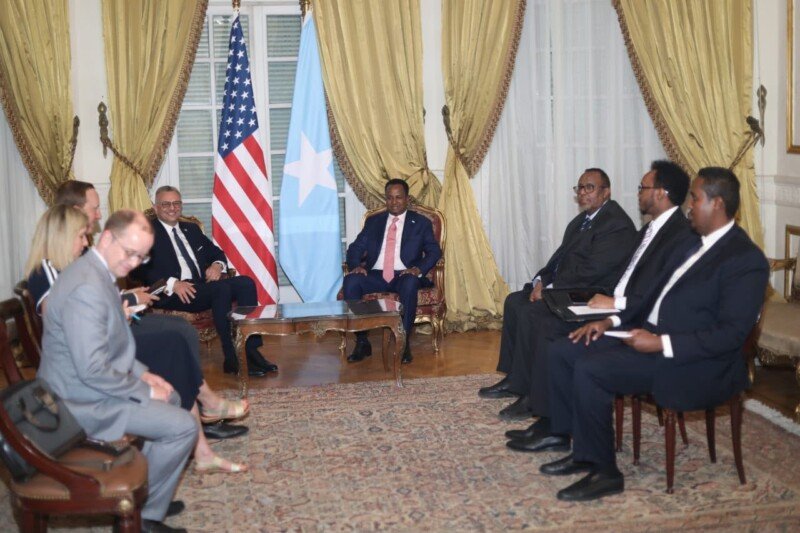


MOGADISHU — Somalia’s government has indicated it might extend its response to Israel’s recognition of Somaliland and appointment of an ambassador to the breakaway region by potentially restricting access to the Bab el-Mandeb Strait, a statement that has drawn significant attention given Mogadishu’s historical dependence on Western support.
“Any country interfering in Somalia’s internal affairs and compromising its territorial integrity and sovereignty will face repercussions, including potential restrictions on access to the Bab-el-Mandeb Strait,” Somali Ambassador to Ethiopia and the African Union, Abdullahi Warfa, said in a statement posted on social media.
The remarks came after Israel began implementing its agreement with Somaliland to exchange ambassadors, following Tel Aviv’s recognition of the breakaway region in December 2025 as the first United Nations member state to do so.
Strategic Importance of the Bab el-Mandeb Strait
The Bab el-Mandeb Strait, located between Djibouti and Yemen, is a strategically vital waterway connecting the Red Sea to the Gulf of Aden and serves as a critical artery for global commerce. Analysts estimate that roughly 14 percent of global trade , including a significant share of container shipping, passes through the narrow waterway, linking the Indian Ocean to the Mediterranean via the Suez Canal.
The security of this maritime passage is of paramount importance to regional and global powers. Egyptian President Abdel Fattah al-Sisi has announced that Egypt is making efforts to bolster stability and security in the Horn of Africa to protect the strategically important Red Sea maritime routes, emphasizing that the Red Sea passage is essential not only for regional but also for global security .
Regional Military Coalition for Red Sea Security
Somalia has been actively engaging with regional powers to secure the Red Sea corridor. Saudi Arabia is reportedly finalizing negotiations for a new military coalition with Somalia and Egypt, a move that signals a potential shift in regional dynamics . The pact seeks to enhance strategic collaboration on Red Sea security and deepen military ties between Mogadishu and Riyadh .
This development follows the Federal Government of Somalia’s recent decision to terminate security and port agreements with the UAE, with Mogadishu alleging that the Gulf nation had violated its sovereignty .
Somalia-Yemen Maritime Security Cooperation
Somalia has also been strengthening bilateral maritime security cooperation with Yemen. Somalia’s Defense Minister, Ahmed Moallim Fiqi, convened a strategic meeting in Cairo with his Yemeni counterpart Lieutenant General Mohsen Mohammed Ahmed Al-Daari, with discussions centered on enhancing defense collaboration and protecting the vital maritime passage connecting the two nations .
At the core of the deliberations was the pressing requirement to reinforce maritime security in the Red Sea and the Gulf of Aden. Both officials examined collaborative approaches to combat the illegal transfer of weapons, which terrorist organizations utilize to undermine regional stability . They concurred on the importance of regulating all forms of unlawful movement to protect both regional stability and global maritime security .
Somalia’s Maritime Security Commitments
Somalia has taken significant steps to strengthen its maritime governance framework. The Federal Republic of Somalia has officially acceded to the Convention on the International Mobile Satellite Organization (IMSO), representing a major achievement in the country’s maritime safety and technological advancement .
This important step underscores the Federal Government of Somalia’s commitment to bolstering maritime security and promoting global cooperation. Membership in IMSO grants access to essential worldwide satellite communication networks vital for maritime safety, search and rescue missions, and oversight of shipping in its territorial waters .
The Somali Fisheries Development Office has launched a crucial training initiative aimed at enhancing the operational capacity of key maritime institutions, with a focus on improving sea communication, safety, and security within Somalia’s maritime domain .
Analysts Question Somalia’s Capacity to Enforce Blockade
Despite the diplomatic posturing, analysts noted the statement carries considerable risks for Somalia, at a time when Western powers are particularly sensitive to disruptions in key global shipping routes.
“From a purely international maritime law perspective, threatening a blockade of a sea lane that is not ‘sovereign’ property of a single state could be interpreted as an act or declaration of war,” prominent Horn of Africa analyst Rashid Abdi said.
Abdi indicated that among the options Somalia might consider against Israel, this threat was least likely to win sympathy or international backing. Somalia lacks the capacity to enforce such a blockade, possessing no functional navy, no air force capable of expeditionary operations, and no stockpiles of ballistic missiles. Nevertheless, analysts noted the rhetoric still carries diplomatic repercussions.
“This specific rhetoric is an own goal: seeking to ‘punish’ Israel by blocking the Red Sea risks aligning Somalia with the Houthis, aggravating brittle ties with the US,” Abdi added.
Saudi Military Pact and Red Sea Security
Somalia has taken concrete steps to build its maritime security capabilities through international partnerships. Somalia has established a significant military cooperation agreement with Saudi Arabia, marking a potential transformation in regional geopolitics aimed at securing the Red Sea and rebalancing influence in the Horn of Africa .
According to officials, the landmark agreement centers on enhancing defense collaboration through military training, equipment modernization, and intelligence sharing, with a focus on Red Sea security through joint initiatives to safeguard vital maritime passages against piracy and geopolitical threats .
Israel’s Strategic Interest in Somaliland
The warning follows Israel’s decision in December 2025 to recognize Somaliland — an announcement that triggered strong objections from Mogadishu and drew mixed reactions internationally. More recently, Israel moved to appoint its first ambassador to the breakaway region, further escalating tensions.
Israel has formally accepted Somaliland’s inaugural ambassador following its highly controversial recognition of the breakaway northern territory . Mohamed Hagi, who previously represented Somaliland as its ambassador to Taiwan, has officially assumed his new diplomatic position in Israel .
Somaliland President Abdirahman Mohamed Abdullahi “Irro” conducted a high-level telephone conversation with Israeli Prime Minister Benjamin Netanyahu, discussing regional security amid the expanding conflict between various Middle Eastern nations .
Furthermore, intelligence reports and regional leaders indicate that Israel intends to establish a strategic military base in the Somaliland region. This proposed expansion of Israel’s military footprint proceeds despite facing severe, direct threats from both Yemeni Houthi rebels and Al-Shabaab militants, who have publicly warned they would consider any Israeli installation a valid military target .
International Condemnation of Israel’s Recognition
The Israeli move has drawn widespread opposition from the international community. Egypt’s Foreign Minister Badr Abdelatty has reiterated Cairo’s firm condemnation of Israel’s recognition of the breakaway region of Somaliland, describing the move and the subsequent appointment of a diplomatic envoy as a “flagrant violation” of international law .
“Stability in Somalia remains critical to the security of the Horn of Africa and is closely linked to Egypt’s national security,” Abdelatty said, underlining Cairo’s pledge to support Mogadishu across military, security, and humanitarian sectors .
Foreign ministers from 12 nations — including Egypt, Somalia, Sudan, Libya, Bangladesh, Algeria, Saudi Arabia, Palestine, Turkey, Indonesia, Pakistan, and Kuwait — issued a joint statement strongly condemning Israel’s announcement, describing the action as a clear breach of Somalia’s sovereignty and territorial integrity .
Geopolitical Implications
Despite the diplomatic posturing, the threat to block the Bab el-Mandeb Strait appears less like a policy shift and more like a rhetorical move aimed at projecting strength in a moment of diplomatic frustration. In geopolitics, declarations are easy; enforcement is harder. Controlling a global maritime chokepoint typically requires more than a press statement.
Somalia does not have direct jurisdiction over these waters. Observers have pointed out that Somalia remains under a Chapter VII of the UN Charter mandate, raising questions about the state’s actual capacity to enforce such threats, let alone regulate international shipping.
The Federal Government of Somalia continues to urge the international community to stand against any measures that threaten the unity of the Somali Republic or seek to legitimize secessionist claims. Somalia has called upon the Government of Israel to reconsider and retract its recognition of Somaliland and to fully respect Somalia’s sovereignty, territorial integrity, and political independence.