
NEW YORK – As the United Nations prepares to decide the future of the African Union Support and Stabilization Mission in Somalia (AUSSOM), a growing debate in Washington is highlighting the delicate balance the United States must strike between continued security assistance and the need for Somali ownership.
The State Department has reportedly expressed frustration with what it views as insufficient progress by Somali political leaders in assuming responsibility for their own security. According to a Reuters report, the United States has warned it will oppose any support for the continuation of the AUSSOM mission beyond its current mandate, which is set to expire in early 2027. While Somali forces increasingly lead counterterrorism and other security operations, the mission still depends on UN logistical support for transportation, food and medical services. African Union officials warned in an emergency meeting last week that without UN support, the mission would be unsustainable. The United States has contributed nearly $2 billion to the UN support mission in Somalia, according to the State Department.
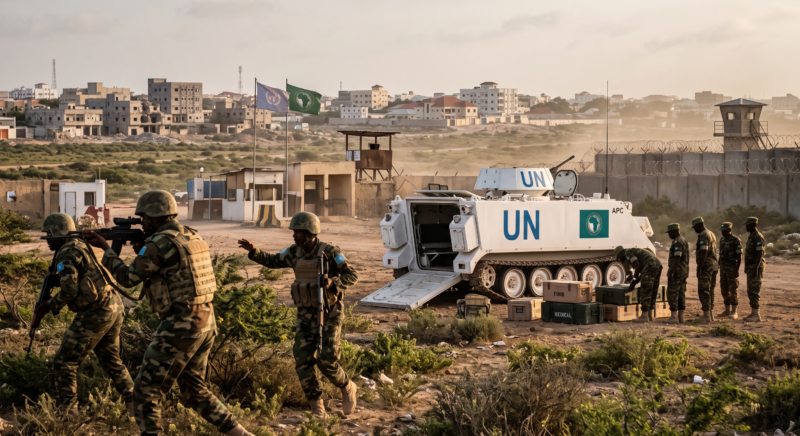
AUSSOM, which officially replaced the African Union Transition Mission in Somalia (ATMIS) in January 2025, currently has nearly 12,000 personnel supporting Somali security forces, operating with a reduced force under a new Concept of Operations. The mission reflects a shift in AU strategy from direct combat support to a more targeted approach focused on training, advising and institutional capacity building for Somali security forces. AUSSOM has reaffirmed its support for Somalia’s peace, with the mission’s leadership emphasising the importance of a coordinated approach to stabilisation[reference:0].
A Persistent Terror Threat
Al-Shabaab remains one of al-Qaida’s strongest affiliates. According to the US Director of National Intelligence, the designated terror organisation is responsible for the assassination of Somali peace activists, international aid workers and journalists, and for blocking the delivery of aid from some Western relief agencies during the 2011 famine that killed tens of thousands of Somalis. The group continues to control large areas of southern and central Somalia and has repeatedly shown its ability to exploit political divisions and weak state institutions.
While the majority of its attacks have been targeted at East African countries, the terror group has directly attacked US military bases overseas, including the 2020 attack at the Manda Bay military base in Kenya. In December 2025, a Somali Al-Shabaab operative received a life sentence in a US prison for a plot to recreate the attacks of September 11.
Progress Amid Persistent Challenges
Despite the security challenges, Somalia has made meaningful progress. In late 2023, Somalia completed the International Monetary Fund’s Heavily Indebted Poor Countries debt relief process, eliminating $4.5 billion in debt after years of difficult economic reform. Somalia is now attracting new international financing and private investment. However, since the collapse of its authoritarian regime in 1991, no direct national elections have been held, and the political system remains fragmented.
A Framework for Sustainable Engagement
Elizabeth Kennedy Trudeau, the Bradford M. Freeman Managing Director of Global Policy at the George W. Bush Institute, argues that the debate on US security support should not be framed as a choice between writing a blank check and walking away. Instead, the United States can emphasise country ownership and greater responsibility for financing, implementing and sustaining programmes over time. The principle is not that the United States can or should withdraw abruptly, but that US and other international support should slowly and transparently reinforce local leadership, measurable reforms and shared accountability while also investing in sustained economic and political progress to thwart recruitment into terror groups.
Trudeau contends that Somalia’s security sector deserves the same framework. Rather than treating assistance as open-ended or halting it before Somali institutions are ready, Washington can use its leverage to transparently secure concrete commitments from Somali leaders while maintaining support tied to clear benchmarks in security sector reform and fiscal accountability.
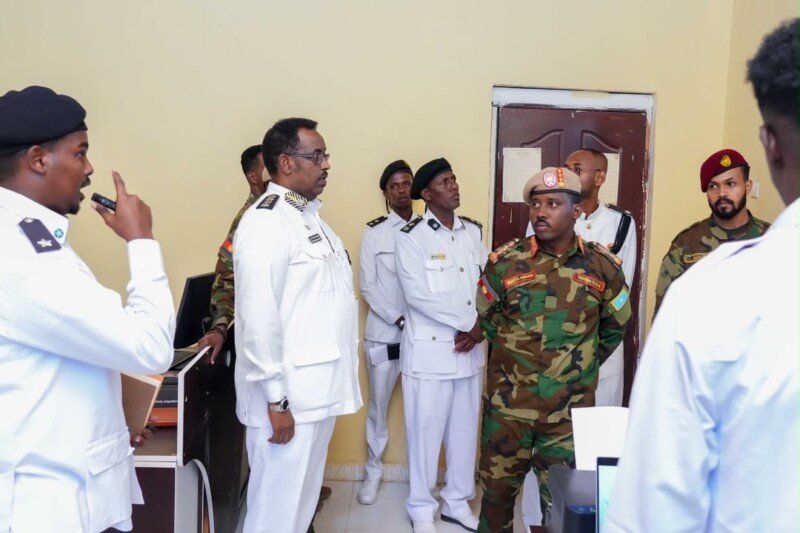
Somalia’s Defence Minister has inaugurated a strategic board to unify security operations and reform, reflecting growing efforts to strengthen institutional capacity. The Somali Army Chief and US officials have held discussions on security cooperation, underscoring the ongoing bilateral engagement even as Washington signals frustration[reference:1]. The idea is clear: Somali leaders should increasingly assume responsibility for their country’s future, but international partners should recognise that building effective institutions takes time. Abruptly withdrawing support before those institutions are ready risks creating the very vacuum that Al-Shabaab has spent years trying to exploit.
Way Forward
The current debate over AUSSOM is much more than the future of one peace mission. It is about building a strategy that encourages greater Somali ownership while preserving hard-won security gains that safeguard US interests. A stable Somalia, governed by capable institutions and increasingly able to provide for its own security, advances both Somali aspirations and American interests.
Recommended Reading On ftlsomalia.com
- Donor Fatigue Grows as $7B Security Investment in Somalia Faces Scrutiny
- Somali Army Chief, U.S. Official Discuss Security Cooperation
- Al-Shabaab Exploits Somalia’s Divisions to Fuel Violence, Warns ISS
- Defence Minister Inaugurates Strategic Board to Unify Security Operations and Reform
- Somalia Secures IMF Staff-Level Agreement, Pledges Stronger Push for Economic Stability
- AUSSOM Reaffirms Support for Somalia’s Peace on Africa Day