
MOGADISHU – For Somalia’s malnourished children, already facing the dual crises of severe drought and sharp reductions in international aid, the escalation of conflict in the Middle East has brought more than rising fuel costs. It has become a question of survival. Critical shortages of essential therapeutic foods, worsened by shipping disruptions linked to the Iran crisis, have compelled clinics to reject severely malnourished children and ration available supplies, according to humanitarian reports.
Nearly half a million children under five are experiencing “severe acute malnutrition” or “wasting,” the most dangerous form of hunger, according to the Integrated Food Security Phase Classification (IPC). New findings from the IPC report indicate that 1.84 million children under five are projected to suffer from acute malnutrition during 2026, with approximately 500,000 facing life-threatening severe malnutrition. The delays in treatment, compounded by reduced donor funding, are intensifying an already dire humanitarian emergency.
Clinics Forced to Ration Lifesaving Supplies
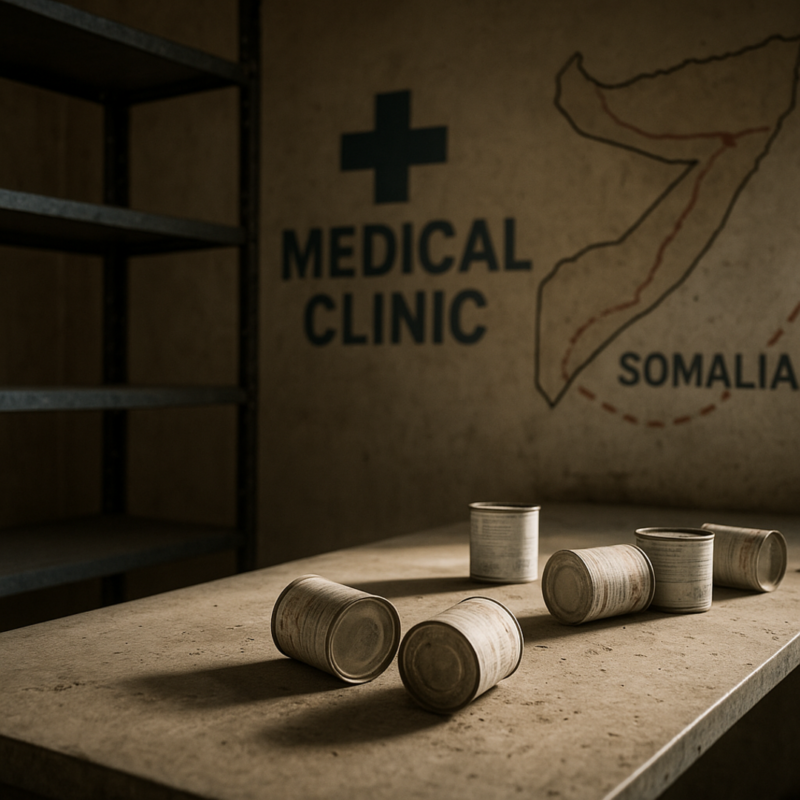
Healthcare professionals in Baidoa and Mogadisho report having to conserve limited supplies of specialized therapeutic milk and Plumpy’Nut, a nutrient-rich peanut-based paste crucial for stabilizing severely malnourished children. “Given the extensive needs and insufficient supplies, we’ve been forced to continually decrease the portions provided to children,” stated nurse Hassan Yahye Kheyre. According to the International Rescue Committee (IRC), which supports the facility, the 225 cartons of peanut paste remaining at his clinic — serving over 1,200 children — will likely be depleted within two weeks. “When treatment is inconsistent, children become extremely weak both physically and mentally. At that point, it might be irreversible,” Kheyre added.
The IRC is among three aid organizations indicating that transportation delays and increasing costs associated with the Iran conflict are worsening an already complex supply situation. An IRC order for peanut paste sufficient to feed more than 1,000 children has been stranded for two months at the Indian port of Mundra, now overwhelmed with redirected shipments unable to enter the Gulf, according to Shukri Abdulkadir, IRC’s Somalia coordinator. Upon learning that the Indian-made product would require at least an additional 30 days for delivery, the IRC canceled the order and placed an emergency order from Nairobi while transferring supplies from Mogadishu to Baidoa.
Shipping Disruptions Multiply Pressure on Aid System
Increased freight and manufacturing costs have driven up prices sharply. CARE International reported that the cost of a single carton of therapeutic food has risen to $200 from $55, meaning available funds now provide enough for only 83 children instead of 300. In 2024, shipments of therapeutic milk and ready-to-use therapeutic food (RUTF) from Europe to Somalia normally required 30 to 35 days, extending to 40 to 45 days in 2025 as ships rerouted around Africa due to security threats in the Red Sea. Following the escalation of conflict involving the United States, Israel, and Iran — and Iran’s subsequent closure of the Gulf entrance — a shortage of vessels has extended this timeframe to 55 to 65 days, according to Mohamed Omar, head of Health and Nutrition at Action Against Hunger (ACF) in Mogadishu.
The compounding crises come as Somalia’s health system, which relies on external partners for approximately 95 percent of its financing, is already under severe strain. Aid reductions have left hospitals and community health programs struggling to maintain operations, with the World Health Organization warning that the funding shortfall jeopardizes the country’s ability to respond to outbreaks and humanitarian emergencies.
Personal Stories Amid Worsening Hunger Crisis
At the clinic in Baidoa operated by IRC’s local partner READO, mother-of-nine Muumino Adan Aamin has been attempting to obtain peanut paste for Ruweido, her 11-month-old daughter. Ruweido requires a daily regimen of three sachets, but Aamin has been refused twice as the clinic had no stock available either time. Aamin nearly lost her daughter Anisa to hunger during a previous drought that brought Somalia to the edge of famine in 2017. “Just bones and skin,” the toddler only survived because of peanut paste, Aamin said. Nine years later, a new drought has driven 6.5 million people, or one in three Somalis, into acute hunger.
The scale of the crisis continues to grow. According to the latest IPC report, approximately 4.4 million people are expected to face crisis-level hunger or worse between April and June 2026, with 3.6 million already experiencing such conditions. Internally displaced persons (IDPs) remain the most vulnerable, with communities in Mogadishu, Baidoa, Dhusamareb, Galkayo, and Kismayo currently experiencing “Emergency” hunger levels, classified as IPC Phase 4.
Admissions of severely malnourished children to Action Against Hunger-supported health centers between January and March increased by 35 percent compared to the previous year. Staff at Daynile General Hospital, which is treating 360 children for wasting, reported on April 20 that they had barely sufficient supplies for the week. “Some children’s nutritional condition has already deteriorated,” said health and nutrition supervisor Xafsa Ali Hassan.
Funding Gaps and the U.S. Aid Suspension
Somalia was not included among 17 impoverished nations selected to receive a portion of this year’s humanitarian funds distributed by the United States to the UN Office for the Coordination of Humanitarian Affairs (OCHA). The United States had announced the suspension of all ongoing assistance programs benefiting the Federal Government of Somalia following allegations of aid diversion and the destruction of a U.S.-funded WFP warehouse, though the suspension was later partially lifted after the government acknowledged the disruption. The resumption of WFP food distribution came after Mogadishu confirmed that all affected commodities had been returned, but broader funding constraints persist.
OCHA reports that over 200 health facilities have been closed and mobile health teams dissolved. United Nations agencies in Somalia have dismissed more than 680 employees since early 2025, including 158 international personnel and 522 local Somali workers, due to acute funding shortages. The organization stated in December that more than 60,500 severely malnourished children had gone untreated as a consequence, and warned that this figure could rise to 150,000 if funding shortfalls continued.
Subsequently, with the outbreak of the Iran conflict, domestic fuel prices in Somalia surged by 150 percent. “Somalia has been severely affected by the Iran war because people are still recovering from the consequences of the previous drought,” stated IRC’s Abdulkadir. “It’s extremely challenging for people to withstand these additional pressures.”
Appeals for Urgent Assistance
The United Nations has officially requested $852 million to address urgent humanitarian needs in Somalia, marking a significant 40 percent reduction from the 2025 funding appeal of $1.42 billion. Yet only 14 percent of this amount has been received so far. The World Food Programme (WFP) is urgently appealing for $95 million to sustain critical food and nutrition operations through August 2026. Without an immediate injection of funds, the WFP warns that its lifesaving programs could be forced to shut down entirely, with emergency food aid recipients having already plummeted from 2.2 million in early 2025 to just over 600,000 currently.
Meanwhile, the number of people facing catastrophic hunger continues to rise. Nearly 6.5 million people are experiencing severe hunger as drought conditions, ongoing conflict, and massive reductions in global aid exacerbate the crisis. By the end of March, that figure was anticipated to include those experiencing “Crisis” or worse levels of food insecurity. Even with average rainfall during the upcoming Gu season from April to June, models project that 5.5 million people will remain in crisis or worse conditions later in 2026, as recovery from extreme drought requires sustained support over considerable time.