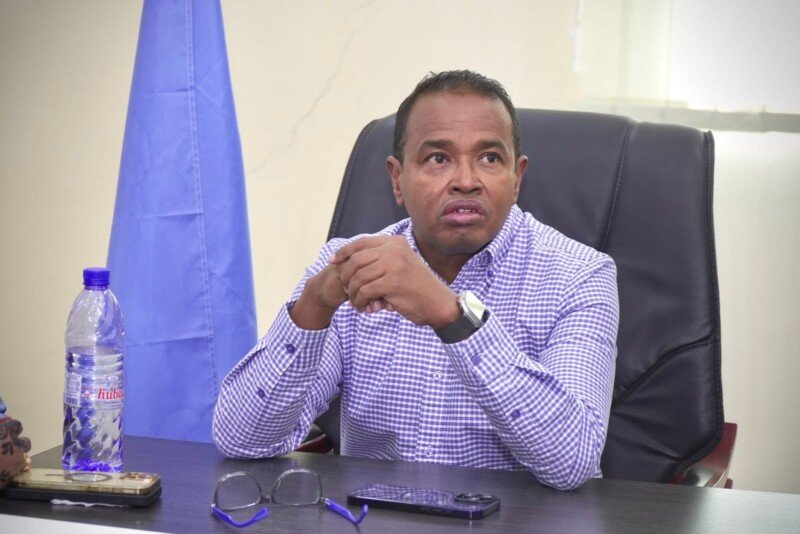

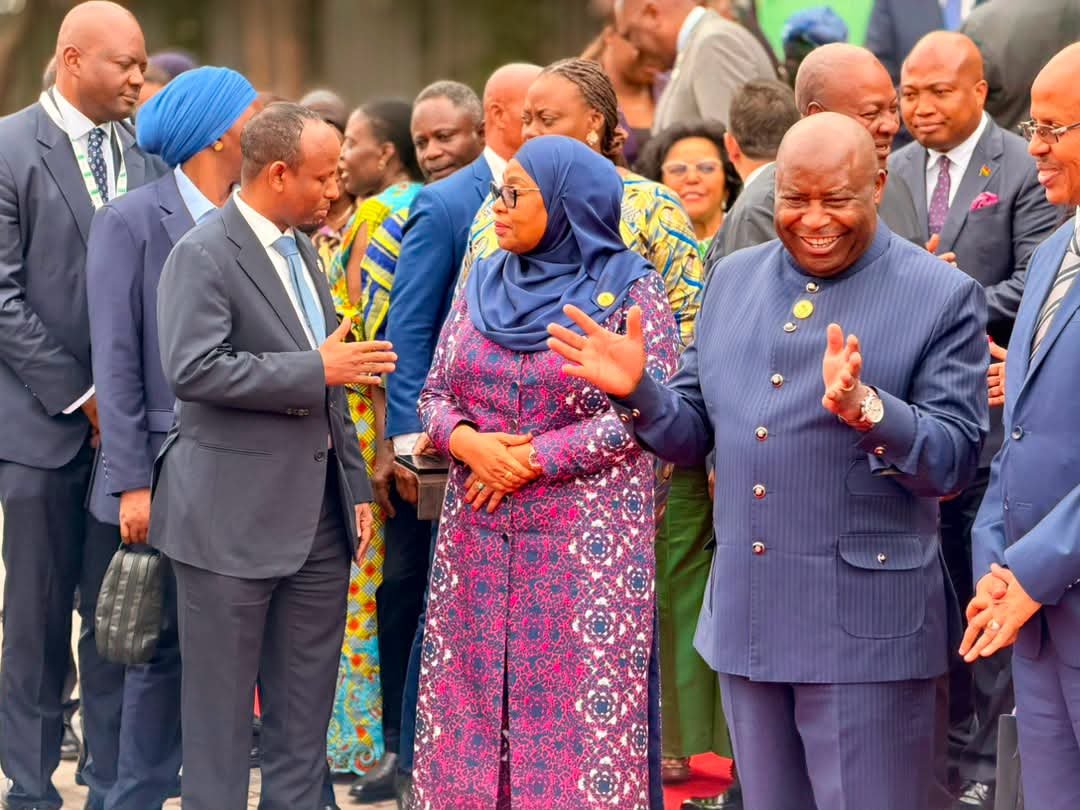
ACCRA – Somalia’s Minister of Health and Human Services, Dr. Ali Haji Adam, has represented President Hassan Sheikh Mohamud at the 25th Extraordinary Session of the African Union Assembly in Accra, Ghana, where he reaffirmed the government’s commitment to strengthening primary healthcare and building resilient health systems. The summit, held under the theme “Advancing Justice, Equity and Universal Health Coverage: Ending AIDS, TB, Improving Maternal Health, Addressing Endemic Non-Communicable and Neglected Tropical Diseases and Conditions in Africa,” brought together African heads of state, health ministers, policymakers, and development partners to chart a new course for the continent’s health sector.
In his address, Dr. Adam told the assembly that Somalia has made the delivery of Primary Health Care (PHC) a national priority, treating it as the foundation on which quality, equitable health services reaching the whole population are built. He outlined reforms the Federal Government is pursuing across health facilities, the health workforce, community services, digital health systems and emergency preparedness. The minister also reaffirmed Somalia’s full support for the Accra Declaration and the African Union’s vision of resilient health systems, calling on African nations to strengthen cooperation, domestic financing and solidarity in pursuit of equitable health and lasting development for the continent.
A Health System in Crisis
Somalia arrived in Accra with a record that speaks to the agenda rather than merely applauding it. Within this month alone, the minister carried the case for regional cooperation, local pharmaceutical production and sustainable health financing to the regional health investment forum in Nouakchott. At home in the same period, the Ministry launched a national Training of Trainers programme for immunization with Gavi, the World Health Organization and UNICEF. The minister also highlighted achievements in cold chain expansion, vaccine distribution, and capacity-building for healthcare workers, stating that coverage of primary healthcare in Somalia has risen from around 42% in 2020 to over 65% in 2025, with national immunization coverage reaching nearly 70%.
However, the gap between rhetoric and reality remains stark. Somalia’s health system is among the world’s most challenged, shaped by fragmentation, chronic resource scarcity, and a longstanding urban bias that leaves rural and peri-urban communities underserved. The country’s Universal Health Coverage service coverage index improved from 22% in 2019 to just 27% in 2024, remaining the lowest globally. With a UHC index score of around 25 to 33.5, Somalia ranks lowest among countries analyzed.
Maternal mortality remains alarmingly high at approximately 563 to 621 deaths per 100,000 live births, one of the highest rates in the world. Neonatal mortality stands at 36 per 1,000 live births, with only 32% skilled birth attendance and limited antenatal and postnatal care utilization. An estimated 1.9 million children under five are expected to suffer from acute malnutrition during 2026, including 493,000 facing severe acute malnutrition.
The Funding Crisis
The structural fragility of Somalia’s health system is compounded by a chronic funding crisis. An estimated 95% of Somalia’s health budget depends on external financing. Funding cuts have already forced the closure of over 200 health facilities, severely limiting access to essential care. According to WHO projections, 618 health facilities, including 51 district hospitals, 413 health centers and 154 primary health units, will likely close their doors in 2026. These facilities are lifelines for millions of Somalis.
Chronic underfunding is foundational: government health expenditure remains among the lowest globally, with less than 10% of total health spending coming from public sources. The system exemplifies the “illusion of free care,” where policy promises of universal access are systematically undermined by structural deficits and the pervasive reality of informal payments. Service quality in public hospitals is frequently constrained by weak governance arrangements.
Promises Without Delivery
The Accra summit’s call for a decisive shift from commitments to implementation is a recognition of a problem that has plagued African health governance for decades. AUC Chairperson Mahmoud Ali Youssouf underscored that the AU Roadmap to 2030 and Beyond is Africa’s implementation compact, designed to end AIDS, eliminate preventable maternal and child deaths, combat communicable and non-communicable diseases, strengthen resilient health systems, and advance Universal Health Coverage. He urged member states to translate the Accra Declaration and national pledges into measurable action, warning: “Future generations will remember this Summit not for our speeches, but for whether we changed the trajectory of health in Africa”.
For Somalia, the challenge is particularly acute. The government’s recent launch of the Community Health Strategy 2025–2029 is a welcome step. But the gap between policy and practice remains wide. The health system continues to be undermined by weak governance, corruption, and a lack of accountability. The government’s emphasis on primary healthcare is a deliberate strategic choice; specialist hospitals and advanced medicine matter, but the health of a nation is decided overwhelmingly at the primary level. Yet without sustained domestic investment and genuine political will, the strategy risks becoming another exercise in documentation rather than transformation.
Way Forward
Somalia’s participation in the AU health summit reflects its growing engagement with continental health governance. But the country’s ability to benefit from this engagement will depend on its capacity to translate commitments into action, to move beyond rhetoric, and to address the structural weaknesses that have left its health system in a state of chronic crisis. The Accra Declaration is a promise, but for the millions of Somalis who lack access to basic healthcare, promises are not enough. The test will be whether the government can deliver the tangible improvements that its people desperately need.
Recommended Reading On ftlsomalia.com
- Somalia Launches Community Health Strategy to Strengthen Primary Healthcare
- Somalia Health Minister Calls for Regional Cooperation on Health Financing
- Somalia Maternal Mortality Rate Remains Among Highest in World
- Somalia Health System Faces Funding Crisis as Closures Loom
- Somalia Commits to Universal Health Coverage Despite Challenges