

MOGADISHU: The Federal Government of Somalia has initiated advanced containment and preventive measures in response to the growing epidemiological threat across Central and East Africa. The Acting Minister of Health, Dr. Maryama Mohamed Hussein, along with Deputy Minister Dr. Mohamed Hassan Bulaale, presided over an emergency coordination meeting today at the Public Health Emergency Operations Center (PHEOC), located within the National Institute of Health (NIH) in Mogadishu.
This intervention seeks to protect the Federal Republic from the Bundibugyo ebolavirus strain after confirmed outbreaks in the Democratic Republic of the Congo (DRC) and Uganda. The multi-sectoral gathering included the Director General of the NIH, representatives from the Somali Private Hospitals Association, and major international technical partners such as the World Health Organization (WHO), the International Organization for Migration (IOM), and the Africa Field Epidemiology Network (AFENET).
Strategic Objectives Focus on Early Warning Systems and Screening
The summit’s strategic objectives concentrate on enhancing the nation’s early warning systems and reinforcing screening procedures at key international entry points, including airports, seaports, and land borders. Key decisions made during the meeting encompass advancing regional diagnostic laboratory capabilities, simplifying national disease surveillance reporting systems, and standardizing Infection Prevention and Control (IPC) protocols. The Ministry has directed immediate stockpiling and verification of Personal Protective Equipment (PPE) at all primary public and private healthcare facilities.
The emergency meeting follows a similar public health alert issued by Puntland State earlier this week regarding the risk of Ebola, with the regional ministry emphasizing that no cases have so far been recorded in Somalia. The WHO’s risk assessment for the epidemic remains “high at the national and regional levels,” with concerns about the high number of suspected cases and significant population movement in the affected zones of DRC and Uganda.
Ministry Enforces Binding Operational Timeline
To guarantee swift implementation, the emergency meeting concluded with the signing of a binding Operational Timeline Matrix. The Ministry of Health has imposed a rigorous three-day deadline for implementing an immediate localized response framework, followed by a thorough seven-day national readiness execution plan. Dr. Maryama Mohamed Hussein acknowledged the frontline epidemiological teams, emphasizing that the federal government stands fully prepared to deploy all required state and security resources to protect the nation’s public health boundaries.
The proactive stance aligns with Somalia’s broader strategy to bolster its health system. The Ministry of Health has previously collaborated with the WHO to improve health systems and access to essential services, particularly in regions facing chronic health emergencies. Additionally, Somalia has appealed to the WHO to help improve health system resilience, focusing on health governance, workforce training, and enhancing healthcare outcomes.
Somalia’s Broader Health Preparedness and Partnerships
The federal government has been working closely with international partners to strengthen its public health infrastructure. The collaboration between Somalia and the Eastern Mediterranean Public Health Network (EMPHNET) has reached a new milestone, reaffirming more than 15 years of shared commitment to public health resilience, from strengthening disease surveillance systems to training frontline responders.
Somalia has faced recurring health emergencies in recent years. A diphtheria outbreak earlier killed 50 children and infected approximately 1,000 others across the country, prompting health authorities to initiate vaccination campaigns. More recently, the Ministry issued a stern alert confirming that over 1,000 children in the Benadir region had contracted diphtheria, with health officials emphasizing that the disease can be prevented through broad immunization efforts.
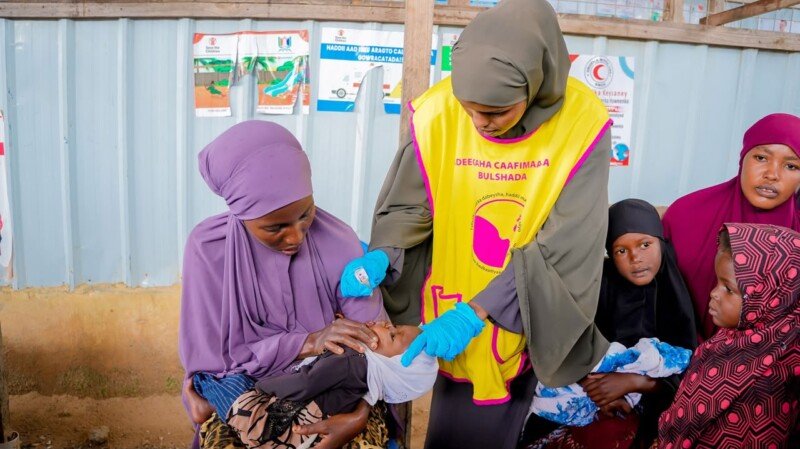
The Ministry has also been actively working to expand vaccine access. A five-day National Immunization Days (NID) campaign was launched this week, aiming to protect millions of Somali children from polio as part of the country’s broader strategy to eliminate the risk of poliovirus transmission.
Recommended Reading On ftlsomalia.com:
- Puntland Issues Ebola Alert Amid Uganda, Congo Outbreaks
- Uganda’s First Case of Ebola Causes Tension in Somalia
- IGAD Appeals to Member Countries to Support Uganda’s Efforts to Curb Spread of Ebola
- Somalia Launches Nationwide Polio Vaccination Drive
- Outbreak of Diphtheria Kills 50 Children in Somalia