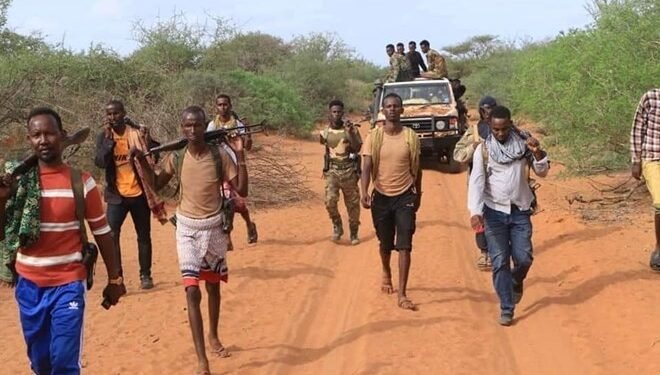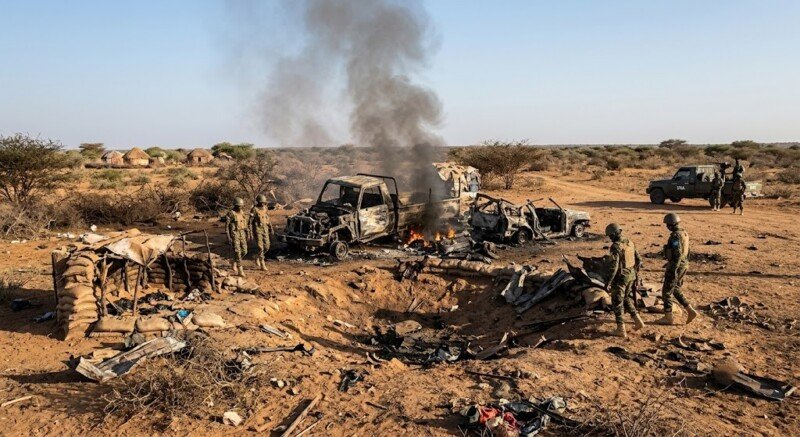

MANDERA – Suspected Al-Shabaab militants launched coordinated attacks on two security posts in Kenya’s Mandera County on Friday evening, marking the latest in a series of cross-border raids that have destabilized the northeastern region for over a decade.
The first attack targeted the Fino security camp, where Kenyan security forces successfully repelled the assailants. A student was shot in the stomach during the assault and remains hospitalized in stable condition. Approximately an hour later, a similar assault was reported in the Arabia area, with heavy gunfire also heard in the Asharaf region of neighboring Mandera County.
A Pattern of Cross-Border Violence
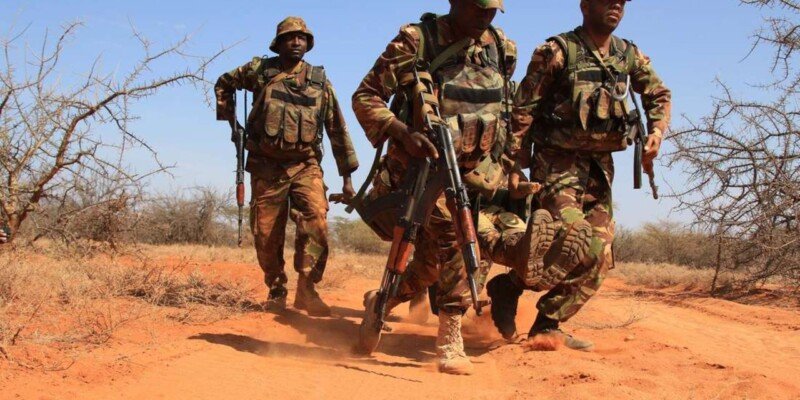
Mandera County and other parts of northern Kenya have witnessed a series of attacks by Al-Shabaab militants since Kenya deployed troops to Somalia in 2011. The group has frequently exploited the porous border to launch attacks on military bases and civilian targets in counties such as Mandera, Wajir, and Garissa. Kenya’s elite Special Operations Group (SOG) had conducted a planned operation against an Al-Shabaab encampment in Mandera County earlier this month, killing 11 militants and wounding seven others.
Heavy fighting also erupted between Al-Shabaab and Kenyan forces near the town of Dhaashow in Garissa County, with the group claiming to have inflicted significant casualties. A separate intelligence-led security operation in the Esagur Cutline area targeted a militant hideout where approximately 30 fighters had assembled to coordinate planned attacks against communities in Mandera County.
The Failure of Military Solutions
The latest attacks come amid heightened security across Kenya following threats by Al-Shabaab to carry out retaliatory attacks unless Kenya withdraws the troops it deployed to the border regions with Somalia in 2011. Despite years of counter-terrorism operations, including Kenya’s Operation Linda Nchi launched in October 2011, Al-Shabaab continues to pose a significant threat to both countries’ security forces and civilian populations.
The group’s ability to launch attacks on Kenyan soil has been a persistent concern for Nairobi. Security analysts suggest these incidents may be part of a broader strategy to disrupt stability and challenge Kenyan government control over border areas. A renewed wave of terror by Al-Shabaab has left multiple people dead in Kenya’s Mandera region, with coordinated attacks targeting both civilians and security forces.
The Intelligence Gap and Governance Vacuum
Kenyan authorities have recovered documents from militant camps, including religious tax receipts allegedly used by Al-Shabaab to collect levies from residents. These documents indicate the group’s structured taxation and checkpoint administration system, reinforcing intelligence that the militants continue to operate an organised governance and revenue collection network in territories across the border. This suggests that Al-Shabaab’s strength is not merely military but also rooted in its ability to fill governance vacuums where state authority is weak or absent.
The Kenyan government has, in recent years, expanded surveillance, intelligence gathering and joint security operations along the Kenya-Somalia frontier. However, the persistent nature of the attacks raises questions about the effectiveness of these measures. The porous border and the group’s ability to regroup and launch attacks suggest that military solutions alone are insufficient.
Way Forward
The Mandera attacks underscore the persistent threat posed by Al-Shabaab along the Kenya-Somalia border. Enhanced intelligence sharing and joint security cooperation between Nairobi and Mogadishu will remain critical to countering the shared threat. However, the cycle of violence is likely to continue unless both governments address the underlying governance deficits and economic marginalization that enable Al-Shabaab to recruit and operate. The lack of an official statement from Kenyan authorities on the latest attacks means the full extent of the casualties and damage remains unclear, a troubling pattern that leaves communities in the dark about their own security.
Recommended Reading On ftlsomalia.com
- Kenya’s Special Operations Group Strikes Al-Shabaab Base Near Border, 11 Dead, 7 Wounded
- Heavy Clashes Erupt Between Al-Shabaab and Kenyan Forces Along Somalia-Kenya Border
- Al-Shabaab Militants Killed in Intense Fighting Along Kenya-Somalia Border
- Renewed Wave of Terror by Al-Shabaab Leaves Ten Dead in Kenya’s Mandera Region
- Police Officers Hurt in IED Blast at Kenya-Somalia Border