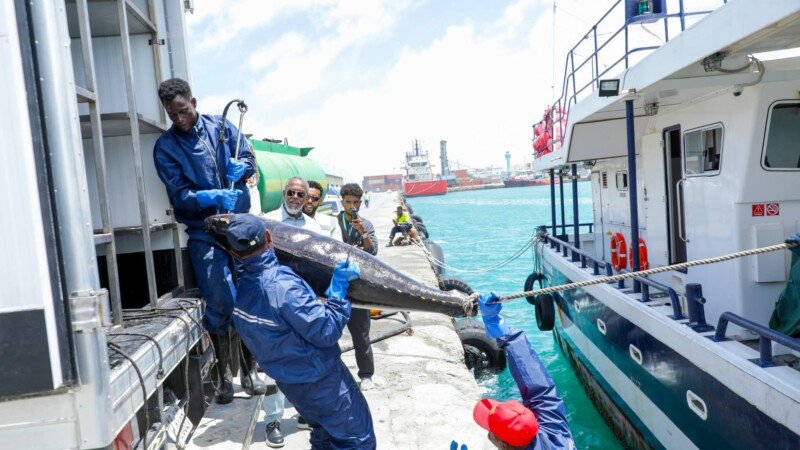

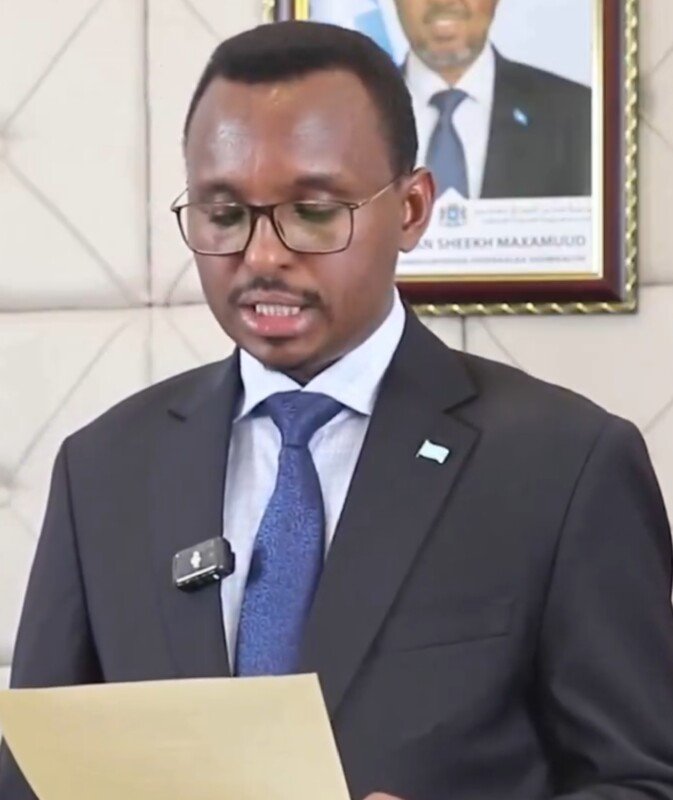
MOGADISHU — Somalia’s federal government reported $32.2 million in revenue from concession contracts at Mogadishu’s port and Aden Adde International Airport in 2024, but the Office of the Auditor General has been unable to verify the accuracy of these figures, raising serious concerns about transparency and accountability in the management of the country’s most critical infrastructure assets. Turkish firms running Mogadishu’s port and airport have not presented audited financial statements, leaving auditors unable to confirm the accuracy of the reported figures.
The Auditor General’s 2024 audit found that neither of the Turkish firms managing these facilities, Favori LLC, which operates the airport, and Albayrak-Somalia (Mogadishu Alport Corporation), which manages the port, had submitted independently audited financial statements as required by their concession agreements. This has left auditors unable to confirm the accuracy of the $34.26 million in concession fees that was to be paid to the federal government by both companies.
Under the current agreements, the government is entitled to 25 percent of airport revenues from Favori LLC, which has managed Aden Adde International Airport since 2013, and 62.17 percent of port revenues from Albayrak, which took over port operations in 2014. According to the official audit report, the government’s share of these revenues was recorded as $28,204,066.70 from the port and $4,006,136.00 from the airport, totaling $32,210,203. However, without the required independently audited financial statements from the companies, the Auditor General concluded that the reported amount “could not be independently verified as fairly determined.”
The Auditor General has pressed Favori LLC on financial transparency and contract compliance, holding meetings with representatives of both companies to demand greater financial transparency. Despite these engagements, neither company has submitted independently audited financial statements as required.
Revenue Generation and Contractual Obligations
The Mogadishu Port is one of Somalia’s most important revenue-generating assets, with the federal government having relied almost entirely on its income to sustain operations. Albayrak signed a renegotiated 14-year concession agreement with the federal government in 2020, following a 2013 agreement that had been renegotiated as part of Somalia’s economic restructuring. The new agreement mandated the injection of $50 million over five years for rehabilitation and investment to upgrade the port amid increasing trade flows.
Favori LLC, which has managed the airport since 2013, has a partnership with SKYWAY, a Somali-owned company, to manage cleaning services at the airport, reflecting efforts to empower local businesses in strategic national facilities. The company has also undertaken significant modernization projects at Aden Adde International Airport.
Lack of Cooperation and Financial Transparency
Favori LLC has maintained its exclusive right to collect navigation fees at Aden Adde International Airport, as stipulated in its concession agreement, and has rejected the involvement of any other entity in the collection of these fees. The company has emphasized that its 2013 agreement remains legally binding and in full force.
Albayrak has not issued any public response to the allegations of non-compliance. The Auditor General’s office has expressed concern that both companies have consistently failed to comply with the terms of their agreements, despite repeated requests for financial documentation.
The 2024 audit report also exposed $153 million in underdocumented social spending, highlighting broader governance challenges across federal institutions.
Critical Note
The inability of the Auditor General to verify $34.26 million in concession fees from Somalia’s two most important infrastructure assets highlights a significant governance gap. The government’s reliance on these concession agreements for domestic revenue, combined with the lack of independent financial oversight, creates an environment where accountability is elusive. The Auditor General’s report concluded that the government could not confirm whether it had received the correct share of revenues from either concession, as the reported figures could not be independently verified.
The Auditor General’s office has emphasized the importance of submitting audited financial reports on time to strengthen monitoring and verification of government revenues. However, without a clear mechanism to enforce compliance, the government risks continuing to operate in the dark about its share of revenues from these critical assets. The international community, which has supported Somalia’s economic reforms, must continue to press for transparency and accountability in the management of public-private partnerships.
Recommended Reading On ftlsomalia.com
- Auditor General Presses Favori LLC on Financial Transparency
- Turkish Firms Running Mogadishu’s Port and Airport Didn’t Present Audited Financial Statements
- Somalia’s 2024 Audit Report Exposes $153 Million in Underdocumented Social Spending
- Somalia Showcases Anti-Corruption Reforms
- Auditor General Summoned by Mogadishu Court
- Auditor General Warns of Weak Governance