
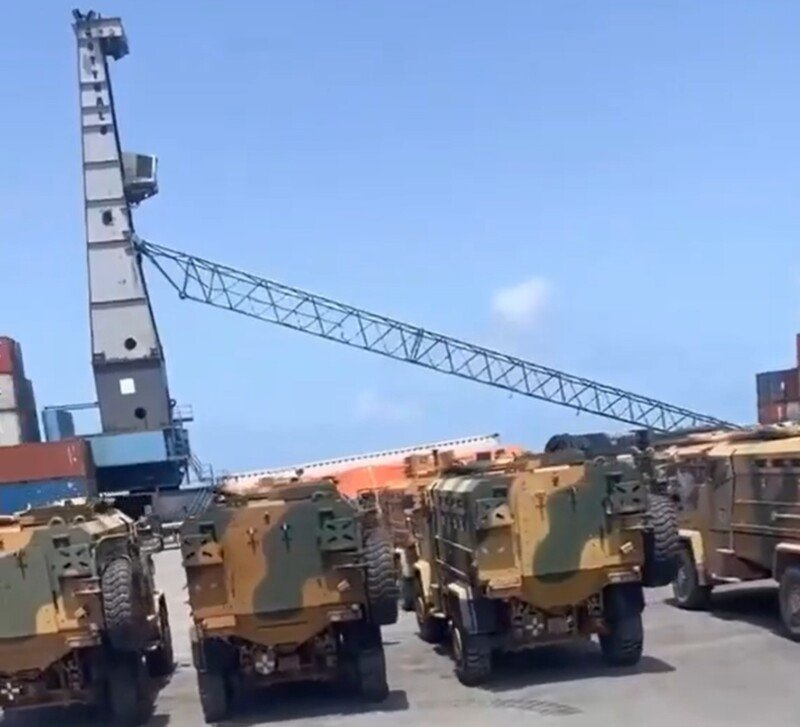
MOGADISHU — A shipment of Turkish-made BMC Kirpi mine-resistant armored vehicles has arrived at Mogadishu Port, according to videos circulating on social media showing the vehicles being unloaded from a vessel. The delivery marks the latest expansion of Turkey’s military support to Somalia.
The Kirpi, which means “porcupine” in Turkish, is a mine-resistant ambush protected (MRAP) vehicle manufactured by Turkey’s BMC. It features a V-shaped hull designed to deflect blasts and has been battle-tested against improvised explosive devices. Turkey has previously supplied the same type of vehicles to Somalia’s elite Gorgor special forces.
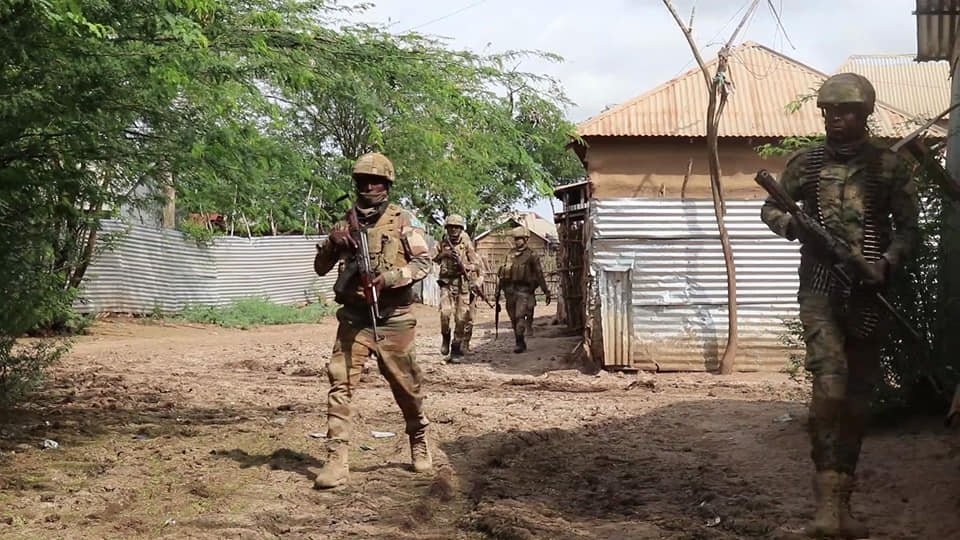
The arrival of the armored vehicles coincides with the graduation of the 21st Gorgor Commando Battalion, which completed its training in Manisa, Turkey, on August 8, 2026. The battalion is the first fully formed Gorgor unit to complete its training at a single location, and is expected to be deployed in ongoing operations against Al-Shabaab.
Turkey’s military engagement with Somalia has been comprehensive, encompassing the training of thousands of Somali soldiers, the provision of advanced weaponry, and the establishment of institutional frameworks for long-term capacity building. The TURKSOM Military Academy in Mogadishu, established in 2017 with Turkish support, has trained thousands of Somali soldiers and officers.
The Federal Government has secured substantial military assistance from Turkey, including armored vehicles, advanced communication systems, command equipment, and night-vision technology. Turkish F-16 fighter jets and attack helicopters have conducted aerial demonstrations over Mogadishu, highlighting Turkey’s ongoing commitment to arming and training Somali security personnel.
Expanding Military Cooperation
Turkey’s military support has been multi-faceted, ranging from specialised training for elite units to the delivery of advanced equipment. Turkish military instructors have conducted specialised training for members of the elite Gorgor unit in Mogadishu, equipping Somalia’s most capable units with skills in infantry manoeuvres, urban warfare, and counter-terrorism operations.
In February 2026, a Turkish military transport docked at Mogadishu Port, offloading a shipment of M48 and M60 Patton battle tanks. According to security sources, the tanks are positioned to defend Turkish installations in the Warshiikh district, approximately 60 kilometers north of Mogadishu, where facilities are reportedly being prepared for missile and satellite launch operations.
Turkish F-16 fighter jets landed at Aden Adde International Airport in Mogadishu in late January 2026, representing Turkey’s first forward stationing of manned combat aircraft in Somalia. Turkey has also transferred T129 ATAK attack helicopters to Somalia under an expanded defense cooperation agreement.
Since its establishment on September 30, 2017, the Somali Turkish Task Force Command has trained over 5,000 Somali security personnel. The programme stems from defense agreements dating back to 2010 and has grown into one of the most influential foreign-led military initiatives in Somalia.
Strategic Implications
The expanding military cooperation reflects Turkey’s strategic interest in the Horn of Africa. Turkey has moved from capacity-building to active deterrence in Somalia. Turkish exploration vessels, escorted by naval task forces, are operating in Somali waters, and Ankara has positioned itself as a key security partner alongside the United States and the African Union.
The deliveries also come as Turkey, Saudi Arabia and Pakistan signed a joint defence agreement in Mecca on August 7, 2026, establishing a framework for collective defence against armed attacks on any of the signatories. The agreement, which builds on a previous Saudi-Pakistan defence pact, reflects growing regional alignment against perceived threats.
President Hassan Sheikh Mohamud has commended the graduating officers at the TURKSOM Academy, thanking Turkey for its continued support in developing and professionalising Somali forces. The President noted that Turkey’s assistance has played a visible role in building a national army with the skills and capability to respond to the country’s security challenges.
Critical Note
While the arrival of Turkish armored vehicles represents a significant enhancement of Somalia’s military capabilities, questions remain about the Somali National Army’s ability to maintain and operate heavy equipment in the long term. The transition from light infantry to armoured warfare requires substantial logistical support, technical expertise, and maintenance infrastructure that Somalia currently lacks. The effectiveness of these vehicles will ultimately depend on the government’s ability to build the necessary support systems and ensure that the equipment is used in coordination with broader security sector reforms.
Furthermore, as Turkey deepens its military engagement in Somalia, there is a risk that the country could become drawn into wider regional rivalries, particularly given the complex geopolitical landscape of the Horn of Africa and the Red Sea. The government would be well advised to ensure that its partnership with Turkey is balanced with other international relationships and that it does not compromise Somalia’s sovereignty or long-term stability.
Recommended Reading On ftlsomalia.com
- Elite Gorgor Commandos Complete Historic Joint Training in Turkey
- Turkish Land Forces Commander Arrives in Mogadishu to Deepen Defence Ties
- Turkish Jets Mark Somalia Army Anniversary
- Türkiye’s Training Mission Reshapes Somalia’s Security Forces
- President Mohamud Commends Graduating Officers at TURKSOM Academy
- Somalia and Turkey Hold Defence Cooperation Talks