
MOGADISHU: The Federal Government of Somalia has reportedly issued nine new registration requirements for businesses operating in Bakaara Market, Mogadishu’s largest commercial hub, triggering widespread shop closures and renewed tensions between traders and authorities. However, the authenticity of the document listing the requirements has been called into question, as it lacks any official government logo, letterhead, or official stamp. The Ministry of Finance has not issued a statement confirming or denying the document’s validity.
According to a document circulating among business owners, the Ministry of Finance is requiring all commercial entities in the market to comply with nine conditions. These include a valid business license, the owner’s passport identification, a company profile, notarized articles of association or bylaws, a company email address and phone number, a registered bank account, the name of the building owner where the organization is located, and the amount of house rent paid. Mustaqbal Media, which first published the list, reported that many market shops have closed as a direct result of the requirements, with traders citing difficulties in meeting certain conditions and uncertainty over the document’s legitimacy.
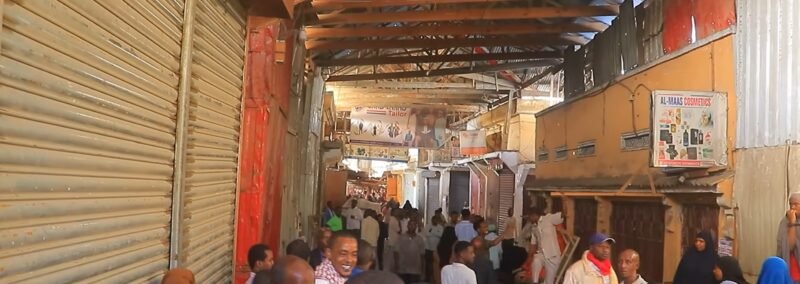
Bakaara Market, known locally as Suuqa Bakaaraha, is the largest open-air marketplace in Mogadishu and serves as the city’s commercial heart for food, electronics, clothing, and gold. It has historically been a hub of economic activity and a symbol of Somali resilience. Yet it has also been a flashpoint for disputes over taxation, land ownership, and governance. The emergence of the nine requirements comes amid a broader backdrop of trader frustration. In March 2025, hundreds of traders protested an eviction order, alleging the government intended to transfer land to wealthy businessmen connected to authorities. Demonstrators blocked key access routes and called on President Hassan Sheikh Mohamud to intervene directly. A trader who had operated at the market for 28 years described any forced eviction as “catastrophic.”
In September 2025, separate protests erupted over aggressive and unregulated tax collection methods. Shop owners reported harassment by individuals claiming to be government tax officials. “There’s no transparency. They just come in, demand money, and if you ask questions, they threaten to shut you down or take you to court,” one vendor said. Traders accused authorities of extortion and intimidation, calling for legal, transparent tax procedures. Protests have also erupted at Banadir Junction, with armed security officers demanding unexplained taxes. These demonstrations follow a similar shutdown at Bakara Market in August 2024 over punitive tax measures, which traders said would remain in place until their grievances were addressed.
The authenticity of the latest document remains unverified. A close examination shows it lacks any official government logo, letterhead, or official stamp, raising doubts about whether the requirements originated from the Ministry of Finance or an unauthorized source. The Federal Government has not issued any official statement clarifying whether the requirements are part of a formal regulatory push. Business owners have been left uncertain whether to comply with conditions that may not be enforceable or to risk further repercussions. The closures have negatively impacted not only traders but also workers, customers, and others who depend on daily market activities for their livelihoods.
The Federal Government has not responded to requests for clarification from multiple media outlets. Until the ministry issues an official statement, the authenticity of the document and the intended enforcement of the nine requirements will remain unclear. For the thousands of families whose livelihoods depend on Bakaara Market, the ambiguity adds to the mounting pressure on one of Somalia’s most enduring economic institutions.