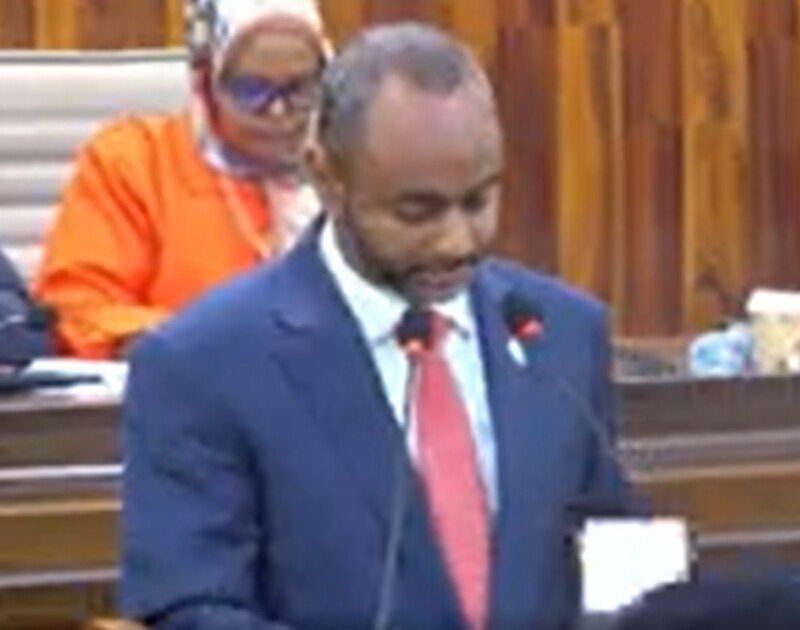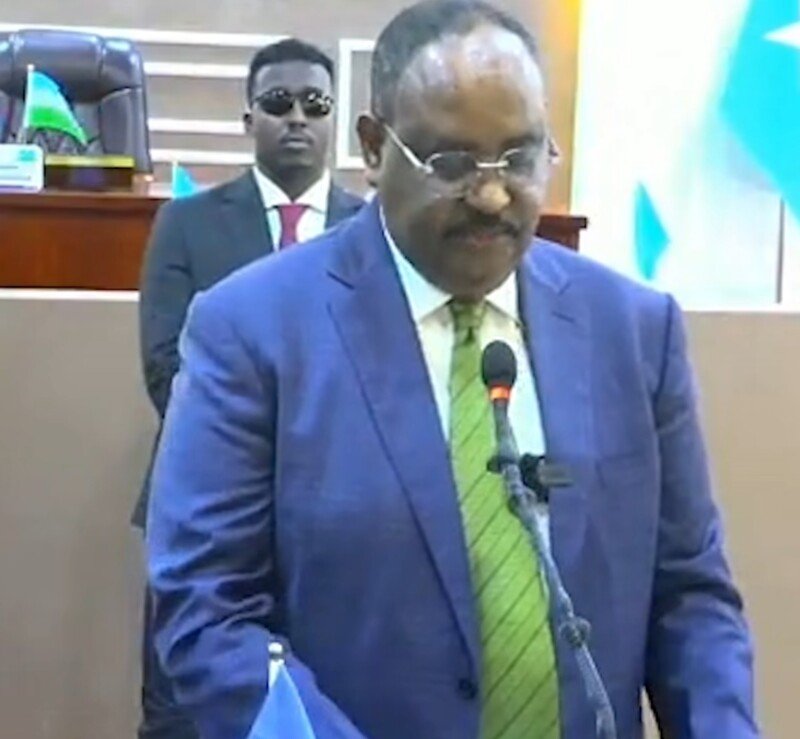

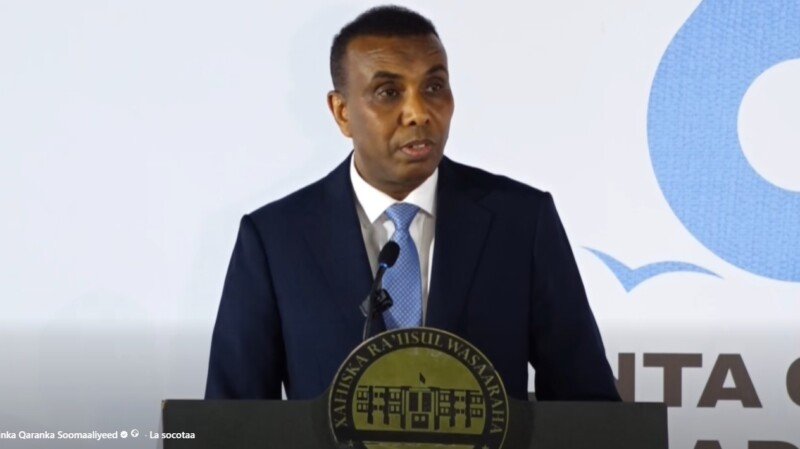
MOGADISHU — Abdulqadir Mohamed Nur Jaamac has been elected Speaker of the House of the People, securing 142 votes against his sole opponent, Abdulqadir Omar Macallin (Daada), who received 30 votes in Monday’s parliamentary election.
Prime Minister Hamza Abdi Barre has extended his congratulations to the new Speaker, hailing his election as a significant moment for parliamentary governance. In a statement, the Prime Minister commended the confidence placed in Jaamac by the members of the House and expressed hope that he would fulfill his constitutional duties with efficiency and dedication.
“Speaker Jaamac’s election reflects the trust and confidence of the House members. I wish him success in advancing the role of the Federal Parliament and strengthening its legislative functions,” Prime Minister Hamza said.
Prime Minister Hamza has pledged full government cooperation with the new Speaker, emphasizing the importance of close coordination between the executive and legislative branches to accelerate national development plans and strengthen governance.
The Prime Minister called on all MPs to unite under the new Speaker’s leadership, urging them to set aside differences and focus on the country’s pressing legislative priorities, including constitutional reform and national reconciliation.
The election, held at Villa Hargeysa, filled the vacancy left by Sheikh Aden Mohamed Nur (Madobe), who resigned in July 2026 after being elected President of South West State. Acting Speaker Sacdiya Yaasin Haaji Samatar had presided over preparations for the vote and conducted a final inspection of the venue on Sunday, August 9.
Jaamac, who previously served as Minister of Ports and Maritime Transport, was one of two candidates certified by the parliamentary election committee on August 8, 2026. His election comes after a brief but intense campaign period, with the new Speaker expected to play a pivotal role in guiding Parliament through key legislative processes, including constitutional reform and electoral legislation.
The election committee was appointed by Acting Speaker Sacdiya Yaasin and chaired by MP Abdirizak Omar Mohamed. The process marked the first time a woman had presided over the Speaker election in Somalia’s parliamentary history.
The committee had earlier released the official timetable, with candidate registration opening on August 5 and closing on August 6, followed by the issuance of candidate certificates on August 8, and the election itself set for August 10.
The electoral committee finalised logistical and procedural arrangements ahead of the vote, ensuring the election was held in an orderly and secure environment.
Political Context and Significance
Jaamac’s election comes at a politically charged moment for Somalia. The country is in the midst of a broader political transition, with the Federal Government and opposition groups locked in protracted negotiations over the electoral framework and constitutional reforms. The new Speaker will play a pivotal role in guiding Parliament through these contentious issues.
His predecessor, Sheikh Aden Mohamed Nur (Madobe), had served as Speaker since April 2022. His departure to South West State marked a significant political realignment, as his election to the regional presidency was viewed as a consolidation of power by some critics. Jaamac now inherits a parliament that is deeply divided over key national issues.
The Arlaadi Council, a group of intellectuals and professionals from the Digil and Mirifle clan, had strongly rejected any attempt to allocate the Speaker position to their clan, arguing that the community’s political destiny cannot be confined to a single position and that it has the right to compete equally for all top leadership roles.
The race for the speakership had drawn significant interest, with State Minister for Interior Saadad Mohamed Nur (Caliyow) resigning from his cabinet post to pursue the position. Villa Somalia had reportedly backed Minister of Ports and Marine Transport Abdulkadir Mohamed Jaamac for the role.
Critical Note
While Jaamac’s election marks a procedural milestone, the process has raised concerns about accessibility and inclusivity. The registration fee of $30,000 for male candidates remains prohibitive, effectively excluding many qualified MPs from contesting and reinforcing the perception that political leadership is reserved for the wealthy or those with access to external funding. The rushed timeline, with registration opening on August 5 and the election set for August 10, left little room for genuine campaign engagement or deliberation. Furthermore, the 4.5 clan-based power-sharing formula restricts the Speaker position to the Rahanweyn clan, perpetuating a system that prioritises clan identity over merit and competence. The election committee’s procedures, while transparent on paper, risk being perceived as a box-ticking exercise rather than a genuine democratic contest. The international community would be well advised to scrutinize this process and to press for reforms that ensure parliamentary leadership elections are truly competitive, accessible, and reflective of the will of the House rather than predetermined by financial, clan, and political gatekeepers.
Recommended Reading On ftlsomalia.com
- Speaker Election Committee Certifies Two Candidates
- Electoral Committee Meets as Parliament Prepares for Speaker Vote
- Acting Speaker Holds First Meeting with Election Committee
- Interior State Minister Resigns Amidst Speaker Race
- Arlaadi Council Rejects Clan-Based Allocation of Speaker Position
- Acting Speaker Inspects Venue Ahead of Election